

Pick the wrong month on Kilimanjaro and you’re not just uncomfortable, you’re trudging through mud on the Machame route or watching your summit bid get scrapped because of whiteout conditions at Barafu Camp. The best time to climb Mount Kilimanjaro is during the two dry seasons, January to mid-March and June to October, when trails stay firm and skies stay clear enough to see Kibo peak from camp. Get the timing wrong and you’re fighting rain-soaked gear and low visibility on summit night, exactly when you need steady footing most.
This guide breaks down the best month to climb Kilimanjaro based on what actually matters: rainfall patterns, temperature swings at altitude, and how crowded the trails get on popular Kilimanjaro trails like Lemosho and Marangu. We’ll flag which months bring the clearest views of the summit and which ones you should skip entirely if you’re not prepared for snow and ice above 15,000 feet.
As a Tanzania-based operator running climbs year-round, we’ve watched groups struggle in the wrong season and others hit perfect summit weather by choosing wisely. Read on for a month-by-month breakdown that helps you plan a climb that matches your schedule, your budget, and your tolerance for rain.
Why the timing of your climb matters
Kilimanjaro sits close enough to the equator that day length barely changes across the year, but rainfall and cloud cover swing wildly by season. That single fact drives everything else: your footing on the trail, your visibility at the summit, and whether your gear stays dry for five to nine days straight. Climbers who ignore this end up learning the hard way that Kilimanjaro weather isn’t uniform just because the mountain sits near the equator, and a broader look at Tanzania’s rainfall patterns through the year makes that clear.
Weather drives your success rate
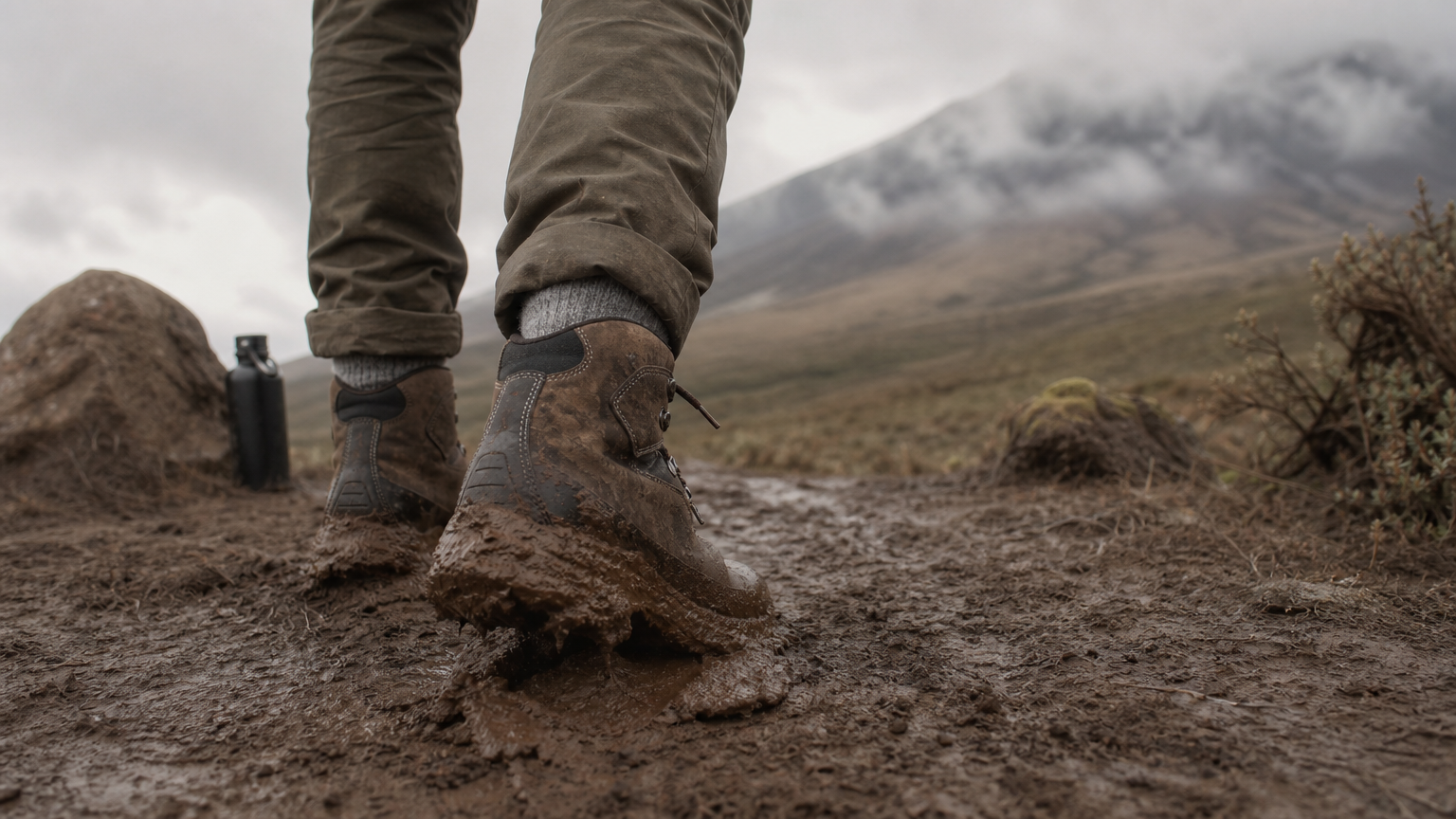
Rain doesn’t just make you miserable, it directly lowers your odds of reaching Uhuru Peak. Wet trails turn to slick clay on sections of the Machame and Umbwe routes, slowing pace and sapping energy you need for summit night. Heavy cloud cover during the wet months also hides the mountain’s upper slopes, which matters more than people expect: guides use visual cues to judge pacing and turnaround points, and low visibility forces more conservative decisions. Tour operators across Tanzania see success rates drop noticeably during the long rains of April and May, which is why almost none of us schedule climbs during that window.
Rain doesn’t just soak your gear, it quietly lowers your chances of standing on Uhuru Peak.
Crowds change the experience more than you’d think
Beyond weather, timing determines how many other trekkers share your trail and campsites. Peak season, meaning July through September and the run-up to Christmas and New Year, packs camps like Barranco and Karanga with dozens of tents. That means longer waits at the toilet blocks, slower movement through narrow sections like the Barranco Wall, and less of the solitude people picture when they imagine African wilderness. If you value quiet mornings and empty ridgelines, shoulder months like late June or early March deliver a strikingly different mountain even though the weather stays dry.
Temperature swings you can’t ignore
Altitude, not calendar season, controls temperature on Kilimanjaro, but timing still shifts what you’ll face at the top. Summit night temperatures regularly drop below 0°F (-18°C) regardless of month, yet the coldest, snowiest conditions cluster in January and February, when a dusting of snow at Stella Point is common. That’s not a dealbreaker, plenty of climbers summit successfully in a light snow, but it does mean stricter gear requirements and a harder adjustment for anyone unused to sub-zero wind chill.
| Factor | Dry season impact | Wet season impact |
|---|---|---|
| Trail footing | Firm, faster pace | Muddy, slower and riskier |
| Summit visibility | Clear, easier route-finding | Fog and whiteout risk |
| Camp crowding | Higher, especially July-Sept | Lower, near-empty camps |
| Gear demands | Standard cold-weather kit | Waterproofing critical |
Understanding these three variables, rainfall, crowd density, and altitude-driven cold, gives you a real framework for picking a month instead of just guessing based on a generic travel calendar.
How to choose the right month for your climb
Start by ranking what matters most to you: dry trails, clear summit views, fewer crowds, or a lower price tag. No single month wins on every front, so your priorities decide the answer more than any generic calendar advice. A honeymoon couple chasing photos of Kibo’s glaciers wants different conditions than a budget-conscious backpacker who doesn’t mind a damp tent if it means dodging the July crowds.
Match the season to your priority
Getting this right means matching your specific goal to the right window rather than defaulting to "summer is safest." Here’s how the trade-offs actually break down when choosing the best time for a Kilimanjaro climb:
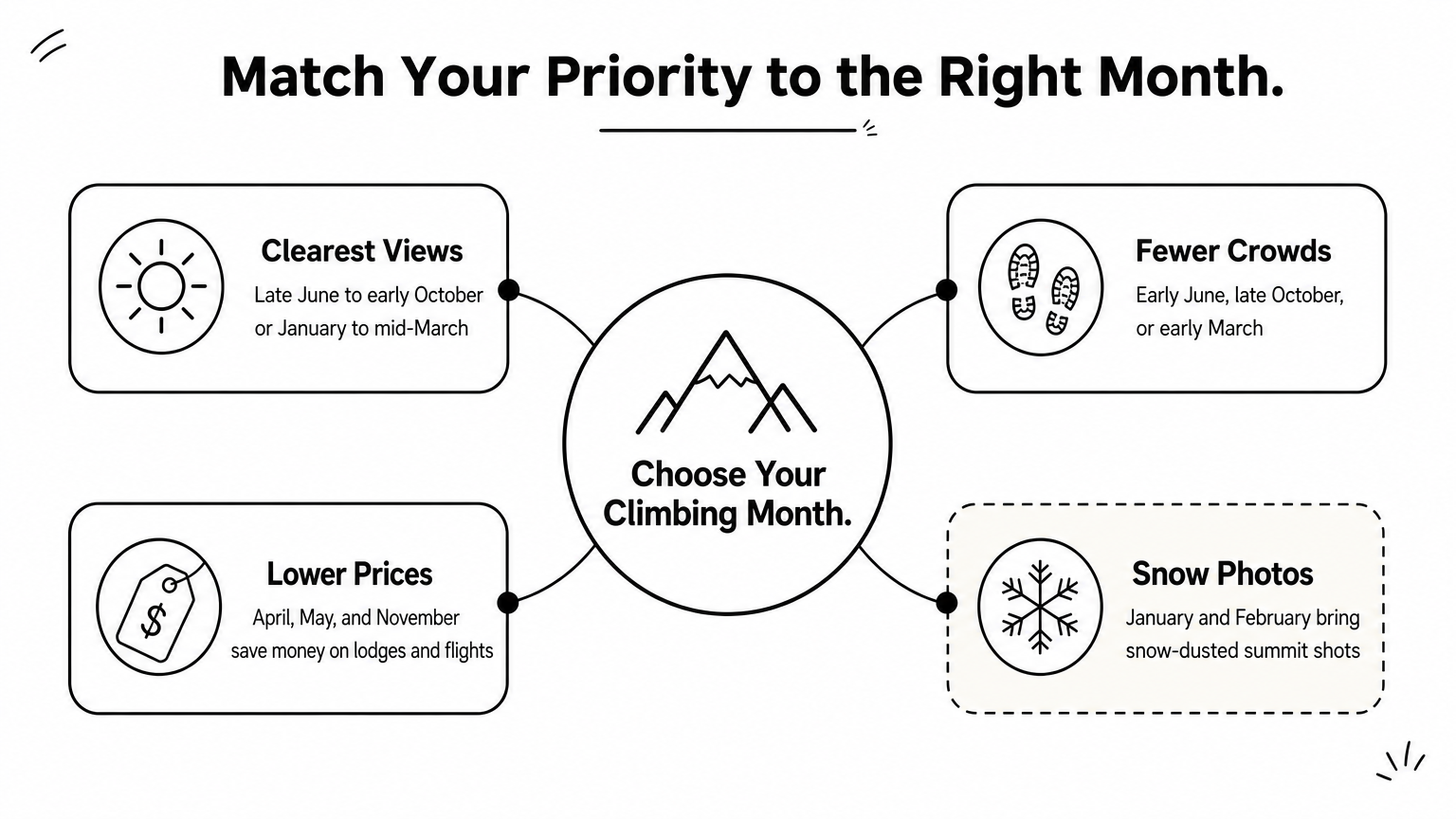
- Clearest views and driest trails: late June through early October, or January into mid-March
- Fewer people on the trail: early June, late October, or early March, right before or after peak crowds arrive
- Lower lodge and flight prices: April, May, and November, though summit conditions turn riskier (see what climbing Kilimanjaro really costs)
- Snow-dusted summit photos: January and February, accepting colder temperatures at Stella Point
Decide what you’re optimizing for first, then let that choice pick your month, not the other way around.
Factor in your physical fitness and schedule
Outside of weather, be honest about your own conditioning and how many vacation days you can commit. Longer routes like Lemosho (8 days) or Machame (7 days) build in better acclimatization, which matters more in cold months when altitude sickness symptoms compound with hypothermia risk. Vacation schedules matter too: if you can only travel during a school break or a fixed work window, work backward from that fixed date rather than forcing a trip into an already-crowded peak month.
Talk to a local operator before locking in dates
Seasoned Kilimanjaro climb guides track real-time conditions on the mountain, not just historical averages, and can flag if a particular route is unusually wet or busy in a given year. Yearly variation exists, so a quick conversation before booking often beats relying on a static chart alone.
Kilimanjaro weather and conditions month by month
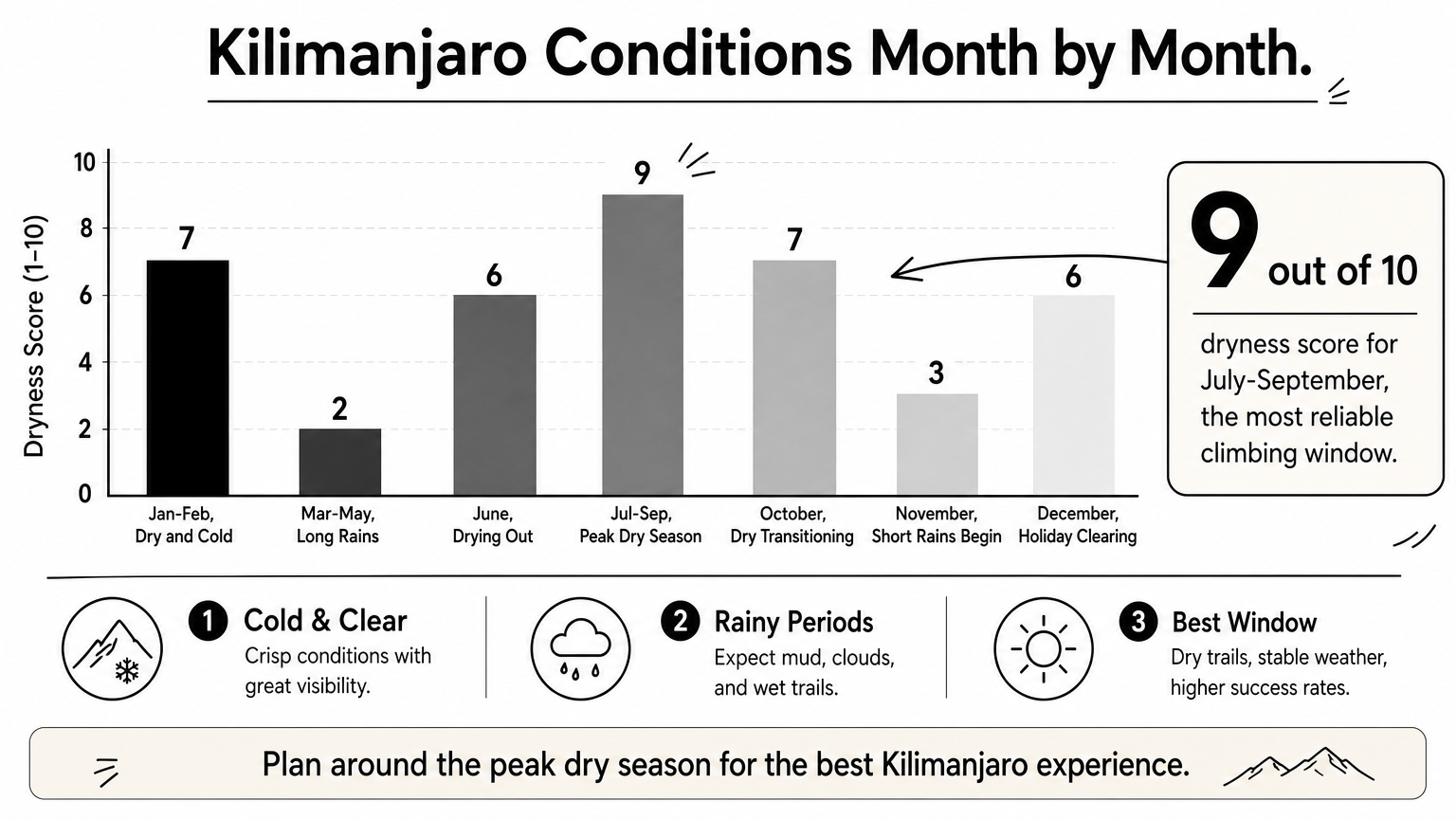
Month-by-month data beats vague seasonal talk when you’re picking exact travel dates, so here’s what actually happens on the mountain across the calendar. Rainfall totals and cloud cover patterns shift enough between neighboring months that a two-week difference in departure date can change your whole trip. Guides who work the mountain year-round watch these patterns closely, because a route that’s firm and dusty in early June can turn slick within days once the short rains arrive in November.
Quick reference: month-by-month conditions
Use this table as your baseline, then adjust for the specific route and year you’re booking.
| Month | Conditions | Crowd level |
|---|---|---|
| January-February | Dry, cold, possible summit snow | Moderate |
| March-May | Long rains, muddy trails, low visibility | Low |
| June | Drying out, cool nights | Moderate |
| July-September | Peak dry season, clear skies | High |
| October | Dry, transitioning | Moderate |
| November | Short rains begin | Low |
| December | Clearing for holidays, busy at Christmas | High |
The mountain doesn’t follow a strict script, but this table reflects what happens most years on most routes.
November deserves a specific warning many first-time climbers miss: the short rains arrive unevenly, so you might get five dry days followed by two soaked ones, which makes packing and pacing harder to predict than in the more consistent dry months. Similarly, March often gets lumped in with the dry season, but by mid-month rainfall picks up fast, especially on the wetter Machame and Umbwe approaches. Regardless of which month you choose, altitude keeps summit night brutally cold, so pack for sub-zero wind chill even if you’re climbing during the driest week of August.
Checking a current forecast a few days before departure still matters, no matter how solid the seasonal averages look on paper. The National Weather Service and similar meteorological services won’t cover Kilimanjaro directly, but your Tanzania-based operator should track localized conditions and adjust your itinerary’s pacing accordingly.
Answers to common Kilimanjaro climbing questions
Readers planning their trip tend to circle back to the same handful of questions, so here are direct answers instead of vague generalities.
What is the single best month to climb Kilimanjaro?
September edges out the rest for most climbers, combining dry trails, clear summit views, and daylight hours that make for comfortable trekking without the deep cold of January. September’s conditions hold steady through the whole month, which is rare on a mountain where weather can flip within days. That said, September also sits inside peak season, so expect busier camps and higher park fees than you’d face in a quieter shoulder month like early June.
If you only remember one month, remember September: it balances weather, visibility, and manageable crowds better than any other.
Can you climb Kilimanjaro during the rainy season?
Yes, and some climbers actually prefer it. April and May bring the heaviest rain and the fewest trekkers on the mountain, so if solitude matters more to you than dry socks, it’s workable with the right gear. Waterproof boots, a solid rain shell, and a guide experienced in wet-season pacing make the difference between a miserable slog and a manageable, if soggy, adventure.
Does the route you choose change the ideal timing?
Somewhat. Routes on the mountain’s wetter southern side, like Machame and Umbwe, feel the rainy months more intensely than drier routes such as Rongai on the northern slopes, as our comparison of the seven climbing routes lays out. Selecting a northern route during the shoulder seasons can extend your dry-weather window by a couple of weeks compared to Machame.
How far in advance should you book?
Book six to nine months out for July through September or the December holiday window, since permits and top-rated Kilimanjaro operators fill fast. Shoulder months allow more flexibility, sometimes as little as six to eight weeks’ notice, though last-minute planning still limits your choice of the best-reviewed guides and campsites.
Finding your ideal climbing window
There’s no single perfect date stamped on a calendar, only a best fit between the weather, the crowds, and what you’re willing to trade for one over the other. Pick the dry windows of January to mid-March or June to October if firm trails and clear summit views matter most, and accept a busier camp in exchange. Choose the shoulder months or even the rainy season if solitude and lower costs outweigh a bit of mud on your boots. Weather patterns shift year to year, and only a local operator watching real-time conditions can tell you if this June looks like last June or something wetter.
Getting the timing right is half the battle; the other half is having guides who know the mountain in every season. If you’re ready to lock in your dates, browse our guided Kilimanjaro climbing tours and get a free custom itinerary matched to the right month for you.