

Picking the wrong route on Kilimanjaro can turn a bucket-list climb into a miserable slog, or worse, a failed summit attempt. Every year climbers show up having booked the cheapest option without realizing it also had the lowest success rate and the least time to acclimatize. Choosing among the climb kilimanjaro routes available means weighing crowding, scenery, difficulty, and how many days it takes to climb Kilimanjaro so your body can adjust to the altitude.
This guide breaks down the seven established paths up Africa’s tallest peak so you can match a route to your fitness level, timeline, and budget instead of guessing. In this route comparison for 2026 and 2027 we weigh success rates and acclimatization profiles for Marangu, Machame, Lemosho, Rongai, Northern Circuit, Umbwe, and Shira, plus what the scenery and camp experience actually look like on each. You’ll see which routes suit first-time trekkers, which reward experienced hikers chasing solitude, and which ones we steer clients toward based on real climbing outcomes, not marketing.
As a Tanzania-based operator running Kilimanjaro expeditions with safety-focused logistics and local guides who know these mountains firsthand, we’ve watched which routes deliver and which ones disappoint. Use this comparison to shortlist your route before you request a custom itinerary.
1. Lemosho route: scenic and high success rate
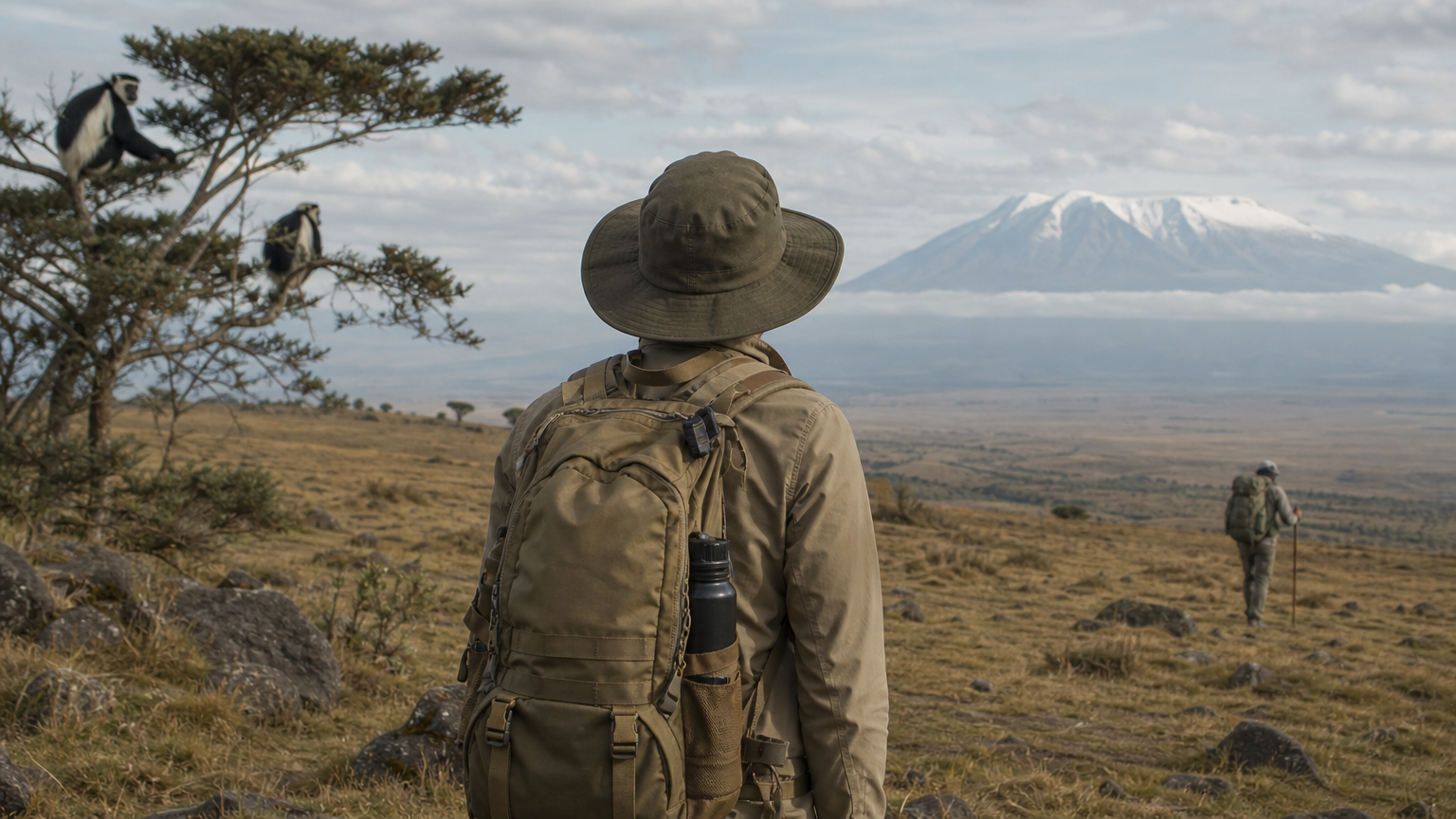
Lemosho approaches Kilimanjaro from the west and gives you more days on the mountain than almost any other option besides the Northern Circuit. That extra time translates directly into one of the highest summit success rates on the mountain, typically cited between 85% and 90% on the standard 8-day itinerary. Camping the entire way, you’ll cross five distinct ecological zones before reaching Uhuru Peak, which makes this route feel like a proper expedition rather than a quick dash up a hill.
Route overview and key stats
Before booking, it helps to see the raw numbers side by side with what you’re signing up for.
| Stat | Detail |
|---|---|
| Duration | 7-8 days (8 recommended) |
| Starting point | Londorossi Gate, west side |
| Accommodation | Camping only |
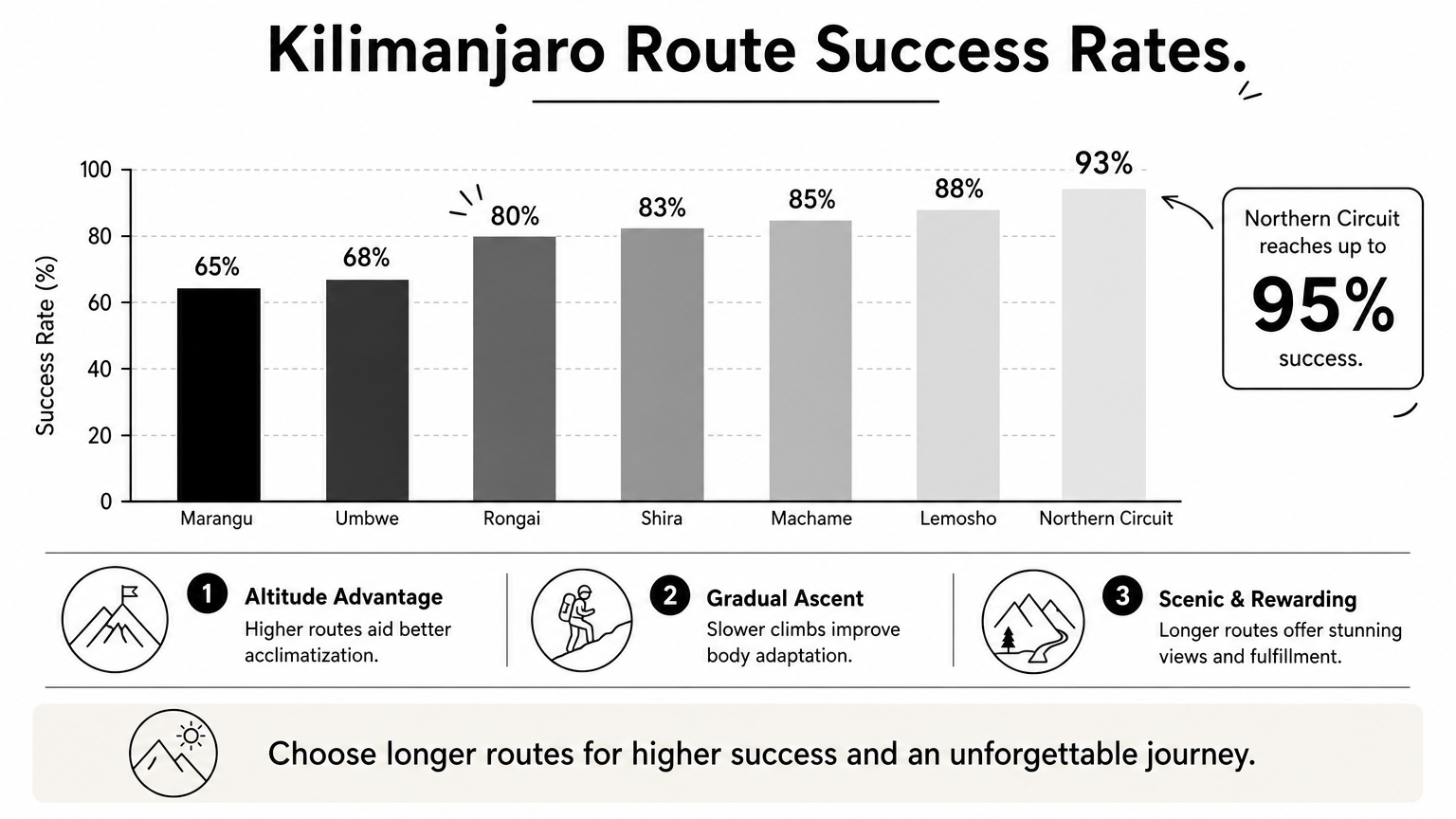
| Success rate | 85-90% on 8-day version |
| Distance | Approximately 70 km |
Difficulty and acclimatization
Difficulty on Lemosho sits in the moderate range, mainly because the extra day built into the schedule spreads out the altitude gain instead of front-loading it. Climbers benefit from the classic "climb high, sleep low" pattern, especially around the Lava Tower detour, which pushes you up to nearly 4,600 meters before dropping back down to camp at a lower elevation to sleep. That dip and rise does more for your acclimatization than almost anything else on the mountain.
More days on Lemosho means more altitude adjustment, and that’s the single biggest reason it outperforms shorter routes on summit success.
Scenery and highlights
Scenery-wise, Lemosho delivers more variety than any route besides the Northern Circuit. You’ll walk through montane rainforest thick with colobus monkeys, cross the open moorland of the Shira Plateau, and get some of the best unobstructed views of the summit itself long before you’re anywhere near it. Solitude is another draw here, since fewer operators route their groups through the west side compared to Machame.
Who this route is best for
First-time Kilimanjaro climbers who want the best realistic shot at summiting should look here first. It also suits photographers and travelers who value quieter trails over the crowded camps you’ll find on the mountain’s southern approaches. If Lemosho fits your fitness level and timeline, our 7-day Lemosho route group climb can build the full trip around it.
2. Machame route: popular and well-rounded
Machame earns its nickname, the "Whiskey Route," for a reason: it’s tougher than Marangu but rewards climbers with far better scenery and acclimatization. Roughly 50% of all Kilimanjaro climbers choose this southern approach, making it the most heavily trafficked route on the mountain. That popularity isn’t accidental. Machame balances a reasonable success rate against a shorter, more affordable itinerary than Lemosho.
Route overview and key stats
Here’s what you’re working with before you commit to this itinerary.
| Stat | Detail |
|---|---|
| Duration | 6-7 days (7 recommended) |
| Starting point | Machame Gate, south side |
| Accommodation | Camping only |
| Success rate | 85% on 7-day version |
| Distance | Approximately 62 km |
Difficulty and acclimatization
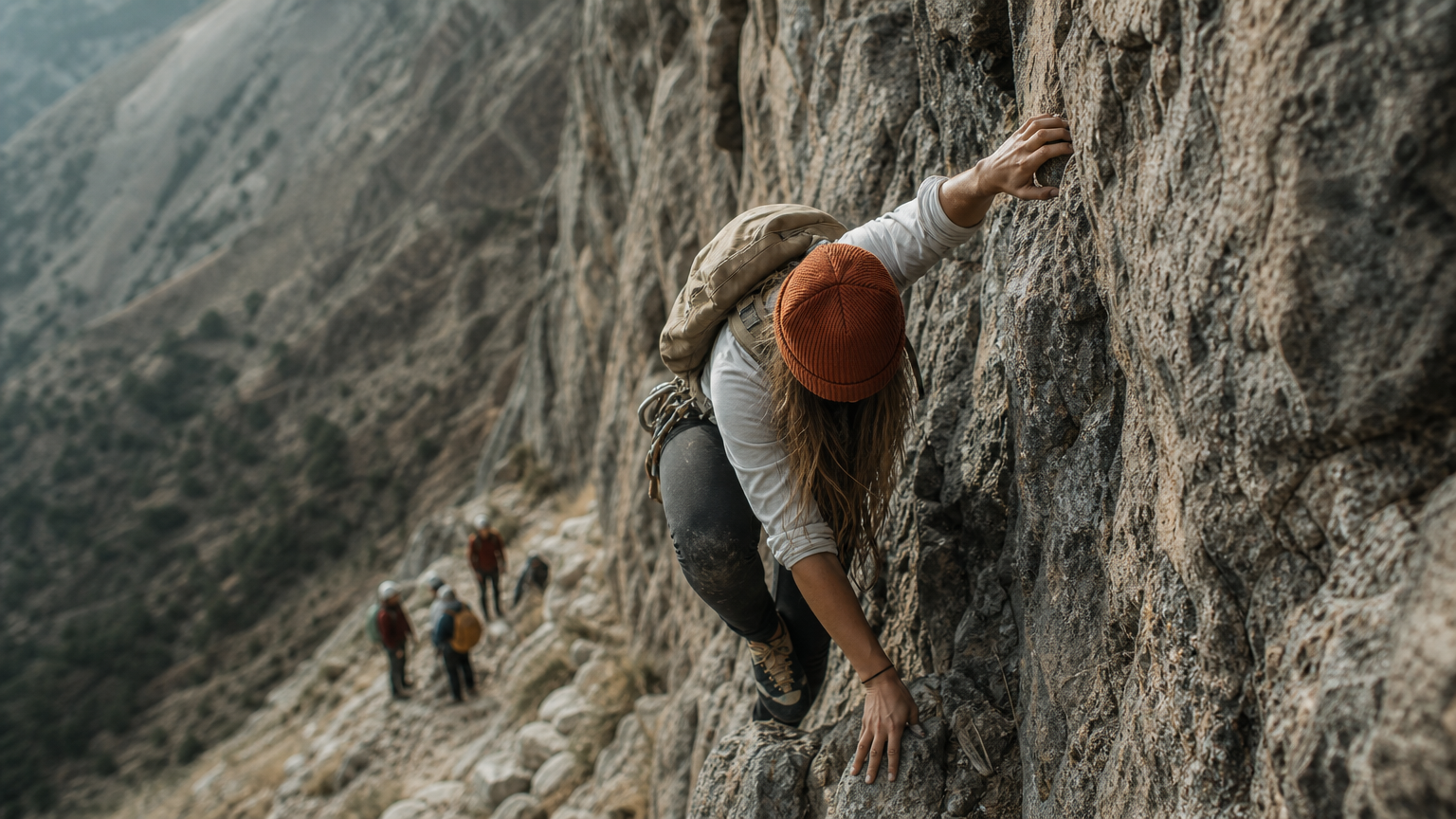
Difficulty runs moderate to challenging, with a steep climb through the forest on day one and a demanding scramble up the Barranco Wall on day three. Choosing the 7-day version over the 6-day option adds a crucial acclimatization day near Barranco Camp, which noticeably improves your odds at the top.
Add the extra day on Machame and you buy yourself real acclimatization, not just a longer vacation.
Scenery and highlights
Scenery shifts dramatically as you climb, moving from rainforest to heath, moorland, alpine desert, and finally arctic summit conditions. Views of the Western Breach and Kibo’s glaciers from Barranco Camp rank among the best on the entire mountain.
Who this route is best for
Active travelers comfortable with steeper terrain and larger group sizes will find our Machame Whiskey Route climb a solid, well-supported choice with dependable infrastructure at every camp.
3. Marangu route: hut-based comfort option
Marangu is the oldest established path up the mountain, and it’s the only one of the seven kilimanjaro trekking routes that offers sleeping huts instead of tents. That single difference shapes everything about the experience, from your packing list to the type of climber who signs up. It’s also the shortest standard itinerary, which keeps costs down but cuts into the acclimatization time you get elsewhere.
Route overview and key stats
Here’s what the numbers look like before you decide if the trade-off works for you.
| Stat | Detail |
|---|---|
| Duration | 5-6 days (6 recommended) |
| Starting point | Marangu Gate, southeast side |
| Accommodation | Sleeping huts with bunks |
| Success rate | 65% on 6-day version |
| Distance | Approximately 64 km |
Difficulty and acclimatization
Difficulty feels gentler underfoot since the gradient is steady rather than steep, but the compressed schedule works against you. Going up and down the same path also means no scenery variation to break up the monotony of summit night.
A shorter itinerary and no huts on the way down make Marangu comfortable to start but harder to finish.
Scenery and highlights
Forest cover dominates the lower slopes, giving way to moorland and then the stark alpine desert near Kibo Hut. Since you ascend and descend the same trail, the views repeat rather than build toward a grand finale like Lemosho or Machame offer.
Who this route is best for
Budget-conscious climbers and those uneasy about tent camping suit the 6-day Marangu hut trek well, provided they add the extra acclimatization day and take the lower success rate seriously.
4. Rongai route: quiet northern approach
Rongai is the only one of the climb kilimanjaro routes that approaches from the north, near the Kenyan border, which means you’ll rarely cross paths with other groups until you merge with the Marangu trail near the summit. That isolation makes it a favorite for climbers who want the wildlife and quiet of a remote trek without sacrificing too much comfort. Rainfall stays lighter here too, since the northern slopes sit in Kilimanjaro’s rain shadow, making Rongai a solid pick during the wetter shoulder seasons, whatever season you plan your summit for.
Route overview and key stats
Here’s what you’re signing up for on this side of the mountain.
| Stat | Detail |
|---|---|
| Duration | 6-7 days (7 recommended) |
| Starting point | Rongai Gate, north side |
| Accommodation | Camping only |
| Success rate | 80% on 7-day version |
| Distance | Approximately 65 km |
Difficulty and acclimatization
Grades stay gentle and gradual for most of the climb, which suits first-timers nervous about steep scrambles. Adding the seventh day builds in a proper acclimatization stop, pushing success rates meaningfully above the shorter version.
Fewer crowds and a gradual gradient make Rongai one of the gentlest introductions to high-altitude trekking on Kilimanjaro.
Scenery and highlights
Drier forest, open moorland, and desert-like plateau define the early stages, with dramatic views of Mawenzi’s jagged peak as you approach the final camps.
Who this route is best for
Hikers craving solitude, wildlife sightings, and a steadier gradient over dramatic scrambles will feel most at home here, especially during Tanzania’s rainier months.
5. Shira route: high starting point for veterans
Shira starts higher than any other approach on Kilimanjaro, dropping you by vehicle almost straight onto the Shira Plateau at roughly 3,500 meters. That head start sounds appealing until you realize your body hasn’t had a single day at lower elevation to adjust before the thin air hits. Among the climb kilimanjaro routes covered here, Shira is the one most likely to catch inexperienced trekkers off guard.
Route overview and key stats
Here’s the quick reference before you weigh this route against the others.
| Stat | Detail |
|---|---|
| Duration | 7-8 days (8 recommended) |
| Starting point | Shira Gate, west side (via vehicle) |
| Accommodation | Camping only |
| Success rate | 80-85% on 8-day version |
| Distance | Approximately 56 km |
Difficulty and acclimatization
Difficulty on paper looks moderate, but the high starting elevation front-loads altitude exposure in a way that trips up climbers without prior experience of the real difficulty of climbing Kilimanjaro. Extending to eight days and merging with the Lemosho path partway through helps offset that early risk considerably.
Starting a Kilimanjaro trek above 3,500 meters rewards experienced lungs and punishes anyone skipping proper acclimatization time.
Scenery and highlights
Granted, you skip the dense rainforest section, but the trade-off is immediate access to open moorland views and an early, unobstructed look at Kibo’s summit dome.
Who this route is best for
Veteran trekkers who’ve already handled altitude on other peaks and want a shorter time commitment without sacrificing much success rate will find Shira an efficient option worth discussing with your guide.
6. Northern Circuit: longest route, top success rate
Northern Circuit is the newest official path up Kilimanjaro, and it’s built for one purpose: maximizing your odds of standing on Uhuru Peak. By circling around the mountain’s quieter north side before looping back to the summit, this route delivers the longest itinerary and highest success rate of all seven kilimanjaro trekking routes covered here. If time and budget allow, this is the one we recommend most often to serious climbers.
Route overview and key stats
Here’s the breakdown before you commit the extra days and budget this route demands.
| Stat | Detail |
|---|---|
| Duration | 9-10 days |
| Starting point | Londorossi Gate, west side |
| Accommodation | Camping only |
| Success rate | 90-95% |
| Distance | Approximately 90 km |
Difficulty and acclimatization
Gradients stay gentle throughout, and the extended schedule gives your body far more time above 3,000 meters than any shorter route allows. That gradual altitude exposure is exactly why the success rate climbs above 90%.
Nine or ten days circling Kilimanjaro beats any shortcut when your only goal is reaching the summit.
Scenery and highlights
Quiet trails dominate the north side, where you’ll spot far fewer climbers than on Machame or Marangu. Kibo’s northern glaciers and the remote Rongai junction add scenery you simply won’t see on the busier southern approaches.
Who this route is best for
Climbers prioritizing summit success over cost or speed, along with those craving solitude and varied terrain, should put the 9-day Northern Circuit expedition at the top of their shortlist.
7. Umbwe route: steep and demanding
Umbwe is the shortest and steepest path up Kilimanjaro, and it’s not one we recommend to first-timers. Climbers gain altitude fast on this route, with almost no gradual buildup before the terrain turns into a near-vertical scramble through the forest. Among all the kilimanjaro climbing routes on this list, Umbwe carries the lowest success rate precisely because it skips the acclimatization buffer that routes like Lemosho and Northern Circuit build in deliberately.
Route overview and key stats
Here’s what you’re up against before choosing this route over a gentler alternative.
| Stat | Detail |
|---|---|
| Duration | 6-7 days (7 recommended) |
| Starting point | Umbwe Gate, south side |
| Accommodation | Camping only |
| Success rate | 65-70% on 7-day version |
| Distance | Approximately 53 km |
Difficulty and acclimatization
Steep switchbacks dominate day one, climbing through dense forest with barely a flat stretch to catch your breath. Extending to seven days and routing through Barranco Camp helps, but even then this remains the toughest route on the mountain for your lungs and legs alike.
Umbwe rewards strong legs and prior altitude experience, and it punishes anyone treating it like a casual first climb.
Scenery and highlights
Rewarding climbers who push through, Umbwe offers dramatic ridge walking and some of the most direct views of the Southern Icefields on the entire mountain.
Who this route is best for
Experienced trekkers chasing a physical challenge and total solitude on the lower slopes will appreciate what the 9-day Umbwe route climb with full acclimatization offers, provided they’ve already proven they handle altitude well.
Choosing the route that’s right for your climb
Seven routes, seven very different experiences, but the decision usually comes down to three factors: how many days you can spare, how your body handles altitude, and whether you’d rather share camps with dozens of climbers or hike in near-solitude. Lemosho and Northern Circuit reward patience with the strongest summit odds, Machame and Rongai split the difference between cost and comfort, and Marangu or Umbwe suit specific circumstances more than general first attempts. None of these climb kilimanjaro routes is objectively "best", they’re just built for different climbers.
Getting the route right matters more than almost any other planning decision you’ll make for this trip. Talk it through with people who’ve actually guided groups up each of these paths before you lock in dates. Browse our Kilimanjaro trekking packages and we’ll help you match the right route to your fitness, timeline, and summit goals.