 Skip to content

Picture a caldera so full of wildlife that lions, elephants, and black rhinos share a single grassy floor twelve miles wide. That’s Ngorongoro Crater, and a well-planned ngorongoro crater tour is one of the most reliable wildlife experiences in Africa, rain or shine, any month of the year. But before you book, you need real answers about cost, timing, and what actually happens once you descend that crater rim road.
This guide breaks down exactly what a tour ngorongoro crater itinerary looks like: how much it costs, what’s included in park and conservation fees, how long you should spend inside the crater, and which season gives you the best shot at spotting the Big Five in one game drive. We also cover how Ngorongoro fits into a longer Tanzania safari alongside the Serengeti or Tarangire.
As a Tanzania-based operator running these routes with private 4×4 vehicles and local guides, we’ve mapped out the details travelers ask us about most, permits, crater descent rules, lodging near the rim, and honest pricing, so you can plan your visit with confidence instead of guesswork.
Why a Ngorongoro Crater tour belongs on your itinerary
Ngorongoro Crater, a once-in-a-lifetime safari destination, is the collapsed cone of an extinct volcano, roughly 2,000 feet deep and 100 square miles across, and its steep walls trap an entire ecosystem inside a bowl you can drive around in half a day. Ngorongoro Conservation Area sits between the Serengeti and Lake Manyara, but the crater floor itself behaves like a closed system. Water, grass, and predators stay put year-round, which is exactly why the wildlife viewing here doesn’t depend on migration timing the way a Serengeti safari does. UNESCO recognized the area as a World Heritage Site precisely because this concentration of habitat and species inside one caldera has no real equal in Africa.
A wildlife density unmatched elsewhere in Africa
Researchers estimate around 25,000 large mammals live inside the crater at any given time, a density that rivals anywhere on the continent. Lion prides here rank among the most studied in Africa, and on a single morning drive you’ll typically spot several, often lounging within yards of your vehicle. Wildebeest, zebra, buffalo, and gazelle graze the grassland floor in numbers that make the crater feel less like a park and more like a natural amphitheater built for game viewing.
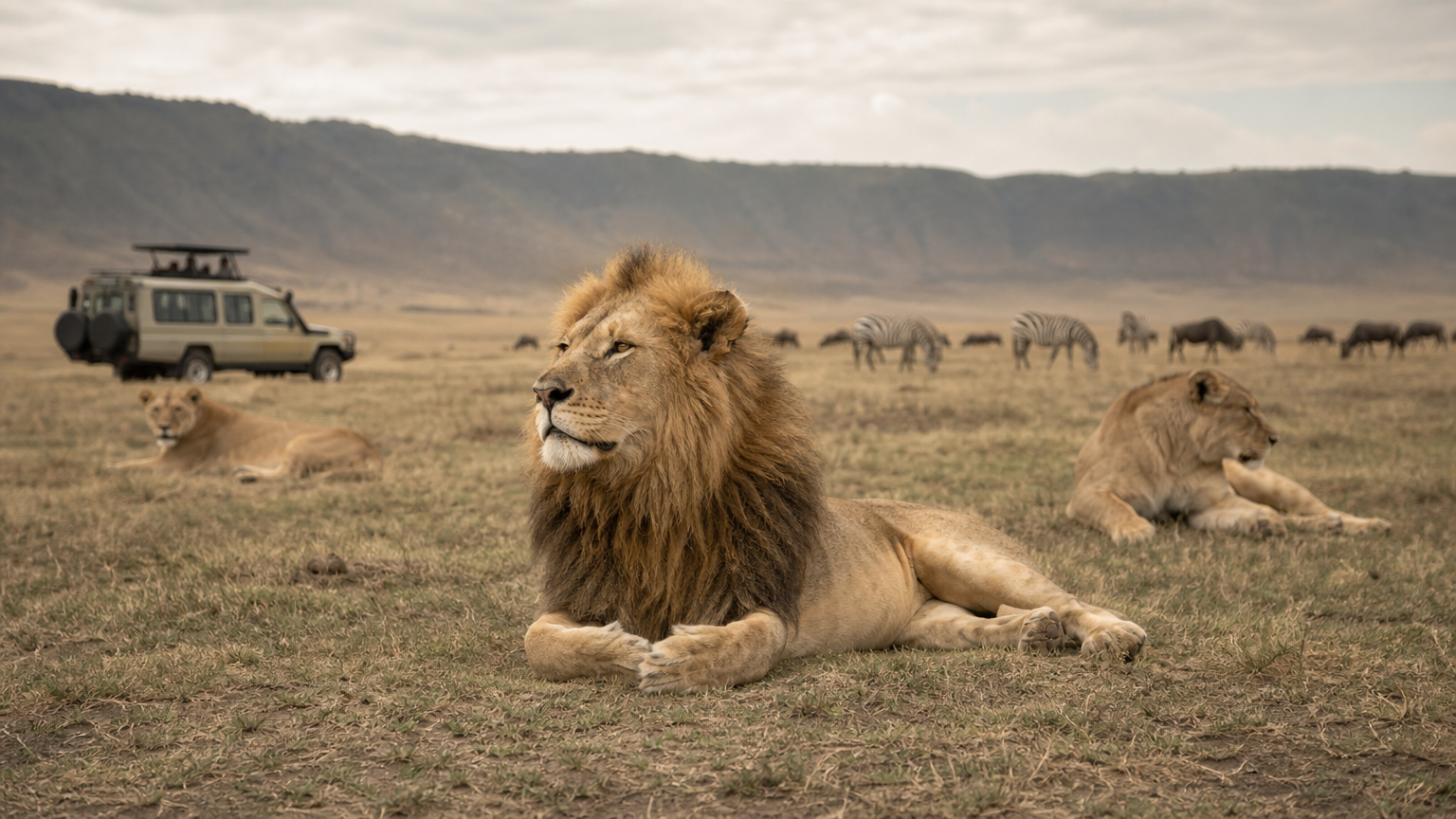
A single morning inside Ngorongoro Crater can show you more predator activity than three days in most other parks.
One of the last strongholds for black rhino
Only a handful of East African parks still give you a realistic shot at spotting a wild black rhino, and Ngorongoro is one of them. Numbers are small, around 30 individuals move through the crater floor, but sightings happen with real regularity because the open grassland offers the rhino almost nowhere to hide. Pair that with resident lion, elephant, and buffalo populations, plus the occasional leopard along the forested crater walls, and you have a genuine shot at all of the Big Five in a single game drive, something very few parks in Africa can promise with any consistency.
It works even when you’re short on time
Unlike the Serengeti, where you might drive for hours between sightings, Ngorongoro rewards travelers who only have a day or two to spare. Because the ecosystem is compact, a single descent covering roughly 100 miles of driving inside the caldera puts you within reach of most resident species by midday. Every day matters when you’re combining the crater with a Kilimanjaro climb or a Zanzibar beach extension, and Ngorongoro is one of the few big-name safari destinations that fits cleanly into a tight schedule without feeling rushed.
How it fits into a longer Tanzania safari
Most travelers don’t visit Ngorongoro alone. It sits along the natural route between Arusha and the Serengeti, so operators build it into a loop that also covers Tarangire National Park’s elephant herds and Lake Manyara. Here’s how the crater compares to those neighboring parks on a few things travelers ask about most:
| Park | Best for | Typical time needed | Migration-dependent? |
|---|---|---|---|
| Ngorongoro Crater | Big Five in one drive, black rhino | 1 day (half-day inside crater) | No |
| Serengeti | Predator action, wildebeest migration | 2-4 days | Yes, seasonal |
| Tarangire | Elephant herds, baobab scenery | 1-2 days | No |
| Lake Manyara | Tree-climbing lions, birdlife | Half day | No |
Getting the order right on your itinerary changes what you see and how far you drive each day, which is exactly why we build every route around the crater’s fixed descent schedule rather than treating it as an afterthought.
How to plan a Ngorongoro Crater tour
Planning a solid ngorongoro crater tour starts months before you land in Arusha, not the night before your safari, and our complete guide to a safari in Ngorongoro Crater covers the permits and logistics in detail. The crater has a fixed descent schedule, limited road access, and conservation fees that change based on how long you stay inside, so the sequence you book things in actually matters. Get the logistics right early and the rest of your Tanzania trip falls into place around it.
Start with the descent and access rules
Only two roads lead down into the crater, and vehicles are required to exit by 6pm regardless of when you entered. Rangers log every vehicle at the gate, so there’s no slipping in for a sunset drive or lingering past closing. Because of this, most operators plan for either an early 6am descent to beat the crowds and catch predators still active from the night, or a later mid-morning entry timed around breakfast at a rim lodge. Decide which rhythm suits you before you lock in accommodation, since some lodges sit closer to the descent road than others.
Figure out how many days you actually need
One descent, roughly four to six hours on the crater floor, is enough to see most resident wildlife, including a realistic shot at black rhino and full prides of lion. Build in a second day only if you’re chasing a specific sighting or traveling with photographers who want flexibility around light and weather. Here’s a quick planning checklist we walk clients through:
- Confirm arrival date and whether you’re combining the crater with Serengeti or Tarangire
- Choose a single descent (1 day) or two descents (2 days) based on your priorities
- Book crater-rim or Karatu-based lodging to match your descent time
- Reserve your 4×4 vehicle and driver-guide at least 60 days ahead in July, August, and December
- Confirm conservation area and crater fees are included in your written quote
Book your vehicle and guide before your lodge, since availability inside the crater’s descent schedule fills up faster than the rooms around it.
Match your route to the rest of your safari
Most travelers don’t fly in just for Ngorongoro. Sequence it correctly and you avoid backtracking across Tanzania’s northern circuit. A typical build looks like Arusha to Tarangire, then Ngorongoro, then on to the Serengeti, finishing back through Arusha for a flight out or a hop to Zanzibar. Requesting a full written itinerary from your operator, rather than a verbal outline, gives you something to check park fees, drive times, and lodge names against before you pay a deposit. We build every quote this way so nothing gets discovered for the first time on the ground.
Ngorongoro Crater tour options and itineraries
A ngorongoro crater tour isn’t one fixed product. It ranges from a single-day drop-in from Arusha to a two-week northern circuit safari that treats the crater as one stop among several. Choosing the right format depends on how much time you have, whether you want to camp or sleep in a lodge, and whether you’re traveling solo, as a couple, or in a small group sharing a vehicle.
The classic day trip from Arusha or Karatu
This is the fastest way to see the crater, and a luxury day trip into the Ngorongoro Conservation Area works well if you’re short on vacation days or bolting it onto a Kilimanjaro climb. You leave Arusha before dawn, reach the crater rim by mid-morning, spend four to six hours on the floor, then drive back out or continue toward the Serengeti. It’s efficient, but it means a long day in the vehicle, so we usually recommend it only when a multi-day trip genuinely doesn’t fit your schedule.
Multi-day safaris that pair the crater with Serengeti and Tarangire
Most travelers get more value from a multi-day loop like our 4-day Tarangire, Serengeti and Ngorongoro safari, which combines Ngorongoro with Tarangire’s elephant herds and the Serengeti’s open plains. Spreading the trip out means you’re not rushing the descent, and you get a real shot at the wildebeest migration if your timing lines up with the Serengeti leg. This is the format we build most often for first-time visitors because it covers the northern circuit’s highlights without excessive backtracking.
The crater works as a standalone day trip, but it earns its reputation as part of a longer northern circuit loop.
Private versus group departures
Group safaris cost less per person because you’re splitting vehicle and guide fees with strangers, but you lose control over pace, photo stops, and departure times. Private 4×4 vehicles on a tailor-made safari cost more but let you linger at a rhino sighting or skip a break you don’t need, which matters more than most first-timers expect once they’re actually on the crater floor.
| Tour format | Duration | Best for | Trade-off |
|---|---|---|---|
| Day trip from Arusha | 1 day | Tight schedules, add-on to Kilimanjaro | Long drive, no overnight near the crater |
| Ngorongoro + Serengeti loop | 4-7 days | First-time visitors wanting the northern circuit | Higher cost, more planning |
| Ngorongoro + Tarangire + Manyara | 3-5 days | Travelers who want variety without Serengeti distances | Skips the migration if it’s Serengeti-season |
| Group departure | Varies | Budget-conscious solo travelers | Fixed schedule, shared vehicle |
| Private departure | Varies | Couples, families, photographers | Higher per-person cost |
Camping versus lodge-based itineraries
Budget itineraries often use public campsites on the crater rim, which put you closer to the descent road but mean basic facilities and cold nights at altitude. Lodge-based itineraries cost more but give you hot showers, proper beds, and views straight into the caldera from your room. Neither option is wrong, it comes down to whether you’re building a rugged trip or a comfort-first one, and your operator should be upfront about which category each quoted itinerary falls into before you commit.
What a Ngorongoro Crater tour costs
Pricing for a ngorongoro crater tour depends on three things: park and conservation fees, the type of vehicle and guide you book, and where you sleep. Fees are set by the Ngorongoro Conservation Area Authority and don’t change based on which operator you book with, but everything else, vehicle quality, lodge category, group size, swings the final number by hundreds of dollars per person. Understanding the fee structure first helps you spot a fair quote from an inflated one.
Government fees you’ll pay no matter who you book with
Every visitor pays a conservation area entry fee plus a separate crater service fee if you actually descend to the floor, and vehicles pay their own charge on top. These fees are non-negotiable and get folded into your operator’s quote, so ask for them itemized rather than bundled into a vague "park costs" line.
| Fee type | Approximate cost (per person/vehicle) |
|---|---|
| Conservation area entry (24 hrs) | $60-70 |
| Crater service fee (per descent) | $295 |
| Vehicle fee (crater access) | $50-90 |
| Guide/ranger fee (if required) | Often included in tour price |
If your quote doesn’t separate government fees from operator services, ask for a breakdown before you pay a deposit.
What a full quote should include
A transparent operator lists park fees, vehicle and fuel costs, guide fees, and accommodation as separate lines, not a single lump sum. Written itineraries protect you here, since a verbal quote makes it easy to miss whether the crater service fee is even included. We build every proposal this way so clients see exactly what they’re paying for before arrival, and you can request the same from any operator you’re comparing.
Typical price ranges by trip style
Costs vary widely depending on comfort level and trip length, and a single crater day trip prices very differently from a week-long northern circuit loop.
- Budget camping safari (shared group vehicle, public campsites): roughly $180-250 per person per day
- Mid-range lodge safari (private vehicle, 3-star lodges near the rim): roughly $350-500 per person per day
- Luxury safari (private vehicle, premium crater-rim lodges): $600 and up per person per day
Generally, a single-day Ngorongoro drop-in from Arusha runs cheaper per day than a multi-day loop, simply because you’re not paying for extra lodging nights. Meanwhile, a 5 to 7 day Ngorongoro plus Serengeti itinerary averages out lower per day than two separate short trips, since fixed costs like vehicle mobilization spread across more days, as our breakdown of Serengeti safari package pricing shows.
Note that prices shift with season too, since lodges near the crater rim raise rates during peak months from June through September and again in December. Requesting a free trip quotation early lets you lock in accommodation before those peak-season prices climb, and gives you a real number to compare against other operators’ proposals.
Best time to go on a Ngorongoro Crater tour
Unlike the Serengeti, where timing your visit around the wildebeest migration can make or break your trip, a ngorongoro crater tour delivers strong wildlife viewing all year. The crater’s resident herds and predators don’t migrate out, so you’re not gambling on catching animals passing through during a narrow window. That said, weather, road conditions, and crowd levels shift by season, and those factors do change what your actual day inside the caldera feels like.
Dry season gives you the clearest views
June through October is Tanzania’s long dry season, and it’s the most popular stretch for good reason. Grass on the crater floor stays short, which makes spotting lion, rhino, and elephant against open ground far easier than during the wetter months. Roads inside the crater also stay firm and dust-free enough for smooth game drives, and skies typically stay clear for photography from sunrise through your exit at 6pm.
Dry season won’t bring you more animals, it just makes the ones already there easier to see and photograph.
Wet season has its own advantages
November through May brings short and long rains, with December through February offering a genuine sweet spot: green scenery, fewer tour vehicles, and newborn wildebeest and zebra calves scattered across the crater floor. March through May is the heaviest rain period, and while the crater rarely closes, road conditions can slow your descent and muddy stretches near the crater floor’s swampy zones. Birdlife peaks during these wetter months too, with migratory species arriving alongside the resident population.
A quick seasonal comparison
| Season | Months | Wildlife viewing | Crowds | Road conditions |
|---|---|---|---|---|
| Long dry season | June-October | Excellent, easy spotting | Highest | Firm, dust can be an issue |
| Short dry/green season | December-February | Very good, calving activity | Moderate | Generally good |
| Long rains | March-May | Good, lush and quiet | Lowest | Muddy in spots |
| Short rains | November | Good, transitional | Low-moderate | Mostly firm |
Matching season to the rest of your trip
If you’re pairing your crater visit with a Serengeti leg timed for the wildebeest migration, let the Serengeti’s month-by-month calendar drive your dates and treat Ngorongoro as reliable no matter when you arrive. Travelers combining the crater with the best season for a Kilimanjaro climb often prefer the dry season anyway, since clear trail conditions on the mountain overlap with the crater’s best driving months. Zanzibar-bound travelers extending into a beach holiday should note that Zanzibar’s own rainy season, April through May, overlaps with the crater’s muddiest stretch, so booking outside that window keeps both legs of the trip comfortable rather than compromising one for the other.
Wildlife you can expect to see
A ngorongoro crater tour puts you in front of species most safaris only promise, not guarantee. Because the crater floor holds water and grazing land year-round, resident populations don’t scatter the way migratory herds do elsewhere in Tanzania. Your guide already knows which pride is denning near the Lerai forest or which swamp the elephants favor that week, so sightings tend to happen faster here than in bigger, more spread-out parks.
The Big Five, realistically
Black rhino remains the hardest of the five to guarantee, but Ngorongoro gives you better odds than almost anywhere else in East Africa. Lion, elephant, and buffalo show up on the vast majority of drives, often within the first hour. Leopard stays the wildcard, since it favors the forested crater walls rather than open grassland, so most sightings happen along the entry road at dawn rather than on the crater floor itself.
Ngorongoro is one of the only places in Africa where seeing all five isn’t a matter of luck so much as timing your drive right.
Grazers and herds that fill the floor
Wildebeest, zebra, buffalo, and Grant’s and Thomson’s gazelle graze the open grassland in numbers dense enough that early explorers described the crater as a natural zoo. Warthog and hyena move through the same herds, and spotted hyena clans here are some of the most studied in the world thanks to decades of research inside the caldera. Hippo pods cluster in the Ngoitokitok springs area, giving you a reliable stop partway through a longer descent.
A quick reference for what to expect
| Species | Sighting likelihood | Best spot inside crater |
|---|---|---|
| Lion | Very high | Open grassland, near Lerai forest |
| Elephant | High | Swampy areas, forest edges |
| Buffalo | Very high | Grassland herds |
| Black rhino | Moderate | Open central floor |
| Leopard | Low | Forested crater walls |
| Hyena | Very high | Near dens, grassland |
| Hippo | High | Ngoitokitok springs |
| Flamingo | Seasonal, high in wet months | Lake Magadi |
Birdlife most travelers overlook
Outside the mammal count, Ngorongoro rewards anyone who packs binoculars for birds too. Lake Magadi, the soda lake on the crater floor, draws thousands of flamingos during wetter months, along with pelicans, storks, and a long list of raptors that circle above the herds looking for an easy meal. Serious birders often extend their descent time specifically to work the lake edge, since the species count here rivals dedicated birding reserves elsewhere in Tanzania.
Secretary birds and crowned cranes turn up regularly on the grassland too, often close enough for a clear photo without a long lens. Combined with the mammal density, this makes a single crater descent one of the more complete wildlife experiences you can pack into one morning anywhere on the continent.
Where to stay near Ngorongoro Crater
Where you sleep changes how your descent morning goes, since some properties sit right on the crater rim while others cluster in the town of Karatu, twenty minutes further out. A ngorongoro crater tour works with either option, but rim lodges save you drive time before that 6am gate rush, and Karatu properties save you money without costing much sightseeing time.
Crater rim lodges for the view and the shortcut
Staying at a luxury lodge perched on the crater rim means you wake up looking straight down into the caldera, and your driver can have you at the descent road in minutes rather than an hour. Rim lodges range from mid-range tented camps to five-star safari lodges across Tanzania with glass walls facing the crater floor, and altitude here sits above 7,000 feet, so nights get genuinely cold no matter the season. Book a room with a crater view specifically, since not every rim property actually faces the caldera despite the marketing photos.
Sleeping on the rim buys you an extra hour of game viewing that a Karatu-based itinerary simply can’t match.
Karatu and the Ngorongoro Highlands for better rates
Karatu, sometimes called Tanzania’s "safari junction," sits along the main road between Lake Manyara National Park and the crater and offers noticeably lower rates than rim properties without adding much to your morning drive. Coffee lodges scattered through the surrounding farmland, such as Karatu Villas Lodge, give you a quieter, greener setting than the busier rim area, and several properties here run their own coffee tours as an add-on for the afternoon after your descent. Choosing Karatu makes the most sense if you’re traveling on a mid-range budget or staying multiple nights before continuing to the Serengeti.
Public and special campsites on the crater floor’s edge
Budget travelers and those building a rugged, camping-based itinerary can book public campsites near the rim, which put you close to the descent gate but come with shared facilities and no heating against the cold nights. Special campsites cost more but reserve the ground exclusively for your group, giving you a bit more privacy without upgrading all the way to a lodge.
Comparing your options at a glance
| Location | Price level | Distance to descent gate | Best for |
|---|---|---|---|
| Crater rim lodges | High to luxury | Minutes | Early descents, photographers |
| Karatu / Highlands lodges | Mid-range | 30-45 minutes | Budget-conscious travelers, longer stays |
| Public campsites | Budget | Minutes to 30 minutes | Camping-based safaris |
| Special campsites | Mid-range | Minutes to 30 minutes | Groups wanting privacy on a budget |
Ultimately, the right choice depends on whether you’re prioritizing that extra hour of sleep before descent or stretching your budget across a longer trip, and a good operator will lay out both options honestly rather than steering you toward whichever property pays the highest commission.
How to choose a Ngorongoro Crater tour operator
Picking the right operator matters more for a ngorongoro crater tour than for almost any other leg of a Tanzania safari, since the descent schedule, vehicle quality, and guide experience directly shape what you actually see inside that one crowded window before the 6pm gate closes. A cheap quote that skips the crater service fee or hands you a shared vehicle with six other strangers isn’t actually cheaper once you factor in what you miss. Vetting Tanzania safari tour operators properly takes twenty minutes of research and saves you from discovering problems on the crater floor itself.
Licensing and local presence
Start by confirming the company holds a valid Tanzania Tourist Board license and operates locally rather than reselling another ground operator’s trips from an office overseas. A locally based company answers questions about crater descent timing, road conditions, and lodge changes with firsthand knowledge, not a script. Ask directly whether the guide leading your drive works for the company full-time or gets subcontracted for the day, since permanent staff tend to know the crater’s current wildlife patterns far better than a driver picked up last minute.
Reviews that mention specifics, not just stars
Generic five-star reviews tell you little, but reviews naming a specific guide, a specific vehicle breakdown that got handled well, or a specific rhino sighting tell you the company delivers on the ground. Check Tripadvisor and SafariBookings for patterns across dozens of reviews rather than trusting two or three testimonials pulled onto a homepage. The most trusted safari companies in Tanzania tend to have 100+ detailed reviews mentioning guides by name, a track record you can actually verify.
A review that names your guide by name tells you more than fifty reviews that just say "amazing trip."
Comparing written quotes line by line
Once you’ve shortlisted two or three companies, request a written itinerary from each and compare them side by side rather than judging on price alone. Look for these specifics before you commit:
- Crater service fee and conservation area fee listed separately, not bundled
- Vehicle type specified (private 4×4 versus shared group vehicle)
- Named lodges or camps, not just "similar standard" placeholders
- Guide-to-guest ratio and whether the same guide stays with you the full trip
- Cancellation and payment terms spelled out clearly
Quotes missing two or more of these usually hide costs that surface later, either as an add-on fee at the gate or a downgrade at check-in.
Ask about safety and contingency planning
Finally, ask how the operator handles a vehicle breakdown on the crater floor or a medical issue mid-descent, since a serious company has a backup vehicle and radio contact with rangers, not just a phone number that goes unanswered. If you’re pairing your crater visit with a Kilimanjaro climb, the same standard applies twice over given the added altitude risk, so ask pointed questions before you pay any deposit.
Final thoughts before you go
A ngorongoro crater tour rewards travelers who plan ahead rather than winging it. You now know the descent rules, the fee structure, the seasonal trade-offs, and what actually separates a solid operator from one cutting corners on the crater floor. None of that requires guesswork anymore, just a decision on when you’re going and who’s driving you there.
Getting the details right before you land in Arusha means you spend your one shot at the crater watching lions and rhino instead of untangling a vague quote or a shared vehicle that isn’t what you booked. That’s the whole point of planning this leg carefully: fewer surprises, more time actually inside the caldera.
If you’re ready to put dates on the calendar, browse our best Ngorongoro Crater safari tours and we’ll build a written itinerary around your timeline, budget, and the rest of your Tanzania route.
