

Picking one country for your African safari feels like settling for less when the Serengeti and the Masai Mara sit just across a shared border. The wildebeest migration crosses that line twice a year, so if you’re weighing tanzania and kenya safari packages, you’re already thinking like a seasoned traveler rather than someone chasing a single-park checklist. The catch is figuring out which itinerary actually delivers, since prices, routes, and included parks vary wildly between operators.
This guide answers that directly. We break down combined Kenya-Tanzania itineraries that make logistical sense, covering border crossings, flight connections, and the best months to catch migration action in each park, so you’re not stuck with a rushed trip or wasted travel days.
Below you’ll find 9 packages ranging from classic Big Five circuits to trips that add Zanzibar beach time after days in the bush. Each one includes realistic pricing, standout camps, and who the trip suits best, whether you’re a first-time visitor, a honeymooning couple, or a family wanting flexible, tailor-made routing across both countries.
1. Golden Trips Tanzania tailor-made Kenya and Tanzania safari
Golden Trips Tanzania builds every Kenya and Tanzania safari from scratch, which matters when you’re combining two countries with different park fees, entry points, and driving distances. Rather than slotting you into a fixed departure date, the team asks about your budget, travel dates, and priorities first, then designs a route around them. This is the approach we’d recommend if you want kenya and tanzania safari packages that actually fit your trip instead of the other way around.
Route and duration
A typical custom route starts in Arusha or Nairobi and links Tarangire, the Ngorongoro Crater, and the Serengeti with Kenya’s Masai Mara, using the Namanga or Sirari border crossing depending on which direction you’re traveling. Most travelers spend 10 to 14 days on the ground, though Golden Trips Tanzania has built shorter 7-day versions and longer 18-day trips that add Lake Manyara or Amboseli. Because the flexible routing is built around you, you can also fold in a Zanzibar extension or a Kilimanjaro climb without starting the planning process over.
What’s included
Every quote from Golden Trips Tanzania spells out exactly what you’re paying for, which cuts down on the surprise add-on fees common with larger booking platforms. Standard inclusions are:
- Private 4×4 safari vehicle with pop-up roof and a dedicated driver-guide for the full trip
- Park entry fees and conservancy fees for both Tanzania and Kenya sections
- Accommodation ranging from tented camps to lodges, chosen based on your budget
- All meals during the safari portion, plus bottled water in the vehicle
- Airport transfers and border-crossing logistics handled by the local team
A custom itinerary only earns its price if every dollar you spend maps to a park, a camp, or a service you actually asked for.
Best for
This option suits travelers who’ve already ruled out cookie-cutter group tours and want a guide who knows both sides of the border personally. It works well for honeymooners wanting privacy, families needing kid-friendly pacing, and repeat visitors chasing a specific migration window. If you want tailor-made safari planning backed by direct WhatsApp access to your operator rather than a call center, this is the fit.
Price range
Expect to pay roughly $350 to $700 per person per day depending on the season and lodge category, with most 10 to 12-day combined trips landing between $3,800 and $8,500 per person. Get a free custom quote from Golden Trips Tanzania to see exact pricing for your dates, group size, and preferred camps before committing to anything.
2. Classic 10-day Kenya and Tanzania highlights safari
This is the itinerary most first-time visitors picture when they search for kenya tanzania safari packages: a fixed-departure trip that hits the biggest names in both countries without the customization (or the higher price tag) of a fully private build. Group sizes usually run 4 to 8 travelers sharing a safari vehicle, which keeps costs down but means less flexibility on daily schedules.
Route and duration
Standard routing starts in Nairobi, spends 2 to 3 nights in the Masai Mara, then crosses into Tanzania at the Namanga border to cover Lake Manyara, the Ngorongoro Crater, and the Serengeti before flying out of Kilimanjaro International Airport. Ten days gives you roughly 2 full days in each major park, a pace our 10-day East Africa safari itinerary breaks down day by day, which is tight but workable if you’re not chasing a specific migration crossing.
What’s included
Most operators bundle these fixed departures with a consistent set of inclusions:
- Shared 4×4 safari vehicle with a guide for the group
- Park fees for both countries’ major reserves
- Mid-range lodge or permanent tented camp accommodation
- Full board meals during the safari days
- One internal flight (usually Serengeti to Kilimanjaro or Arusha)
A fixed 10-day route trades some flexibility for a lower per-person cost, which works fine if your dates aren’t tied to a specific migration event.
Best for
Budget-conscious couples, solo travelers, and first-timers who want a proven route rather than a blank slate suit this style best. It’s also a reasonable choice if you’re comfortable sharing a vehicle with strangers to keep the daily rate lower.
Price range
Expect $2,400 to $3,800 per person for the full 10 days, land only, depending on season and lodge tier. Peak months (July through September) push toward the top of that range.
3. Luxury Kenya and Tanzania safari
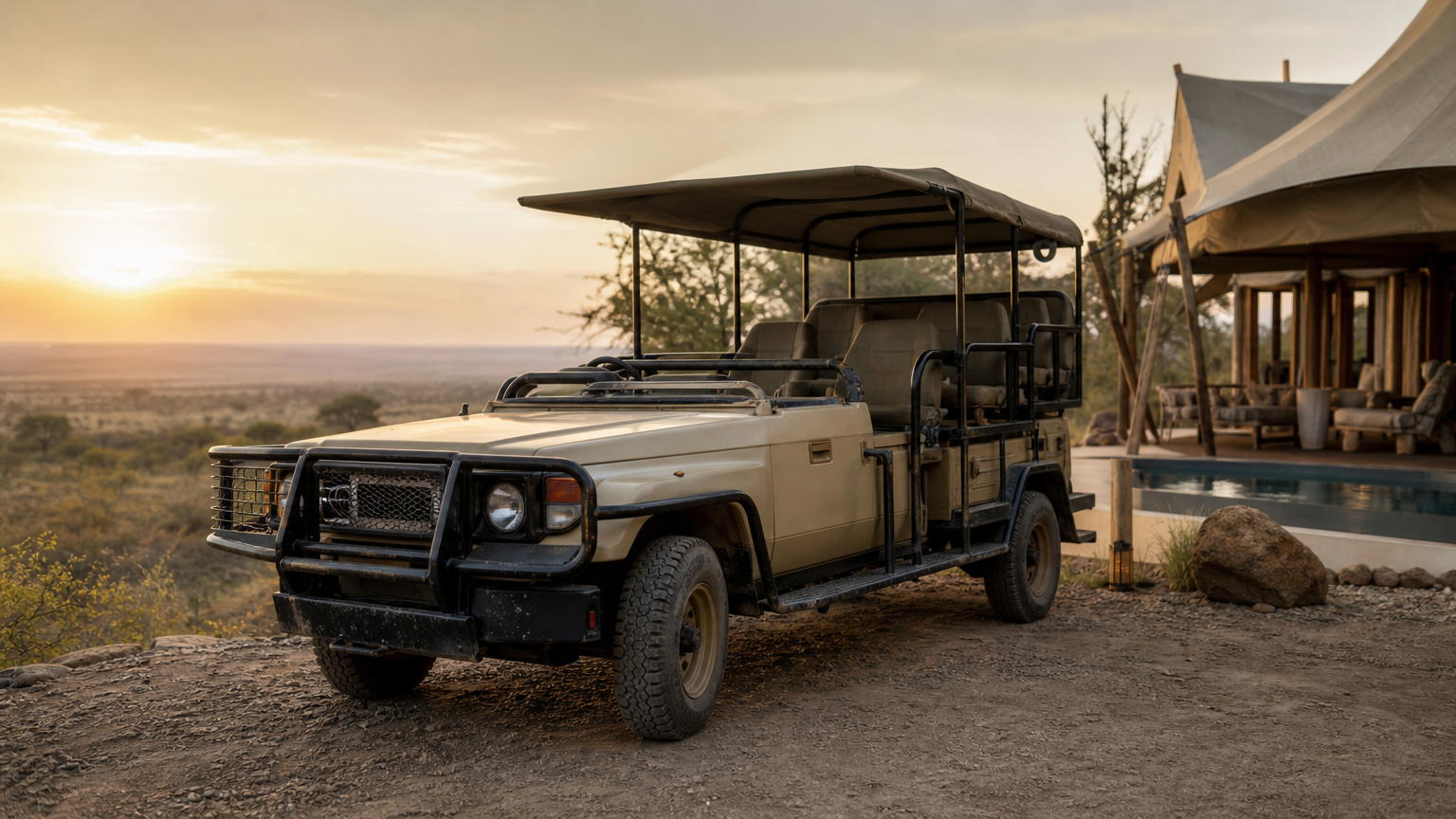
Some travelers want the same parks everyone else visits, just without the crowded lodges and shared vehicles, which is where five-star lodges and private game drives come in. A luxury safari across both countries swaps mid-range camps for exclusive-use properties, private guides, and small-plane transfers between parks, which cuts driving time dramatically and adds a level of comfort that changes how the whole trip feels.
Route and duration
A typical high-end route runs 10 to 12 days, linking Kenya’s Masai Mara with Tanzania’s Serengeti, Ngorongoro Crater, and often a private conservancy like Naboisho or Olare Motorogi before crossing south. Instead of a long drive at the border, many luxury operators fly clients between regions, which saves a full day of travel and keeps the pace relaxed rather than rushed.
What’s included
Expect a noticeably different inclusion list than a standard group trip:
- Private guide and vehicle dedicated to your party only
- Light aircraft transfers between key parks instead of long road transits
- Luxury tented camps or lodges, often with plunge pools or private decks
- All meals, premium drinks, and laundry service included
- Optional extras like hot air balloon safaris or bush dinners
Luxury on safari isn’t about thread count. It’s about fewer vehicles, shorter drives, and guides who aren’t managing six other guests at once.
Best for
This tier suits honeymooners looking at romantic safari itineraries for couples, milestone anniversaries, and travelers who’ve already done a budget safari and want to see the same wildlife without compromising on privacy or comfort. It’s also a strong fit for anyone with limited vacation days who’d rather fly between parks than drive.
Price range
Budget $900 to $1,800 per person per day, with a 10-day trip typically landing between $9,000 and $18,000 per person, excluding international flights. Camps like Singita, andBeyond, and Angama properties sit at the top of that range, particularly during peak migration months.
4. Budget-friendly camping safari across Kenya and Tanzania
Not every traveler needs a lodge with a plunge pool to fall in love with the Serengeti, and affordable Big Five adventures prove it. Public campsites inside or bordering the major parks put you closer to the sounds of the bush, often for a third of what a lodge-based trip costs. Anyone searching for kenya tanzania safari packages on a tighter budget usually lands here first, and it’s a legitimate way to see the same parks without the luxury markup.
Route and duration
Most camping routes run 8 to 10 days, starting in Nairobi or Arusha and covering the Masai Mara, Lake Nakuru or Amboseli, then crossing into Tanzania for the Ngorongoro Crater and Serengeti. Drivers handle longer road transfers instead of flights, which keeps costs down but adds a few extra hours on travel days.
What’s included
Camping trips still cover the essentials, just without the frills:
- Shared 4×4 vehicle with driver-guide and camping equipment
- Public campsite fees and park entry for both countries
- Dome tents, sleeping mats, and a cook preparing group meals
- Basic shared toilet and shower blocks at most campsites
- Park fees for major reserves in the itinerary
Camping safaris strip away the extras, not the wildlife, so you’re paying less to see the exact same animals.
Best for
Backpackers, students, and anyone who’s genuinely comfortable roughing it for the sake of a lower daily rate fit this style well. It also suits travelers who’ve done a lodge safari before and want a rawer, more immersive version this time around.
Price range
Expect roughly $150 to $250 per person per day, putting a 9-day trip between $1,350 and $2,250 per person, land only. That’s often half the cost of the classic 10-day highlights route covered above.
5. Kenya and Tanzania safari with a Zanzibar beach extension
After a week of early wake-up calls and dusty vehicle tracks, most travelers want somewhere to unwind before flying home. Adding a few days on Zanzibar’s coast after your parks does exactly that, and it’s why kenya tanzania zanzibar safari packages rank among the most requested combinations we build. The contrast between crater rims and white sand beaches makes the whole trip feel like two vacations in one, the same logic behind our safari and Zanzibar beach packages.
Route and duration
A standard version runs 10 to 14 days total: 7 to 9 days covering the Masai Mara in Kenya and the Serengeti-Ngorongoro circuit in Tanzania, followed by a short flight from Arusha or Kilimanjaro to Zanzibar for the final 3 to 5 days. Crossing by road between countries still applies to the safari portion, but the beach leg is always a flight, since driving to Zanzibar isn’t an option.
What’s included
Expect the same safari inclusions as a standard combined trip, plus:
- Domestic flight from the northern circuit to Zanzibar
- Beachfront accommodation, often on a bed-and-breakfast basis
- Airport transfers on the island
- Optional add-ons like Stone Town tours or snorkeling trips
The best combined itineraries treat the beach days as a genuine second half of the trip, not an afterthought tacked onto the safari.
Best for
Honeymooners and couples get the most out of this pairing, though families with older kids and anyone who dislikes ending a trip on a long-haul flight straight from the bush also benefit. If you’re building a custom Zanzibar extension, talk to Golden Trips Tanzania about which beach resorts pair well with your safari dates.
Price range
Budget an extra $150 to $400 per person per night for Zanzibar, on top of your safari cost, depending on the resort tier and season.
6. Family-friendly Kenya and Tanzania safari
Traveling with kids changes the calculus on almost every itinerary decision, from how long you sit in a vehicle each day to which camps actually welcome children under 12, as our guide to a safari with kids in Tanzania explains. A family safari across both countries works best when the pace slows down and the lodges have space for kids to be kids between game drives, rather than cramming in back-to-back long transfers.
Route and duration
Good family routes run 9 to 12 days and lean toward fewer, longer stays instead of one-night stopovers. A typical version covers the Masai Mara for 3 nights, crosses into Tanzania, then settles into Tarangire and the Ngorongoro Crater before finishing in the Serengeti, keeping road transfers under three hours wherever possible so nobody spends a whole day strapped into a seat.
What’s included
Family-oriented packages usually add a few things you won’t see on a standard adult trip:
- Family-friendly lodges or camps with interconnecting rooms or family tents
- A private vehicle instead of a shared one, so nap schedules don’t dictate the group’s day
- Shorter game drives with flexible timing built around kids’ energy levels
- Kid-focused activities at some lodges, like junior ranger programs or bead-making with local Maasai women
A safari built for families succeeds when the itinerary bends around nap times, not the other way around.
Best for
This style suits parents traveling with children roughly 6 to 15 years old, plus multi-generational groups bringing grandparents along. Golden Trips Tanzania regularly builds these routes with age minimums for each park in mind, since some conservancies restrict young children.
Price range
Expect $400 to $700 per person per day for a private family setup, with most 10-day trips landing between $4,000 and $7,000 per adult and reduced rates for children sharing a room with parents.
7. Short 7-day Kenya and Tanzania big five safari
Limited vacation time doesn’t have to mean skipping one country entirely. A tightly planned 7-day run through both parks proves you can still see lion, leopard, elephant, buffalo, and rhino without carving two weeks out of your calendar, much like our other 7 day African safari tours. Travelers searching for kenya tanzania safari packages that fit a standard workweek off tend to end up here, and it works precisely because the route cuts fluff rather than wildlife time.
Route and duration
Seven days usually means 2 nights in the Masai Mara, a border crossing at Namanga, then 2 nights each in the Ngorongoro Crater area and the Serengeti before flying out of Kilimanjaro or Arusha. Flying between the Mara and the northern Tanzania circuit instead of driving the full distance is what makes this pace survivable, since it reclaims the better part of a day that would otherwise go to road transfers.
What’s included
A lean 7-day package still covers the basics:
- Private or small-group 4×4 vehicle with driver-guide
- One short domestic flight connecting the Mara to northern Tanzania
- Park and conservancy fees for both countries
- Lodge or tented camp accommodation, full board
- Border crossing paperwork and transfer logistics handled for you
A short safari only works when the itinerary is built around flying past the slow parts, not skipping the good ones.
Best for
This trip suits professionals with limited leave, travelers bolting a safari onto a longer Europe or Middle East trip, and repeat visitors who’ve already done a longer circuit and just want a quick Big Five refresher. It’s a poor fit if you’re hoping to catch a specific river crossing during the migration, since that needs more built-in flexibility.
Price range
Expect $2,800 to $4,500 per person for the full 7 days, land only, with the internal flight pushing costs above the classic 10-day route on a per-day basis.
8. Great migration safari across Kenya and Tanzania
Timing a trip around the wildebeest migration means chasing a moving target, since the herds don’t respect the border between the Serengeti and the Masai Mara. Building an itinerary flexible enough to follow the river crossings is what separates a lucky sighting from a wasted week staring at empty plains. Anyone comparing best kenya and tanzania safari packages for migration season should prioritize routing over price, because the wrong month in the wrong park means no crossing at all.
Route and duration
Most migration-focused trips run 10 to 12 days, timed to either the Grumeti River crossings in the southern Serengeti (May to June) or the Mara River crossings further north (July to September), so check the Great Migration timing in Tanzania before you fix dates. The route usually starts in the Serengeti, tracks the herds north as the dry season progresses, crosses at Namanga or Sirari, then finishes with a few days in the Masai Mara once the migration has fully shifted into Kenya.
What’s included
A migration itinerary typically bundles:
- Flexible daily routing that adjusts to recent herd movements and ranger reports
- Private vehicle and guide, since group trips can’t easily change plans on short notice
- Park and conservancy fees across both countries
- Camps positioned near known crossing points rather than fixed lodge locations
Chasing the migration only works if your operator can change tomorrow’s plan based on today’s river crossing.
Best for
Serious wildlife photographers, repeat safari-goers, and anyone whose main trip goal is witnessing a river crossing rather than checking off parks fit this style best.
Price range
Budget $500 to $1,200 per person per day, with a 10-day migration-timed trip landing between $5,500 and $12,000 per person during peak crossing months.
9. Kenya and Tanzania safari combined with a Kilimanjaro trek
Some travelers want more than wildlife on their itinerary, and standing on the roof of Africa delivers a different kind of bragging rights entirely. Pairing a Kilimanjaro climb with a combined safari means tackling the mountain first, while your legs are fresh, then rewarding yourself with days in a vehicle instead of on a trail. This combination shows up often in searches for kenya & tanzania safari packages from travelers who want one trip to cover both a physical challenge and classic game viewing.
Route and duration
Expect 6 to 8 days on Kilimanjaro using a route like Machame or Lemosho on one of our guided Kilimanjaro treks, followed by 7 to 10 days covering Tarangire, the Ngorongoro Crater, and the Serengeti before crossing into Kenya for the Masai Mara. The full trip usually runs 15 to 20 days total, so this isn’t a package for travelers short on vacation time.
What’s included
A combined climb-and-safari itinerary typically bundles:
- Mountain crew including guides, porters, and a cook, plus park and camping fees on Kilimanjaro
- Pre-climb medical screening and emergency oxygen equipment
- Private safari vehicle and driver-guide for the wildlife portion
- Lodge or tented camp accommodation after the descent
Climbing first and safariing second gives your body time to recover in a vehicle seat instead of a tent.
Best for
This trip suits fit, adventurous travelers who’ve trained for altitude and want the summit photo alongside their lion sightings. Golden Trips Tanzania builds these combinations with rest days factored in before the safari starts.
Price range
Budget $3,500 to $6,500 for the climb alone, plus $2,500 to $6,000 for the safari portion depending on lodge tier and duration.
10. How much does a Kenya and Tanzania safari cost
Price is the first question every traveler asks, and the honest answer is that kenya and tanzania safari packages span a huge range depending on how you travel between parks and where you sleep at night. Camping trips start around $150 per person per day, while private-plane luxury circuits can run past $1,800 per day, so knowing which tier fits your budget before you start browsing itineraries saves you from comparing apples to oranges.
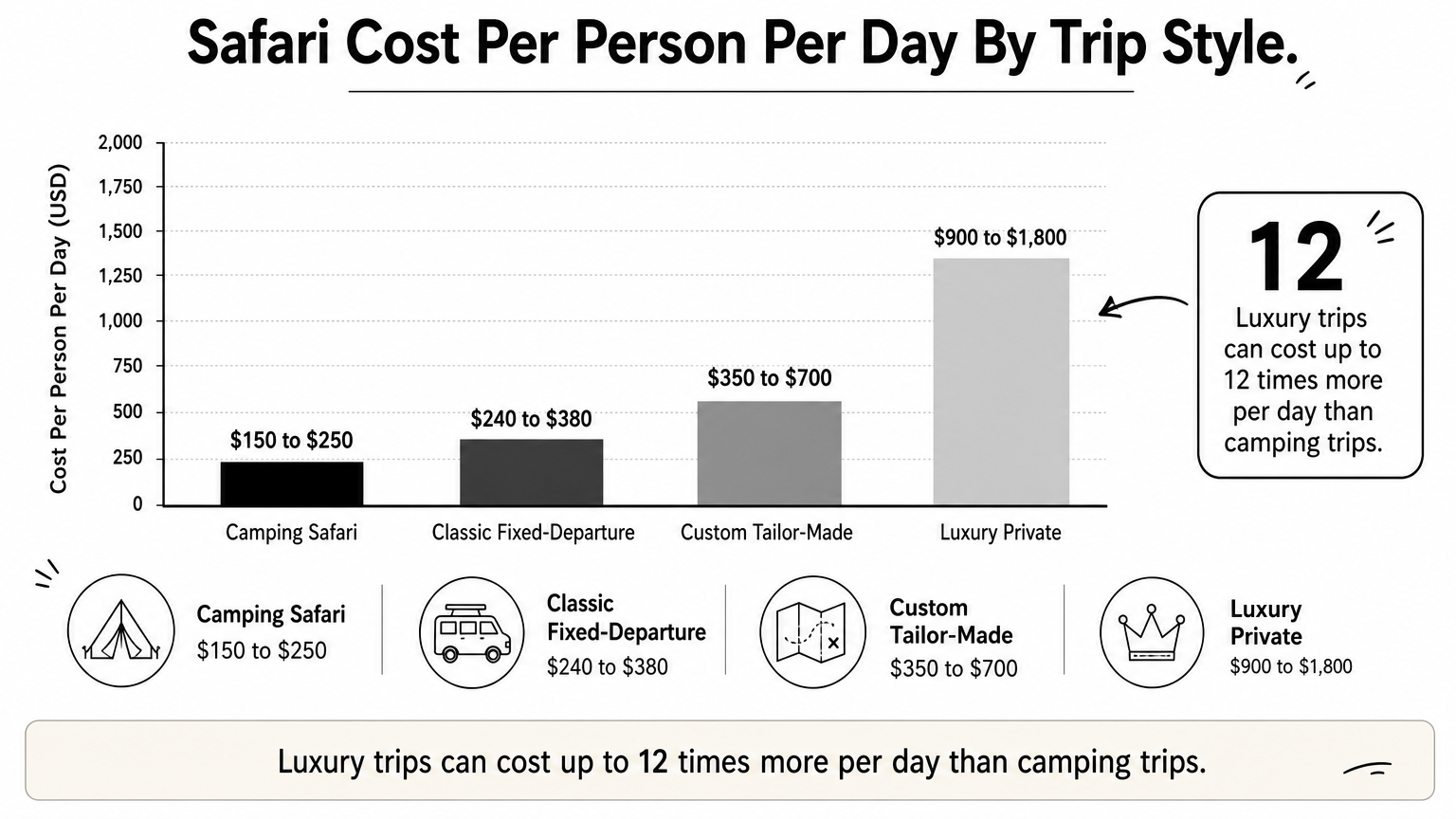
Several factors push a quote up or down more than travelers expect, and an honest Kenya vs Tanzania safari comparison shows where each country lands on cost. Domestic flights between the Masai Mara and northern Tanzania add real cost but save a full day of driving. Private vehicles cost more than shared ones but let you skip the compromise of a stranger’s schedule. Peak season (July through September, plus the December holidays) carries a premium at nearly every camp, while the shoulder months of April, May, and November often drop rates by 20 to 30 percent.
The biggest swing in your total cost usually comes down to one choice: fly between parks or drive between them.
Here’s a rough breakdown by trip style:
| Trip style | Cost per person per day | Typical 10-day total |
|---|---|---|
| Camping safari | $150 to $250 | $1,500 to $2,500 |
| Classic fixed-departure | $240 to $380 | $2,400 to $3,800 |
| Custom tailor-made | $350 to $700 | $3,500 to $7,000 |
| Luxury private | $900 to $1,800 | $9,000 to $18,000 |
These figures cover land costs only. International flights, visas for both countries, tips, and travel insurance sit outside these ranges, so factor in another $500 to $1,500 per person when building your full trip budget.
11. How many days you need for Kenya and Tanzania
Deciding how many days to book is really a question of how many parks you’re willing to skip. Squeezing both countries into a single trip means accepting some trade-offs, and the honest minimum for a satisfying combined safari is 7 days, with 10 to 12 days giving you a far more comfortable pace.
Seven days works if you accept one flight between the Masai Mara and northern Tanzania and keep your park list tight, usually just the Mara, Ngorongoro Crater, and Serengeti. Ten to twelve days lets you add Tarangire or Lake Manyara without feeling rushed, and it’s the range most tanzania kenya safari packages land in once you account for border logistics. Anything under 15 days that also includes a Zanzibar extension or a Kilimanjaro climb starts to feel compressed, since each of those additions realistically needs its own dedicated block of time, and how long it takes to climb Mount Kilimanjaro alone runs six to eight days.
More days rarely mean more driving. They usually mean fewer one-night stopovers and more time actually parked in front of wildlife.
Here’s a quick guide by goal:
| Trip goal | Recommended days |
|---|---|
| Big Five basics, both countries | 7 to 8 days |
| Comfortable pace, 4 to 5 parks | 10 to 12 days |
| Add Zanzibar beach time | 12 to 15 days |
| Add Kilimanjaro climb | 18 to 20 days |
Giving yourself an extra day or two beyond the bare minimum also acts as a buffer against flight delays or a border crossing that takes longer than planned, which happens more often than most first-time travelers expect. Golden Trips Tanzania can map exact day counts against your specific park list before you commit to dates.
12. Best time to visit Kenya and Tanzania on safari
Timing a trip across two countries means balancing two different climates, since the Mara and the Serengeti don’t always peak on the same calendar. Generally, the dry season from June through October covers the best months for a Tanzania safari and gives you the most reliable game viewing in both countries, as thinning vegetation and dwindling water sources push animals toward rivers and open plains where vehicles can actually see them. This stretch also lines up with the Mara River crossings, which is why most best kenya and tanzania safari packages built around the migration cluster into July, August, and September.
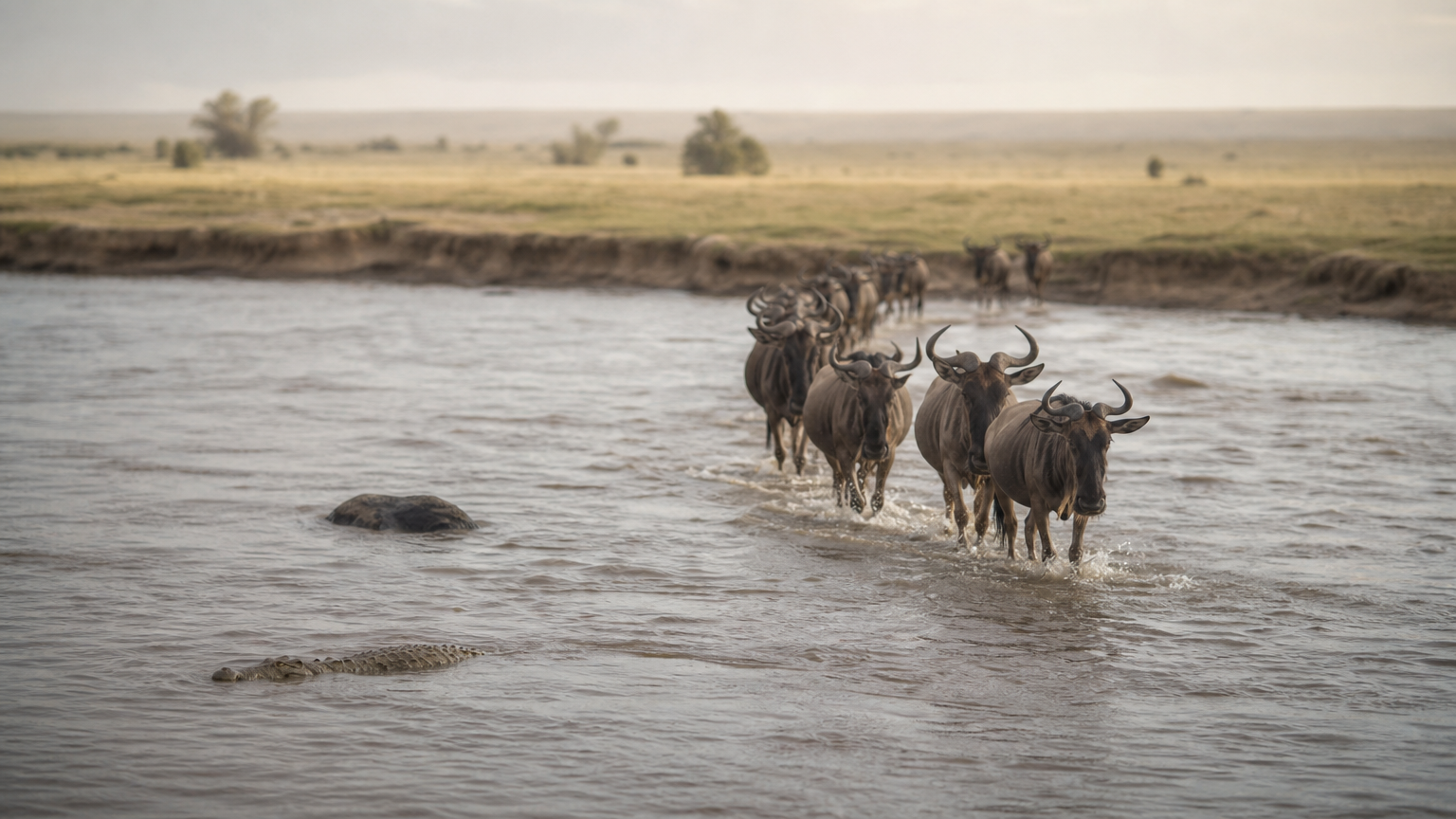
Outside that window, the calendar still offers strong options if you know what you’re chasing. January and February bring the calving season to the southern Serengeti, when thousands of wildebeest calves drop within a few weeks and predator action spikes accordingly. March through May is the long rains, quieter on tourist numbers and cheaper on rates, but muddy roads and overcast skies make photography tougher. November’s short rains green up the landscape fast and refill water holes, drawing scattered herds back south.
Chasing dry-season crowds isn’t the only strategy. Calving season in February often delivers more predator action per hour than peak migration month does.
| Season | Months | Highlight |
|---|---|---|
| Dry season | June to October | Mara crossings, easy game viewing |
| Calving season | January to February | Predator action, newborn wildebeest |
| Long rains | March to May | Lower rates, fewer crowds |
| Short rains | November | Green landscapes, returning herds |
Whichever window you pick, book camps near the crossing points at least six months ahead, since the best-positioned properties sell out well before peak months arrive.
13. Crossing the Kenya-Tanzania border on a combined safari
Border logistics trip up more first-time travelers than any wildlife question, mostly because nobody tells them the crossing itself eats a real chunk of the day. Namanga is the main crossing between Nairobi/the Masai Mara and Arusha, while Sirari and Isebania connect the Serengeti directly to the Mara for travelers skipping the capital altogether. Either way, kenya tanzania safari packages that route through these posts typically budget 1 to 3 hours for the actual crossing, on top of the driving time to reach it.
Paperwork matters more here than at a typical international airport, since you’re crossing by road with a vehicle change on the other side. Most trips swap vehicles and drivers at the border rather than driving one truck straight through, because Kenyan and Tanzanian safari operators are licensed separately.
A smooth border crossing depends less on luck and more on whether your operator prepped your paperwork the night before.
Bring these with you at minimum:
- A passport valid for at least six months beyond your travel dates
- A single-entry or East Africa multi-entry visa, depending on your route, and the full Tanzania safari visa rules for 2027 if you’re entering from the Kenyan side
- Proof of yellow fever vaccination if you’re arriving from a country where it’s required
- Cash in small denominations for any incidental fees
The East Africa multi-entry visa, covering Kenya, Tanzania, and Uganda for 90 days, saves money and hassle if you’re crossing more than once, and it’s worth applying for through the official Kenya eVisa portal before you fly. Golden Trips Tanzania handles the Tanzanian side of the paperwork and driver handoff directly, so you’re not standing at a border post sorting out logistics on your own vacation.
14. How to choose the right safari package for you
Narrowing nine options down to one, whether from this list or the wider set of best African safari tour packages, starts with being honest about what actually matters to you, not what looks impressive on a brochure. Your budget sets the ceiling, but your travel priorities decide everything else: whether you’re chasing a specific migration crossing, traveling with young kids, or trying to fit a trip into a single week off work. Someone hunting river crossings needs flexible routing more than luxury tents, while a family with toddlers needs shorter drives more than an extra park on the list.
The right package isn’t the most expensive one or the cheapest one. It’s the one built around the two or three things you actually care most about.
Run through these questions before you commit to any of the kenya and tanzania safari packages above:
- How many vacation days can you realistically commit, including travel to and from Africa?
- Is a specific wildlife event (calving, river crossings) worth building your dates around?
- Do you want a shared group vehicle or a private one, and how much is that difference worth to you?
- Are you ending the trip on a beach, a mountain summit, or straight home?
- Who’s traveling with you, and does the pace need to slow down for kids or older relatives?
Answering those five questions usually points you toward one or two package styles from this list, not all nine. If you’re still stuck between two options, or you want a route that borrows pieces from several packages here, that’s exactly the gap a fully custom itinerary fills, and it’s worth a conversation before you lock in a fixed departure that only half fits what you’re after.
Bringing your Kenya and Tanzania safari to life
Nine packages, one clear takeaway: the best trip is the one matched to your actual priorities, not the fanciest itinerary on paper. Whether you’re chasing a river crossing, traveling with kids, or trying to fit both countries into a single week off, the route matters more than the marketing. Combined Kenya-Tanzania safaris reward travelers who plan the border crossing, the season, and the pace deliberately instead of leaving it to a fixed departure that half fits.
Getting those details right, border logistics, migration timing, and realistic day counts, is exactly where a local operator earns its keep. You’ve seen the ranges and the trade-offs; now it’s a matter of turning them into actual dates and camps. If you want a route built around your budget and priorities rather than someone else’s fixed template, get a free custom quote from Tanzania’s local tour operators and start planning the trip you’ll actually take.