

A safari in Ngorongoro Crater puts you inside a collapsed volcano that packs more wildlife per square mile than almost anywhere else on earth. Lions doze on the crater floor, black rhinos graze in open grassland, and flamingos line the soda lake, all within a space you can cover in a single day. If you’re trying to figure out whether it’s worth the detour from the Serengeti, this guide answers that.
This is the practical breakdown you need before you book: what a typical ngorongoro crater safari tour actually involves, the best months to go, realistic costs per person, and how it pairs with a wider Serengeti itinerary. We’ve run this route hundreds of times with our guides, so we’re covering the details that matter, not just the highlights you already know from photos.
Below, you’ll find what to expect on the crater floor, how to time your visit around the wildebeest migration and dry season, what ngorongoro crater safari package typically include, and how pricing compares across budget levels. By the end, you’ll know exactly how to plan a trip that fits your time, budget, and the wildlife you’re hoping to see.
Why a Ngorongoro Crater safari is worth the trip
Standing on the crater rim, you look down at a caldera roughly 12 miles across and realize why guides call this Ngorongoro Crater destination Africa’s Garden of Eden. The wildlife density here is the highest of any protected area on the continent, packed into a self-contained ecosystem with permanent water, grassland, and a soda lake all inside walls that trap animals from migrating out. That concentration is exactly what makes a safari in Ngorongoro Crater different from anywhere else you’ll drive in Tanzania.
Wildlife density that rivals anywhere in Africa
This is one of the few places left where you can realistically spot black rhinos in the wild, alongside lions, elephants, buffalo, and leopards, giving you a genuine shot at the Big Five in one day. Add in hyena clans, jackals, hippos wallowing near Lake Magadi, and thousands of flamingos, and you get a game drive that rarely has a slow stretch.
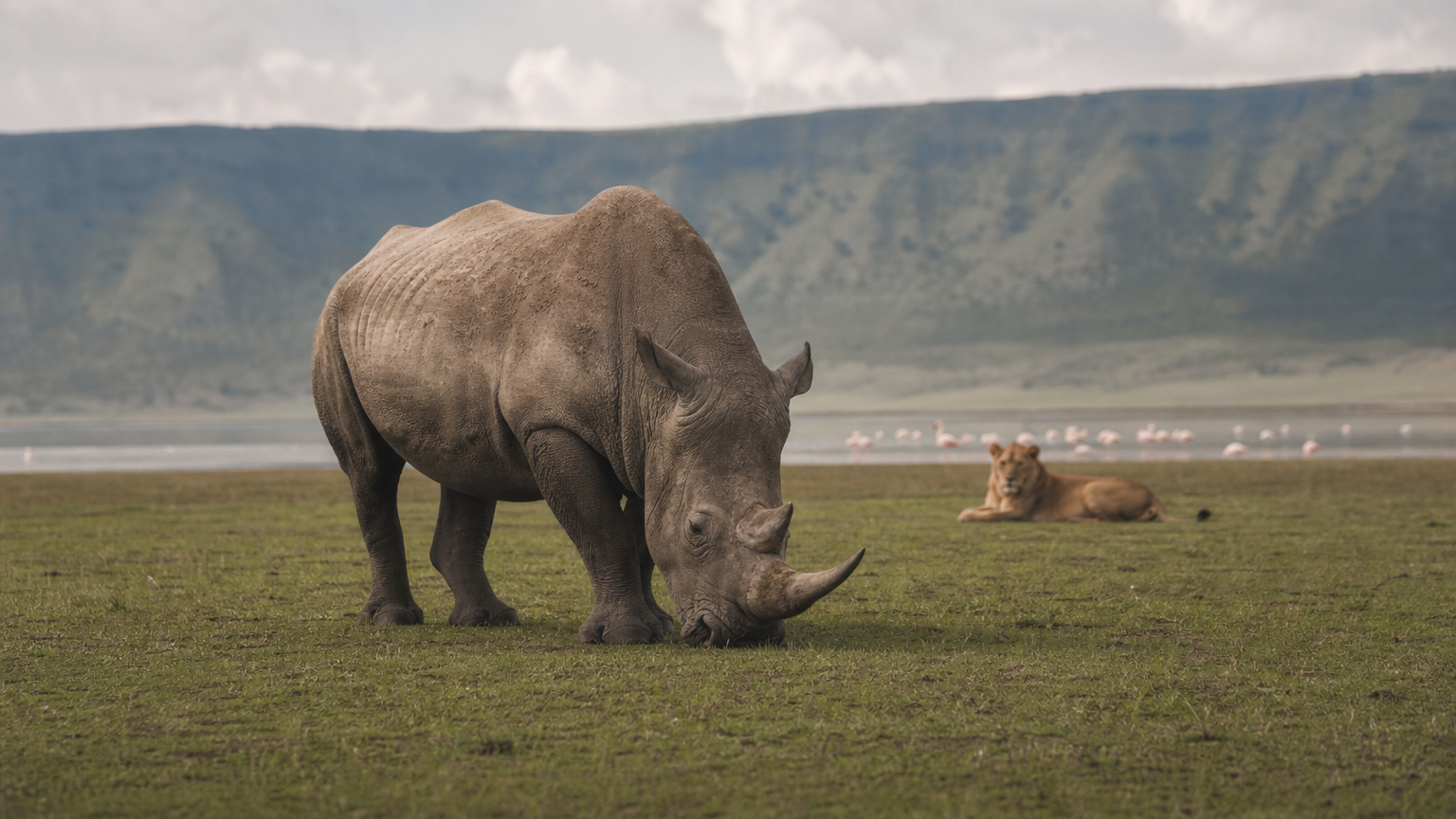
Nowhere else in Tanzania can you check off the Big Five in a single day the way you can inside Ngorongoro Crater.
How it stacks up against the Serengeti
Compare it to the open plains of Serengeti National Park and the difference is clear: the crater trades scale for certainty.
| Feature | Ngorongoro Crater | Serengeti |
|---|---|---|
| Area | About 102 sq mi | About 5,700 sq mi |
| Wildlife density | Highest in Africa | High, but seasonal |
| Big Five odds | Strong, often in one day | Rhino sightings are rare |
| Known for | Concentrated, reliable viewing | Wildebeest migration, open horizons |
Unlike the Serengeti, where animals spread across vast plains and sightings depend heavily on season, the crater floor keeps everything within a few hours’ drive. That’s part of why it consistently shows up as a highlight on ngorongoro crater safari tours even for travelers who’ve already seen plenty of wildlife elsewhere in East Africa. If you’re weighing whether it earns a spot on your itinerary, the short answer is yes, and the next section covers exactly how to plan it.
How to plan your Ngorongoro Crater safari
Getting the timing right matters more here than almost anywhere else in Tanzania, because the crater floor gets crowded fast once the morning convoys arrive. Booking early, ideally three to six months out during peak months, secures the permits and the guide you actually want rather than whoever’s available.
Best time to visit
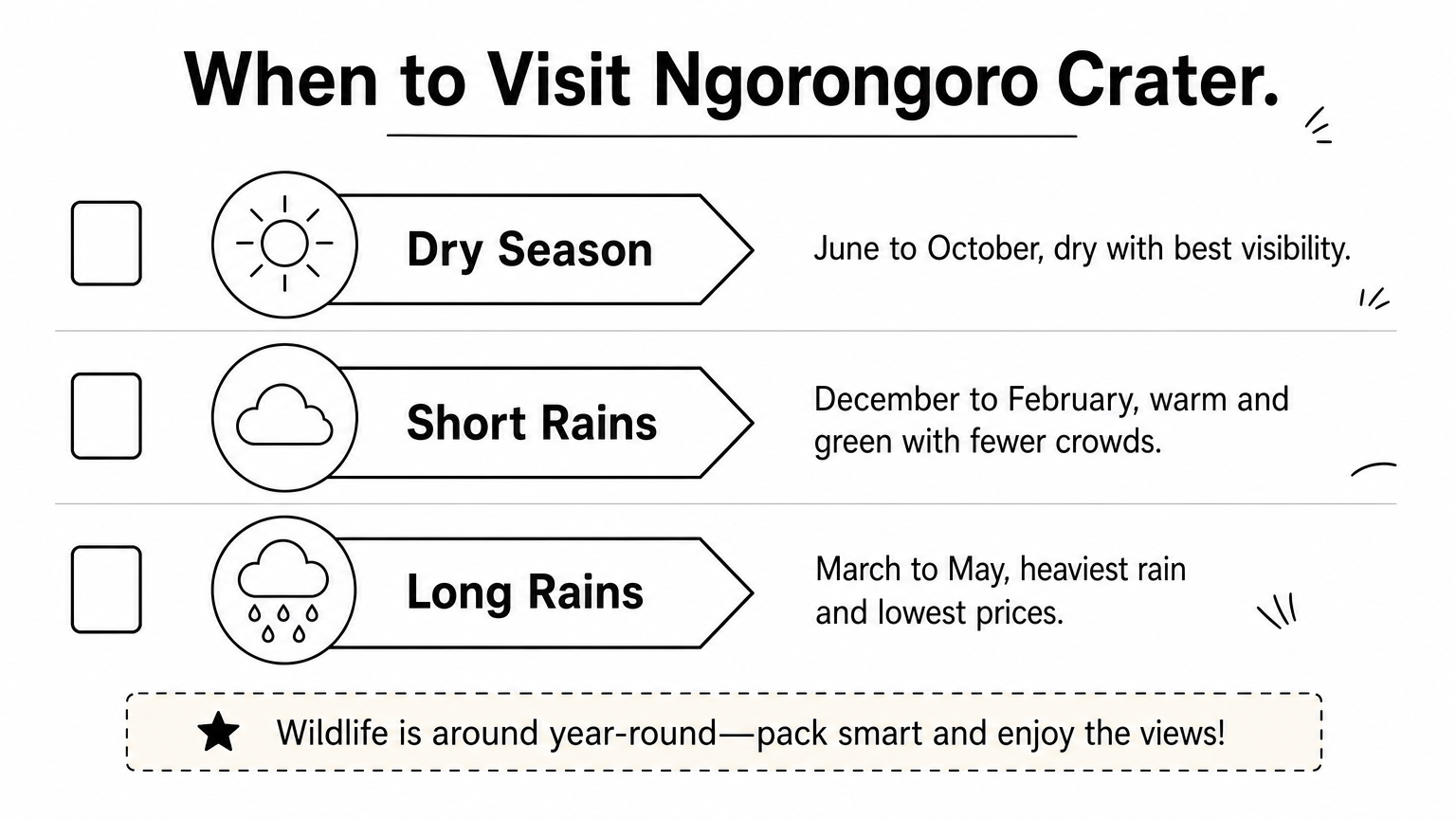
The dry season, from June through October, is the best time to visit Tanzania for safari, giving you the clearest roads and the most predictable animal movement around the remaining water sources. The short rains in November and the long rains from March through May thin the crowds but also turn some tracks muddy and push animals into thicker cover.
- June to October: dry, dusty, best visibility
- December to February: warm, green, fewer crowds
- March to May: heaviest rain, lowest prices
The single biggest planning mistake is booking a safari to Ngorongoro Crater without confirming your descent permit weeks in advance.
Working with a local operator
Only registered vehicles get crater descent permits, and the number issued each day is capped, so independent travel isn’t really an option here. A local operator handling your ngorongoro crater safari bookings deals with the Ngorongoro Conservation Area Authority directly, locks in your entry time, and pairs it with lodging on the rim so you’re not driving in the dark. That’s the logistics piece worth outsourcing before you worry about anything else.
What to expect on game drives and wildlife sightings
Your day starts early, usually before sunrise, because the descent gates open at 6 a.m. and the crater floor cools down fast once dozens of vehicles arrive. Descending the crater wall takes about 30 minutes on a steep, dusty track, and once you’re down, you spend roughly six hours of guided safari game drives crisscrossing grassland, swamp, and the fringes of Lake Magadi before climbing back out by early afternoon.
A typical morning on the crater floor
Expect lion prides lounging near the swamp edges, herds of zebra and wildebeest grazing in the open, and, if you’re patient, one of the last black rhino populations left roaming freely in Tanzania. Hyenas patrol in clans, hippos surface in the muddy pools, and flamingos crowd the lake’s shoreline in pink lines you can see from a mile off.
A morning inside the crater usually delivers more wildlife encounters per hour than a full day almost anywhere else in East Africa.
Why timing your drive matters
Midday brings more vehicles and less action, since predators retreat into shade and grazers scatter toward the crater walls. Guides running a ngorongoro crater safari tour know to hit the swamp areas first thing, then swing toward Lerai Forest for elephants before the heat sets in. That sequencing, not luck, is what separates an average game drive from one where you tick off the Big Five before lunch.
Where to stay and what it costs
Most travelers sleep on the crater rim rather than the floor itself, since no permanent camps sit inside the caldera. Rim lodges range from simple tented camps like Ngorongoro Wild Camp on the crater rim to luxury properties with glass walls facing straight down into the crater, and the price gap between them is enormous. Golden Trips Tanzania builds each safari itinerary around the accommodation tier that actually fits your budget, rather than defaulting to whatever a template package includes.
Accommodation tiers and price ranges
Budget determines comfort more than location here, since every rim lodge sits within a short drive of the descent road.
| Tier | Price per night (per person) | What you get |
|---|---|---|
| Budget camping | $80-150 | Shared facilities, basic tents |
| Mid-range lodge | $200-400 | Private rooms, crater views |
| Luxury lodge | $500-1,200+ | Glass-walled suites, full board, private guides |
Where you sleep on the rim shapes your whole trip more than any other single choice you make.
What a full package typically costs
Pricing for a complete ngorongoro crater safari package usually bundles the descent permit, conservation fees, park entry, guide, and 4×4 transport into one daily rate, which runs roughly $250 to $700 per person depending on lodge tier and group size, much like the wider safari packages in Tanzania for 2026. Smaller groups pay more per head since vehicle and guide costs split fewer ways, so joining or building a group of four to six travelers noticeably lowers your per-person rate.
Combining Ngorongoro with the Serengeti and beyond
Few travelers fly all the way to Tanzania just for the crater. Most build a Tanzania safari Serengeti Ngorongoro Crater route, since the two parks sit close enough to combine without wasting travel days, and the contrast between them makes the whole trip feel complete rather than repetitive.
Building the route
A standard loop starts in Arusha, drops into Tarangire or Lake Manyara for a warm-up day, spends a night on the crater rim, then pushes north into the Serengeti for three or four nights chasing open plains and, if timing lines up, the Great Migration in Tanzania. Running Ngorongoro first works better logistically, since the descent road and rim lodges sit directly on the path north, so you’re not backtracking.
Pairing the crater with the Serengeti gives you concentrated certainty first, then wide-open unpredictability second, and that order works best.
Extending toward Zanzibar or Kenya
Many itineraries don’t stop at the Serengeti either. Adding four or five days on Zanzibar’s beaches afterward gives you a genuine wind-down after early mornings and dusty roads, and it’s a natural add-on rather than a separate trip. Others extend across the border into Kenya, linking the Serengeti with the Masai Mara on a cross-border Kenya and Tanzania safari itinerary for a longer serengeti Ngorongoro crater safari covering both countries. Golden Trips Tanzania designs these combined routes around your available days rather than forcing a fixed template.
Making your Ngorongoro Crater safari a reality
A safari in Ngorongoro Crater rewards travelers who plan the descent permit, lodge tier, and timing before landing in Arusha, not after. You now know the dry season windows, the realistic per-person costs, and how the crater pairs with a Serengeti loop or a Zanzibar wind-down, so the pieces you need to build a real itinerary are all here.
What’s left is turning that plan into confirmed dates and a vehicle waiting for you at the gate. Independent travel doesn’t work well inside the conservation area, so the fastest path is working with a team that handles permits, lodging, and guides as one package rather than separate bookings you have to coordinate yourself.
If you’re ready to move from research to an actual trip, request a free custom safari quote from Golden Trips Tanzania and we’ll build the route around your dates, budget, and the wildlife you actually want to see.