

Serengeti National Park Tanzania Safari: The Ultimate African Wildlife Journey
You’ve seen the photos: endless golden grass, a wildebeest column stretching to the horizon, a lion resting under an acacia tree at sunset. Now you’re trying to figure out how to actually get there. A serengeti national park tanzania safari involves more decisions than most first-time visitors expect, from which season matches your travel dates to which park circuit fits your budget.
This guide answers the practical questions people ask before booking a serengeti safari: what wildlife you’ll realistically see, how much a trip costs per person, when the wildebeest migration passes through which region, and how many days you actually need. We wrote it from the ground in Arusha, where we plan these trips year-round for travelers heading into the Serengeti and neighboring parks.
Below you’ll find a breakdown of the park’s regions, a month-by-month look at wildlife movement, realistic cost ranges for different travel styles, and what separates a well-run tour from a rushed one. We’ll also cover how a Serengeti trip pairs with Ngorongoro Crater, Tarangire, or a few days on Zanzibar’s beaches, and how to choose a safari serengeti tanzania operator you can actually trust with your itinerary.
Why a Serengeti safari belongs on your bucket list
More wildlife per square mile than almost anywhere on earth
Numbers rarely capture what it feels like to stand on the Serengeti plains, but they explain why people keep coming back. The park covers roughly 5,700 square miles, and it sits inside a wider Serengeti ecosystem that stretches into Kenya’s Masai Mara. Within that space you’ll find over 70 large mammal species and more than 500 bird species, with wildlife density so high that a single game drive can turn up lions, elephants, giraffes, and three antelope species before lunch. That kind of concentration is rare, and it’s the reason a serengeti safari africa trip consistently ranks above smaller, fenced-in reserves elsewhere on the continent.
A well-timed drive through the Serengeti can show you more large mammals in one morning than most parks show in a week.
The Great Migration passes right through
Nothing else on land matches the scale of the migration. Roughly 1.5 million wildebeest move through the park each year on the great wildebeest migration, joined by hundreds of thousands of zebra and Thomson’s gazelle, following rain patterns in a rough clockwise loop across the ecosystem. Watching this column stretch across the horizon, or catching a river crossing at the Grumeti or Mara, is the single experience most travelers name when they explain why they booked a serengeti national park safari in the first place. It’s not a staged event and there’s no guaranteed schedule, but a guide who tracks herd movement daily can put you in the right region at the right week.
Predators follow the herds, and so will you
Alongside the migration comes the predator show. Lions, leopards, cheetahs, and spotted hyenas all concentrate where the prey concentrates, which means the Serengeti delivers some of the most reliable predator sightings in East Africa. Most trip planning conversations we have in Arusha eventually turn to the Big Five, so here’s how the Serengeti stacks up:
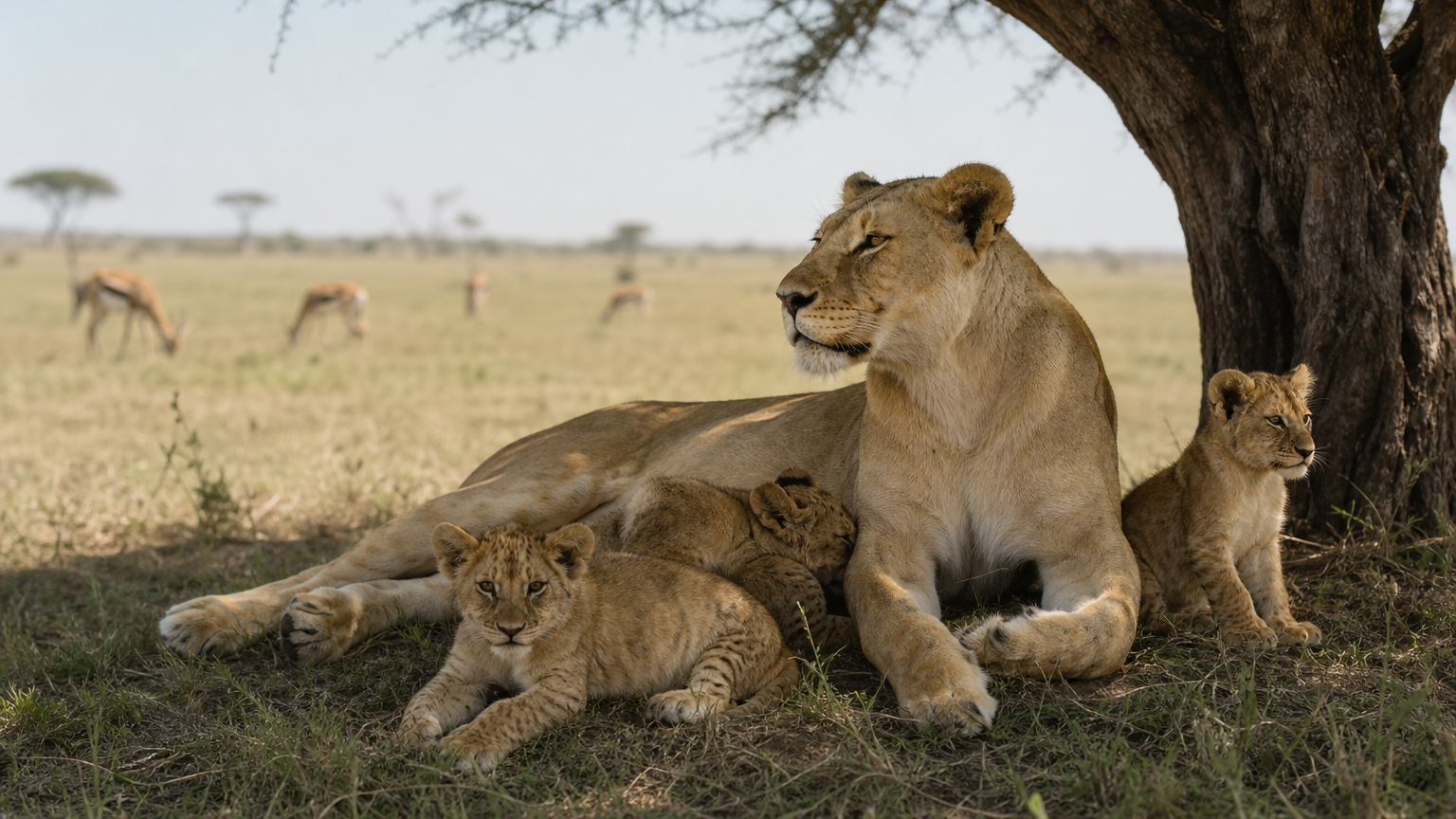
- Lion: abundant, especially in Seronera and the central plains
- Leopard: present but shy, best spotted along riverine woodland
- Elephant: common in the north and west, less so on the open short-grass plains
- Buffalo: found in large herds near water sources
- Rhino: rare, with a small population reintroduced in the Moru Kopjes area
Seeing four of the five in a single trip is realistic. The fifth, rhino, takes patience and often a dedicated search.
A landscape that still feels wild, not managed
Unlike some smaller reserves that feel curated, the Serengeti’s sheer size keeps it feeling genuinely wild. You can drive for an hour without seeing another vehicle, which matters if you’ve traveled a long way for an african safari serengeti experience and don’t want it to feel crowded. Vast kopjes, rivers, and open plains give the park visual variety that photos rarely capture fully. Visiting also opens the door to real cultural contact, since Maasai communities live along the park’s borders and welcome respectful visits arranged through a local guide. Between the wildlife, the migration, and the landscape itself, it’s easy to see why a trip here tends to outlast every other memory from a first African vacation.
How to plan your Serengeti safari
Getting a serengeti national park tanzania safari right starts weeks before you land in Arusha, not once you’re already in a jeep. The order you make decisions in matters: pick your travel window first, because that dictates which region you’ll base yourself in, which then determines your route, your camp choices, and finally your budget.
Decide your travel dates before anything else
Your dates decide almost everything downstream, so lock them in first. If catching the wildebeest migration at a specific stage matters to you, cross-check your travel window against the month-by-month migration calendar before booking flights, since arriving even two weeks off can put you in the wrong region entirely. Shoulder-season travelers get more flexibility and lower prices, but peak months near July and February book out lodges up to a year ahead.
Book your dates around the migration first, then build the rest of the trip around that decision, not the other way around.
Choose how many days you actually need
A rushed one-day dash through the Serengeti rarely satisfies anyone who’s flown this far. We recommend a minimum stay based on what you want to see:
- 3 days: covers Seronera and central plains, decent Big Five odds
- 4 to 5 days: adds a second region, room for a migration river crossing attempt
- 6+ days: combines the Serengeti with Ngorongoro Crater and Tarangire for a fuller circuit
Fewer days than three means most of your trip is spent driving rather than watching wildlife.
Work with a local operator who builds the itinerary around you
Once dates and length are set, the itinerary itself needs a hand that knows current road conditions, camp availability, and where the herds actually are that week, not where a brochure says they should be. This is where a locally based team earns its keep, and it’s worth comparing the best safari companies in Tanzania before you commit. At Golden Trips Tanzania, we build every serengeti safari tanzania itinerary from scratch through our free trip quotation tool, adjusting the route as migration reports come in rather than locking you into a fixed template months in advance.
Sort logistics that are easy to forget
Before you finalize anything, confirm the Tanzania safari visa rules for 2027, get your yellow fever vaccination documented if you’re arriving from an at-risk country, and pack for wide temperature swings between dawn game drives and midday heat. None of these are complicated, but skipping them causes more trip delays than any wildlife issue ever does.
When to visit the Serengeti for the best wildlife viewing
Timing shapes every other decision in your trip, so it deserves attention before you look at camps or costs. The Serengeti doesn’t have an off-season the way some destinations do. Every month offers something, but the ideal months to visit the Serengeti in 2026/2027 depend entirely on what you want to see, whether that’s the migration crossing a river, newborn calves on the plains, or simply fewer vehicles at each sighting.
The dry season delivers the classic safari experience
June through October brings Tanzania’s long dry season, and it’s when most first-time visitors book their serengeti safari. Grass shortens, water sources shrink to a handful of rivers and waterholes, and animals cluster around what’s left. That concentration makes game viewing easier and more predictable, especially in the Grumeti and Mara regions where the migration’s dramatic river crossings happen roughly between July and September.
If you want the Serengeti at its most reliable for wildlife sightings, dry season travel beats every other window.
The green season rewards patient, less crowded travel
November through May covers the short and long rains, and while some travelers avoid this window, it has real advantages. Calving season runs from late January through March on the southern plains, when over 8,000 wildebeest calves are born daily and predator action follows close behind. Roads soften and some camps close for maintenance, but lodge rates drop and crowds thin out considerably.
A month-by-month cheat sheet
| Months | Conditions | Best for |
|---|---|---|
| Jan-Mar | Short rains, green plains | Calving season, predator action |
| Apr-May | Long rains, muddy roads | Lowest prices, fewer travelers |
| Jun-Jul | Dry, migration moving north | Central and western Serengeti |
| Aug-Sep | Peak dry season | River crossings in the north |
| Oct-Nov | Short rains begin | Migration heading south |
| Dec | Short dry spell | Southern plains, good weather |
Whichever window you choose, book lodges and camps early. Peak months fill a year ahead, and even shoulder season rooms in popular areas near Seronera go quickly once migration reports start circulating among tour operators.
Where to stay across the Serengeti’s four regions
Where you sleep each night decides what you see each morning, so picking a region matters as much as picking one of Tanzania’s top safari lodges. The park splits into four distinct areas, and each one suits a different kind of trip and a different point on the migration calendar. A serengeti national park safari built around one region alone will miss most of what makes the ecosystem worth visiting, which is why most itineraries we build move guests through two or three camps rather than parking them in one spot for a week.
Seronera, the year-round heart of the park
Central Seronera sits at the crossroads of the park’s road network, and its rivers keep resident wildlife around even when the migration has moved on. Lions, leopards, and resident herds make this the safest bet for wildlife density on any given day of the year, and it’s why most first-time visitors base at least two nights here regardless of season.
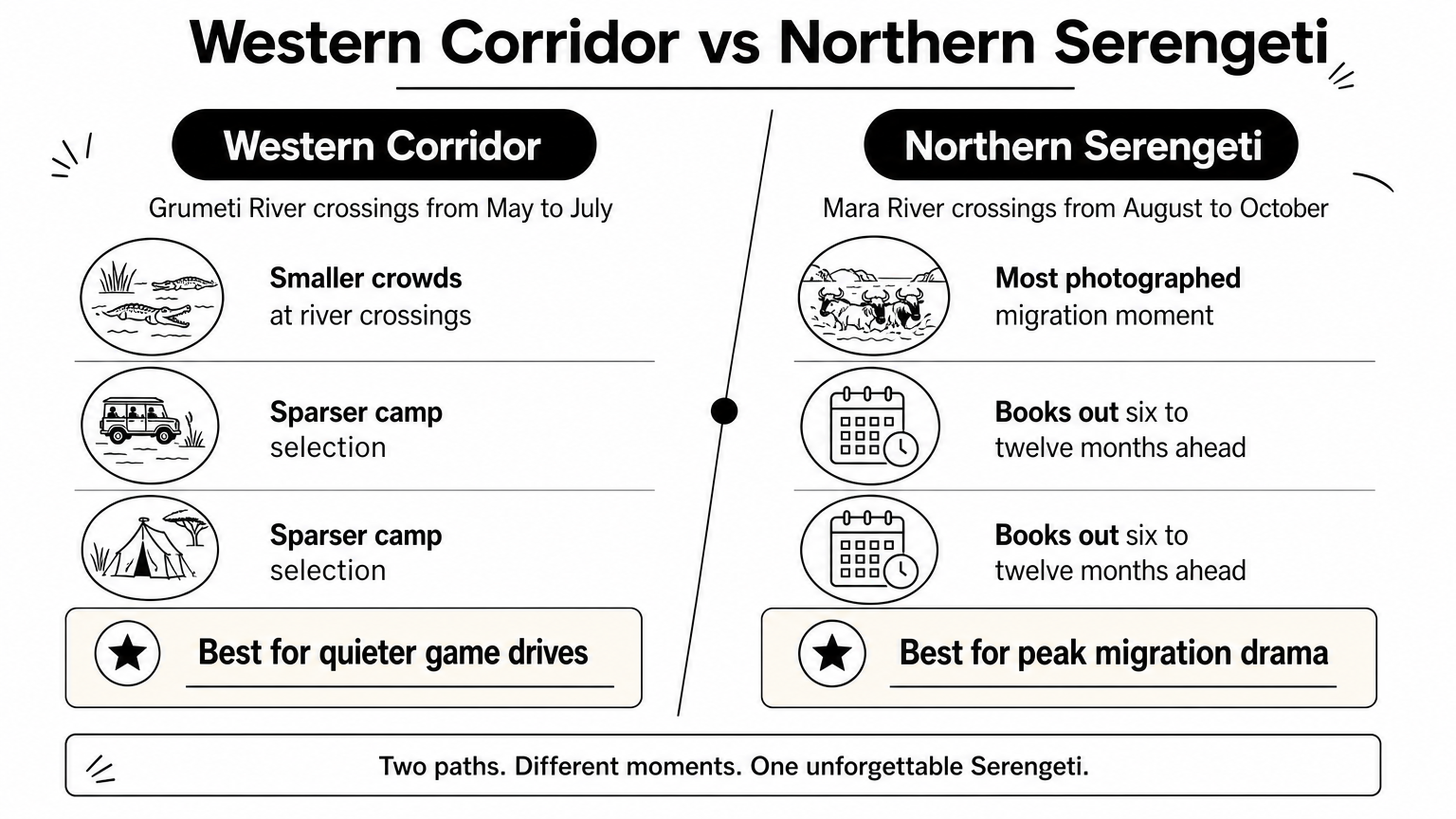
Western Corridor, the Grumeti River crossings
Between May and July, the migration funnels through the Western Corridor and its Grumeti River, where crocodile-filled crossings draw crowds smaller than the more famous Mara version. Camps here run sparser, which suits travelers who’d rather trade a wider room selection for quieter game drives.
Northern Serengeti, home to the Mara River drama
August through October puts the herds along the Mara River in the far north of the park, and this is where the migration’s most photographed river crossings happen. Lodges up here book out fastest of any region, so if a safari on the serengeti built around this crossing is your goal, reserve six to twelve months out.
Southern plains, calving season and open horizons
From December through March, the short-grass plains around Ndutu turn into a nursery, with wildebeest calves born by the thousand and predators trailing close behind.
Match your camp to the season, not the other way around, and the migration will come to you.
| Region | Best months | Camp style |
|---|---|---|
| Seronera | Year-round | Mix of luxury and mid-range |
| Western Corridor | May-Jul | Seasonal tented camps |
| Northern Serengeti | Aug-Oct | Premium permanent camps |
| Southern plains | Dec-Mar | Mobile and semi-permanent camps |
We map these regions against your travel dates through our tailor-made safari planning, so your nights align with wherever the herds actually are that week.
Top safari activities and experiences in the Serengeti
Game drives sit at the center of every itinerary, but Serengeti National Park tours offer more than the standard morning and afternoon loop. Building variety into your days keeps a week-long safari in serengeti national park from feeling repetitive, and it gives you a shot at experiences most first-time visitors don’t even know to ask for.
Morning and afternoon game drives
Dawn drives catch predators finishing a night hunt before the heat sends everyone into shade, while afternoon drives favor elephants and grazers moving toward water. Most camps run both, and a good guide will read the previous night’s radio chatter to pick a direction before you’ve even had coffee. Full-day drives with a packed lunch let you push deeper into the plains, which matters if the migration has moved past your camp’s usual range.
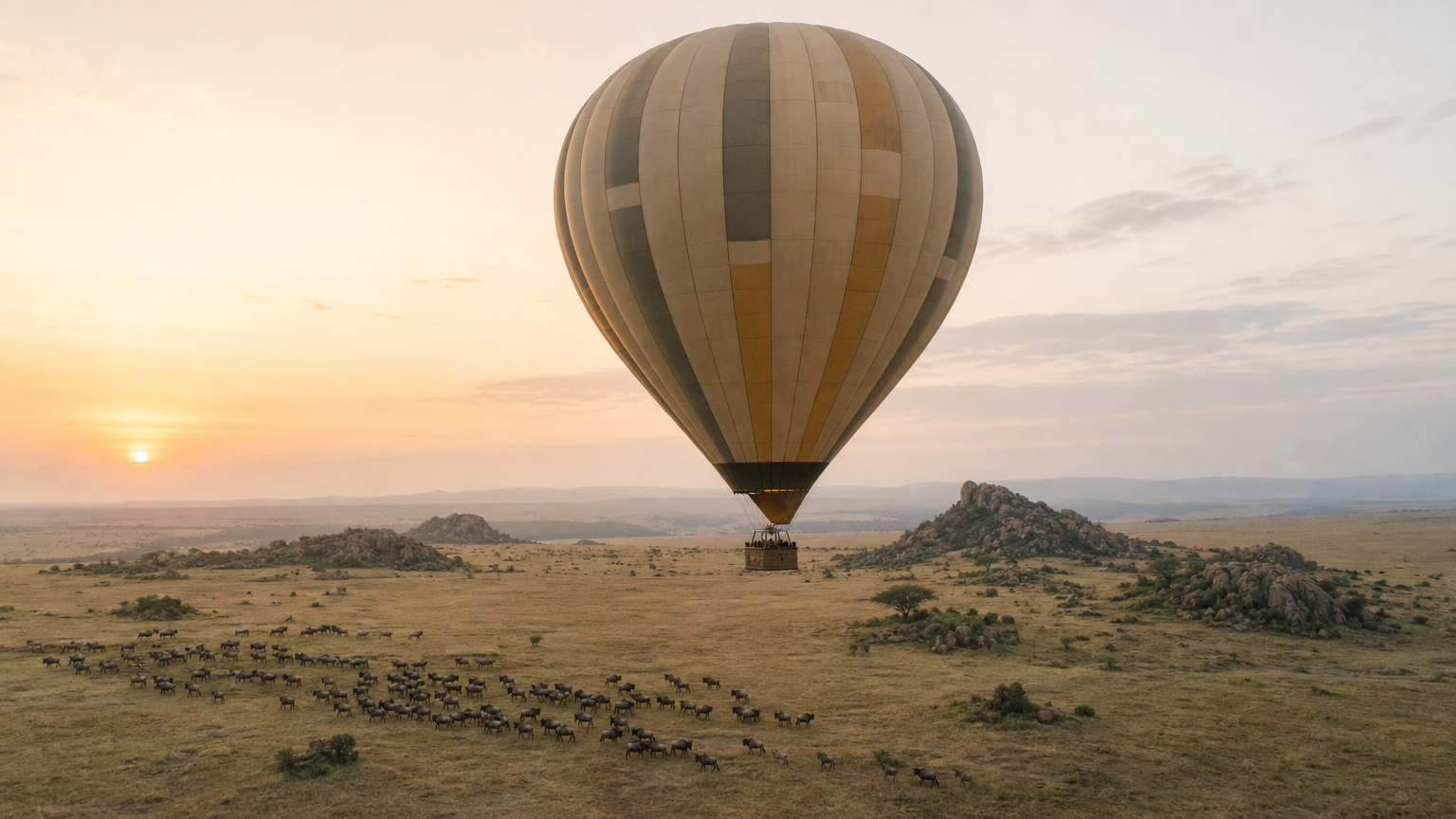
Hot air balloon safaris at sunrise
A balloon flight over the plains at first light shows you the scale of the ecosystem in a way no vehicle can, herds stretched across the horizon, kopjes rising out of the grass, shadows still long from the low sun. Flights launch before dawn and end with a champagne breakfast set up in the bush, a small splurge that most guests say was worth every dollar afterward.
The view from a balloon at sunrise is the one part of a Serengeti trip that photos genuinely can’t replace.
Walking safaris and cultural visits
A few concession areas allow short walking safaris with an armed ranger, where the pace slows down enough to notice tracks, dung beetles, and birdlife you’d drive right past otherwise. Pair this with a visit to a nearby Maasai village or, further south near Lake Eyasi, time with Hadzabe hunter-gatherers, and you get cultural context that no game drive provides on its own.
Night drives and specialty add-ons
- Night game drives: available in select concessions outside the core park, spotlighting nocturnal hunters like leopard and genet
- Photography-focused drives: slower pace, extended time at sightings, vehicles fitted with beanbags or camera mounts
- Private guide requests: useful for repeat visitors chasing a specific species or a second migration crossing attempt
Each add-on works best when it’s built into your itinerary from the start, since camps allocate limited slots for balloons and night permits well before peak season fills up.
How much does a Serengeti safari cost
Money is usually the last question travelers ask us, but it’s the first one they actually need answered before booking anything. A serengeti safari runs anywhere from $250 to over $1,200 per person per day, and that range depends far more on camp choice and season than on the wildlife itself, since every traveler sees roughly the same animals regardless of budget.
What drives the price up or down
Season moves prices more than any other factor. Peak months like August and February can push camp rates 30 to 50 percent above green season pricing, while the same tent in April costs a fraction of what it does during a Mara river crossing week. Group size matters too: a private vehicle for two people costs more per head than a shared group of six, and remote regions like the northern Serengeti carry higher logistics costs than easy-to-reach Seronera.
A Serengeti safari’s price tag reflects your season and camp choice far more than what animals you’ll see.
Typical daily costs by travel style
| Travel style | Cost per person per day | What’s included |
|---|---|---|
| Budget camping | $250-$400 | Basic tented camps, shared vehicle, set menu |
| Mid-range | $400-$700 | En-suite tented camps or lodges, private vehicle |
| Luxury | $700-$1,200+ | Premium camps, private guide, extras like balloon flights |
Serengeti safari package prices typically bundle park fees, accommodation, meals, a guide, and game drives, but they rarely include international flights, visas, tips, or alcohol.
Where the money actually goes
Park entrance fees alone run around $70 to $80 per person per day for Serengeti National Park, and that’s before crater fees if you’re adding Ngorongoro to the route. Vehicle fuel, driver-guide wages, and camp logistics eat up a large share of any quoted rate, which is why even affordable Tanzania safari tours rarely drop much lower than the budget tier without cutting corners on vehicle maintenance or guide experience.
Quoting a fair, transparent price is where a locally based operator earns trust. Through our free trip quotation tool, we break down exactly what you’re paying for on any serengeti national park tanzania safari, region by region, so nothing gets tacked on once you’ve already committed to a date.
Making the most of your Serengeti journey
A serengeti national park tanzania safari rewards travelers who plan with intention rather than winging it. Get your dates locked to the wildlife behavior you want to see, match your camp to the right region, and budget honestly for the season you’ve chosen. Do those three things well and everything else, the game drives, the balloon rides, the campfire dinners under a wide sky, falls into place on its own.
Getting there still means trusting someone with local knowledge who can read migration reports week to week, not a template built months in advance. Every itinerary in this guide, from a three-day Seronera loop to a full northern circuit chasing a Mara crossing, works best when a guide on the ground adjusts it in real time.
Ready to put dates on a calendar? Compare the Serengeti safari packages worth booking in 2026 and let us build your trip around the season and budget that fit you.