 Skip to content

Search for Kilimanjaro tour prices and you’ll see numbers ranging from $1,500 to over $6,000 for the same seven-day route. That gap confuses most first-time climbers, and it’s the main reason you’re here trying to figure out the real cost to climb Kilimanjaro before you commit to an operator.
Here’s the short answer: budget climbs start around $1,800 to $2,500 per person, mid-range trips with better guides and gear run $2,800 to $4,000, and luxury expeditions with private crews and premium camps push past $5,000. The kilimanjaro climb price you land on depends on route length, group size, crew wages, park fees, and how much safety equipment and support the operator actually includes, not just the label on the package.
In this article, we’ll break down exactly what goes into that price tag: mandatory park fees, guide and porter costs, gear rentals, route selection, and the red flags that signal a company is cutting corners on cost for a Kilimanjaro climb. You’ll walk away knowing what a fair price looks like and what questions to ask before you book, so you can compare quotes with confidence instead of guessing.
Why Kilimanjaro climbing costs vary so widely
Mount Kilimanjaro sits inside Kilimanjaro National Park, and the Tanzania National Parks Authority (TANAPA) charges fixed daily fees for every climber, every guide, and every porter who sets foot on the mountain. These government fees make up the non-negotiable floor of any quote, roughly $70 per person per day for park entry, plus camping or hut fees, rescue fees, and VAT. A seven-day Machame route climb generates well over $900 per person in government charges alone before an operator adds a single dollar of profit. This is why you should be suspicious of any cost of Mount Kilimanjaro climb quote that looks dramatically cheaper than everyone else’s, since the fees don’t change based on who you book with.
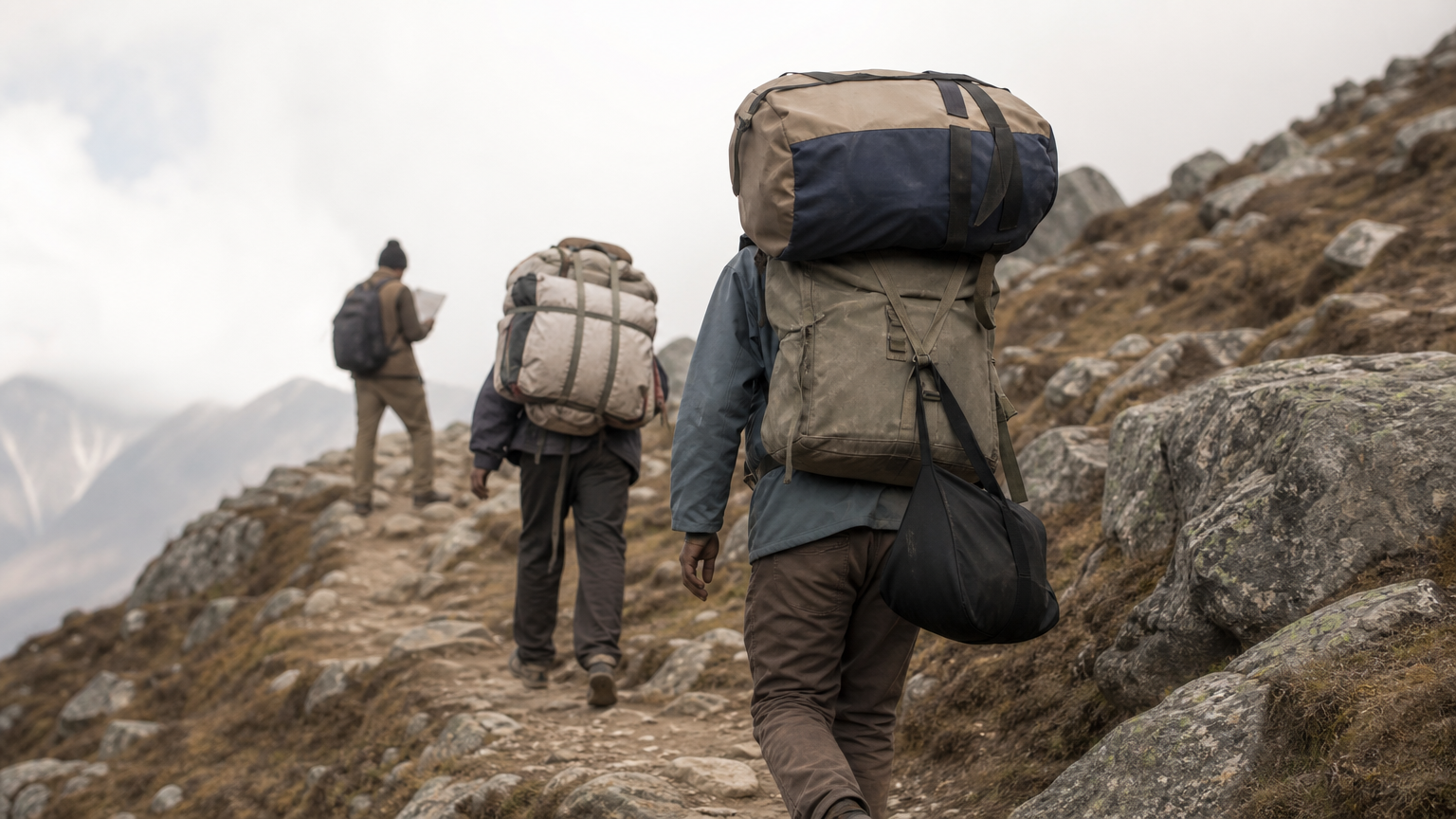
Government park fees are fixed, so a suspiciously low quote almost always means someone else on your crew is getting shortchanged.
Beyond those fees, the biggest swing factor is the size and treatment of your climbing crew. Ethical operators, including us at Golden Trips Tanzania, pay porters fair wages, provide them with proper boots, jackets, and tents, and cap the loads they carry at the 20kg limit set by the Kilimanjaro Porters Assistance Project. Cutting corners here is the fastest way for a company to shave hundreds of dollars off a quote, and it’s also how climbers unknowingly fund exploitative labor practices. A well-run trip typically assigns three to four porters per climber, plus a cook and one or two guides, so a group of four hikers might travel with a crew of sixteen to twenty people. Every one of those crew members needs a daily wage, food, and park permits, and that adds up fast.
Route length and difficulty change the math
Route selection is another major driver, and it’s one you actually control, so it pays to compare every Kilimanjaro climbing trail before booking. Shorter routes like a five-day Marangu route itinerary cost less upfront because you’re paying fewer days of park fees, guide wages, and food. But shorter routes also have lower summit success rates because your body has less time to acclimatize. Longer routes such as the eight-day Lemosho or the Northern Circuit climbing itinerary cost more in raw dollars but often deliver better value per successful summit, since you’re not paying for a shot at the top that ends in altitude sickness at 15,000 feet.
| Route | Typical Days | Relative Cost | Summit Success Rate |
|---|---|---|---|
| Marangu | 5-6 | Lowest | 60-70% |
| Machame | 6-7 | Mid | 85-90% |
| Lemosho | 7-8 | Mid-High | 90-95% |
| Northern Circuit | 8-9 | Highest | 95%+ |
Group size and private departures
Joining a scheduled Kilimanjaro group departure spreads fixed costs like guide wages and vehicle transfers across more people, which is why group trips usually undercut private climbs. Private climbs cost more per person but give you full control over pace, start times, and rest days, which matters if you’re climbing with kids, older travelers, or anyone nervous about altitude. Neither option is wrong, but the price to climb Kilimanjaro as a solo private climber will always run higher than joining a group of six on the same route and dates.
Operator overhead explains the rest of the gap. A Tanzania-based local tour operator running a lean operation with its own vehicles, staff, and gear inventory can charge less than a foreign-owned agency that subcontracts everything to a ground operator and adds a markup on top. Neither model guarantees quality, but understanding where your money goes, government fees, crew wages, gear, and company margin, helps you judge whether a quote reflects real value or just a low number designed to win the booking.
How to budget for your Kilimanjaro climb
Budgeting for Kilimanjaro means looking past the sticker price on a tour operator’s website and adding every cost you’ll actually pay before you leave home. A realistic budget covers international flights, a Tanzania visa, pre-climb gear rentals, tips for your crew, and a night or two of hotel accommodation in Arusha or Moshi before and after the trek. Skipping this step is how climbers get blindsided by a cost to climb Mt Kilimanjaro quote that looked affordable until they added $1,000 in flights and forgot tips entirely.
Treat the operator’s quote as one line item in a bigger budget, not the whole number.
Start with the full trip cost, not just the climb
Listing the major categories separately keeps nothing from slipping through the cracks. Most first-time Kilimanjaro climbers underestimate flights and tipping the most, since both vary widely depending on where you’re flying from and how many days you’re on the mountain.
- Flights: $900-$1,800 round trip from the US or Europe to Kilimanjaro International Airport (JRO)
- Visa: $50-$100 depending on your nationality
- Tour package: $1,800-$5,000+ depending on route and operator tier
- Gear rental: $50-$150 for boots, poles, and cold-weather layers you don’t already own
- Crew tips: $150-$300 per climber for guides, cooks, and porters combined
- Pre/post-climb lodging: $30-$150 per night depending on comfort level
Adding these together, a mid-range seven-day climb often lands closer to $4,500 to $5,500 all-in once flights and extras are counted, even when the quoted cost of Kilimanjaro climb itself was $3,200.
Set aside a buffer for weather delays and altitude medication
Weather on Kilimanjaro shifts fast depending on the months you choose to climb in, and a storm can push your summit attempt back a day or force an extra night at a lower camp. Good operators build contingency days into longer routes, but you should still keep some cash aside for an unplanned hotel night if your flight home needs rebooking. Getting altitude sickness medication like acetazolamide (Diamox) requires a prescription, so budget for a doctor’s visit before you travel, since the CDC recommends consulting a travel medicine specialist for high-altitude trips.
Finally, ask your chosen operator for a written, itemized quote instead of a single total. This forces them to show what’s included, park fees, meals, tents, crew wages, so you can compare it against the ranges above and see exactly where your money goes before you sign anything.
Kilimanjaro cost breakdown by route and operator tier
Once you understand what drives the price, the next step is matching a tier to your actual needs rather than picking the cheapest number on a comparison site. Operators generally fall into three price bands, and each one reflects a real difference in crew size, food quality, tents, and safety gear, not just marketing spin. Knowing the kilimanjaro price to climb at each tier helps you spot when a quote is missing something important.
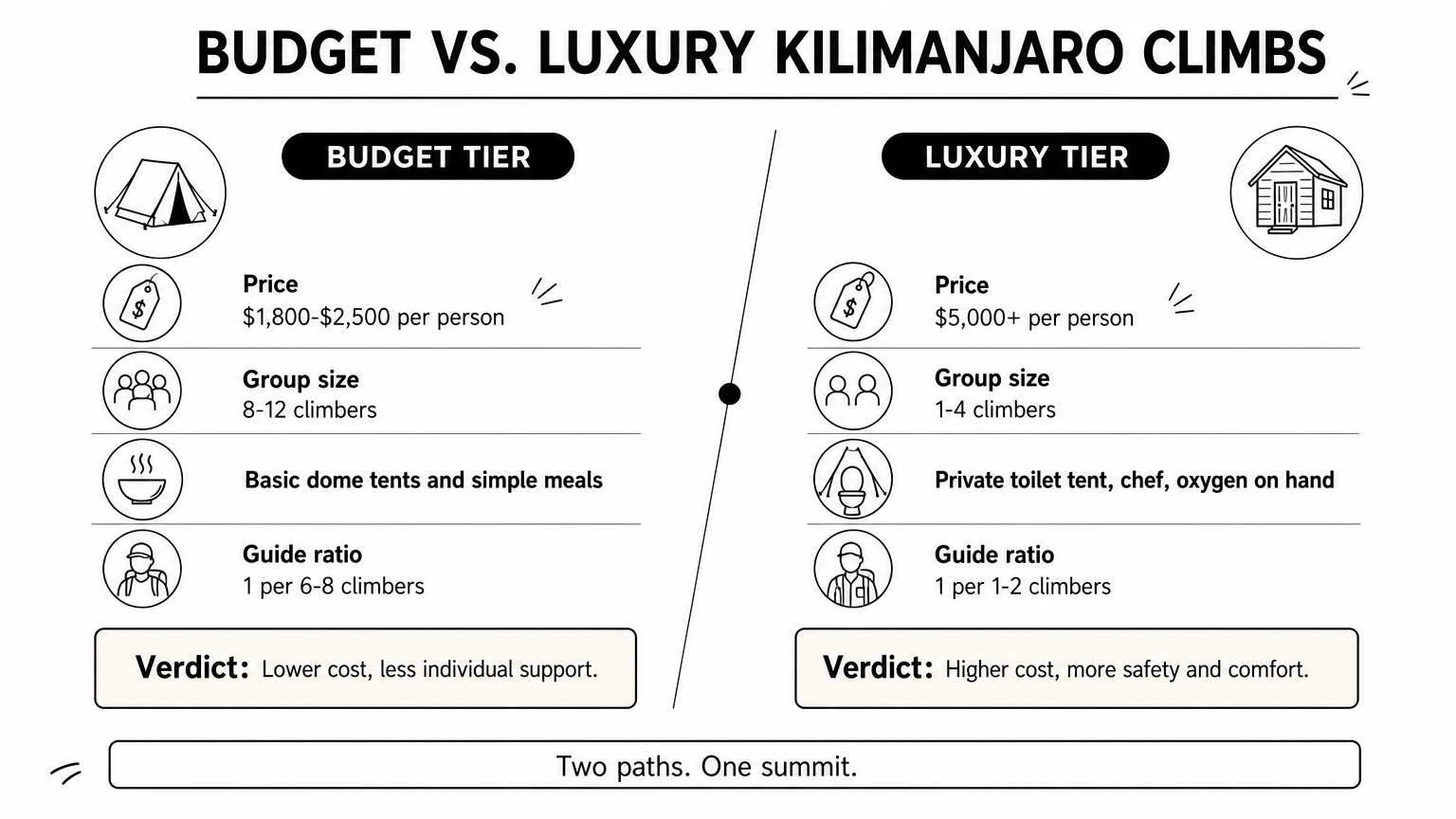
A budget quote and a luxury quote can climb the same mountain, but they’re not selling the same trip.
Budget, mid-range, and luxury tiers
Budget operators keep costs down by running larger groups, using basic dome tents, and offering simple meals like rice, beans, and pasta. Mid-range companies add better food, sturdier four-season tents, and a higher ratio of professionally trained mountain guides to climbers, which matters most on summit night. Luxury operators go further still, with private toilet tents, oxygen concentrators, and sometimes a private chef. The table below shows what you’re typically paying for at each level on a standard seven-day Machame route.
| Tier | Price per person | Group size | Tents & meals | Guide ratio |
|---|---|---|---|---|
| Budget | $1,800-$2,500 | 8-12 climbers | Basic dome tents, simple meals | 1 guide per 6-8 |
| Mid-range | $2,800-$4,000 | 4-8 climbers | Four-season tents, varied menu | 1 guide per 3-4 |
| Luxury | $5,000+ | 1-4 climbers | Private toilet tent, chef, oxygen on hand | 1 guide per 1-2 |
How route choice multiplies the difference
Layer route length on top of operator tier and the spread gets wider fast. A budget five-day Marangu climb might run $1,600, while a luxury eight-day Lemosho trip with the same company structure can top $6,000, even though both trips use the same crew wage standards internally. The cost to climb Mount Kilimanjaro always scales with how many days each route takes, since every extra night means another round of park fees, wages, and food for a crew that can number fifteen people or more.
This is why comparing two quotes side by side only works if you match route and duration first, using a full Kilimanjaro route comparison as your baseline. A $2,200 quote for Marangu and a $2,200 quote for Lemosho are not comparable, because one company is running a shorter, cheaper trip and the other may be cutting crew size or gear quality to hit the same number on a longer route. Always ask which route and how many days a quote covers before you compare it against the ranges in the table above.
Extra costs to plan for beyond the trek price
Beyond the quoted trek price, a handful of smaller expenses catch first-time climbers off guard, and they add up faster than most people expect. Travel insurance for Kilimanjaro trekking with high-altitude coverage runs $100-$250 depending on your age and trip length, and most reputable operators, including us, won’t let you start the climb without proof of a policy that covers evacuation above 6,000 meters. Skipping this to save money is the single worst place to cut corners, since a helicopter evacuation from high camp can cost more than the entire trek.
Insurance is the one line item you should never trim, because the mountain doesn’t negotiate on emergencies.
Vaccinations, visas, and paperwork
Routine but easy to forget, a yellow fever vaccination certificate is required if you’re arriving from certain countries, and a Tanzania e-visa runs $50-$100 depending on nationality, payable through the official Tanzania Immigration Services portal rather than a third-party site charging inflated fees. Pack a printed copy of your visa approval and vaccination card, since border officials at Kilimanjaro International Airport sometimes ask for both before stamping you through.
Tipping, gear, and post-climb extras
Gratuities for your guide, cook, and porters are expected and separate from the kilimanjaro climb price you paid upfront, typically $150-$300 per climber split across the whole crew based on role and seniority. Operators should hand you a tipping guideline sheet before summit day so you’re not doing math at 15,000 feet, and a well-run trip will collect tips as a group on the final morning rather than leaving each climber to negotiate individually.
Rounding out your budget means accounting for the smaller things that rarely make it into a quote:
- Laundry and extra nights in Moshi if your flight home is a day or two after summit
- Duffel bag rental if you don’t own one built for porters to carry ($10-$20)
- Bottled water and snacks in town before and after the trek
- Souvenirs and tips for hotel staff at your pre- and post-climb accommodation
- A Zanzibar add-on if you’re combining the climb with a beach recovery week, which most climbers say is worth every extra dollar
Factoring these in before you book keeps your total trip cost honest, and it’s a habit that pays off well beyond Kilimanjaro. Anyone who has budgeted for a big trip knows the real number always sits a few hundred dollars above the headline price, and Kilimanjaro is no exception.
How to spot an unsafe or overpriced operator
A rock-bottom quote isn’t a bargain if it means a thinner crew, worn-out gear, or a guide with no wilderness first aid training. Since you now know what a fair cost of a Kilimanjaro climb actually includes, you can use that knowledge to catch operators who are quietly cutting corners to win your booking. The warning signs are usually visible before you ever leave home, if you know where to look.
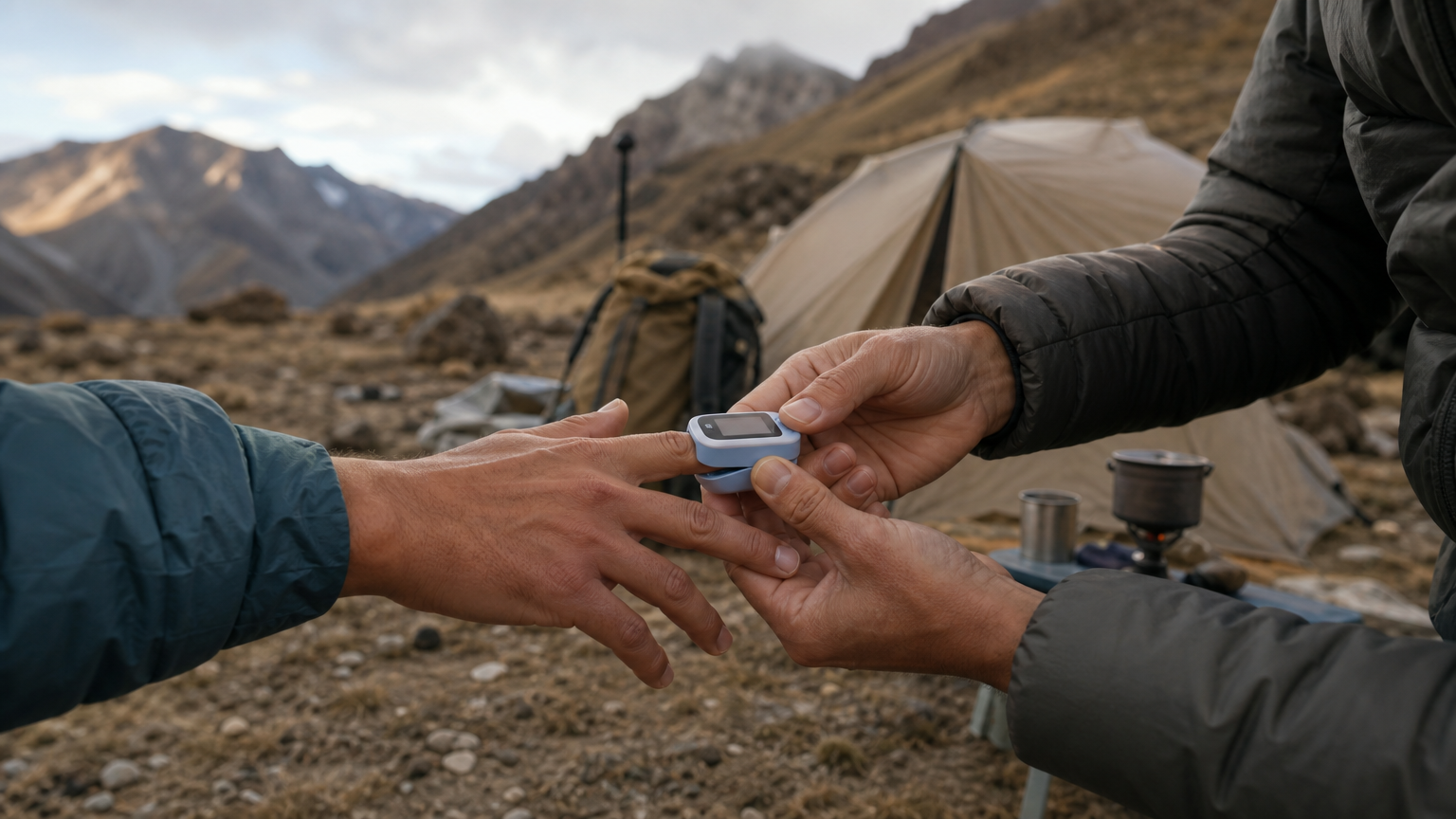
If a quote can’t explain where the money goes, assume it’s going somewhere you wouldn’t approve of.
Red flags in the quote itself
Start by asking for an itemized breakdown rather than accepting a single total. An operator who refuses, or gives you a vague answer about park fees and crew wages, is often hiding a thin margin somewhere in the trip. Watch for these specific warning signs when you’re comparing offers:
- No mention of park fees or KPAP porter standards in the written quote
- Group sizes over 12 climbers on a route marketed as a small-group experience
- A price below the government fee floor for that route and duration
- Vague answers about crew size, like refusing to say how many porters and guides are assigned to your group
- No written cancellation or refund policy, which usually signals a company that isn’t set up for long-term trust
Checking safety and crew treatment before you book
Beyond price, safety practices tell you more about an operator than any glossy brochure. Ask directly whether guides carry a pulse oximeter and check oxygen saturation twice daily, since this is standard practice among reputable companies and a simple way to catch altitude sickness before it becomes dangerous. Confirm whether the company carries oxygen cylinders and a Gamow bag on the mountain, and ask what their evacuation protocol looks like if a climber needs to descend quickly. A company that hesitates or can’t answer clearly is telling you something important about how they’d handle a real emergency.
Porter treatment is just as revealing. Ask what porters are paid daily, whether the company provides them with proper boots and sleeping bags, and how loads are weighed before departure. Companies with nothing to hide will answer without flinching, and some, including Golden Trips Tanzania, publish these details openly because transparency builds the trust that keeps climbers coming back.
Finally, read recent reviews on Tripadvisor or SafariBookings and look specifically for mentions of guide names, crew treatment, and how the company handled problems on the mountain, not just summit photos. A pattern of specific, detailed praise from real climbers, plus a look at how the best Kilimanjaro tour companies compare, is far more reliable than a low price tag when you’re deciding who to trust with your climb.
Common questions about Kilimanjaro climb costs
First-time climbers tend to ask the same handful of questions once they’ve seen enough quotes to feel confused rather than informed. Answering them directly here should clear up the last bit of guesswork before you start requesting proposals, and it rounds out everything we’ve covered about the cost to climb Kilimanjaro so far.
How much does it cost to climb Mount Kilimanjaro overall?
Most climbers land somewhere between $1,800 and $5,000 per person for the trek itself, depending on route, operator tier, and group size. Once you add flights, tips, gear rental, and a night or two of lodging in Moshi or Arusha, the realistic all-in total for a mid-range trip usually sits closer to $4,500 to $5,500. Anyone asking how much does it cost to climb Mount Kilimanjaro should request that full breakdown, not just the operator’s headline number, before comparing offers.
Why does Kilimanjaro cost so much compared to other treks?
Unlike many trekking destinations, Kilimanjaro requires a full support crew of guides, cooks, and porters for every climber, plus daily government park fees that don’t exist on most other mountains. A group of four hikers might need sixteen or more crew members working together for a week, and every one of them needs wages, food, and permits.
The mountain itself doesn’t charge you for the view, but the fees, wages, and gear needed to reach it safely add up fast.
Is a cheap Kilimanjaro climb ever safe?
Sometimes, but rarely by accident. A genuinely low price to climb Kilimanjaro usually comes from a company running larger groups and shorter, less acclimatized routes rather than from cutting crew safety. The danger sign isn’t a low price on its own, it’s a low price combined with vague answers about crew size, porter wages, and oxygen equipment on the mountain.
Do quoted prices include tips?
Almost never. Tips for your guide, cook, and porters are a separate cash expense, typically $150 to $300 per climber, and reputable operators will tell you this upfront rather than let you discover it on summit morning.
Is it cheaper to book once you arrive in Tanzania?
Booking on the ground in Moshi can occasionally shave a little off the price, but it also removes your ability to vet the company’s safety record, read recent reviews, or confirm crew treatment before handing over cash. For a climb involving multiple days at altitude, that trade-off rarely favors the last-minute booker, and most experienced travelers book their cost of Kilimanjaro climb in advance for exactly that reason.
Making sense of your Kilimanjaro budget
The cost to climb Kilimanjaro was never really a mystery, it just needed unpacking. Park fees are fixed, crew wages and gear quality explain most of the spread between operators, and route length shapes both your budget and your odds of reaching the summit. Once you know what belongs in a fair quote, park fees, porter wages, tents, food, and safety equipment, you stop comparing random numbers and start comparing real trips.
Getting this right matters more than shaving a few hundred dollars off a headline price. A well-run climb protects your crew, your health, and your chances of standing on Uhuru Peak. Request an itemized quote from any operator you’re considering, ask the hard questions about crew treatment and safety gear, and don’t let a low number override your judgment.
If you’d rather skip the guesswork entirely, browse our budget-friendly Kilimanjaro climb packages and get a free, itemized quote showing exactly what a fair Kilimanjaro budget looks like for your route and dates.
