

safari serengeti ngorongoro crater: Your Tanzania guide for unforgettable safari experience
Picking dates, routes, and a budget for a safari serengeti ngorongoro crater trip gets confusing fast once you start comparing itineraries online. Every operator seems to offer a different combination of days, camps, and prices, and it’s hard to tell what actually matters versus what’s just marketing filler. If you’re staring at a blank page trying to figure out where to even start, you’re not alone.
This guide walks you through exactly how to plan a serengeti and ngorongoro crater safari, from choosing the right season for the wildebeest migration to deciding how many days you actually need in each park. You’ll learn how to budget realistically, what accommodation options make sense for your travel style, and how to structure your route so you’re not wasting hours on rough roads between parks.
We’ve built dozens of these itineraries for travelers heading to Tanzania, so this isn’t theory. You’ll get a practical, step-by-step planning process alongside real pricing ranges and a sample itinerary you can adapt. By the end, you’ll know exactly what questions to ask a tour operator and how to spot a well-designed safari package versus a generic one.
Why Visit the Serengeti and Ngorongoro Crater together
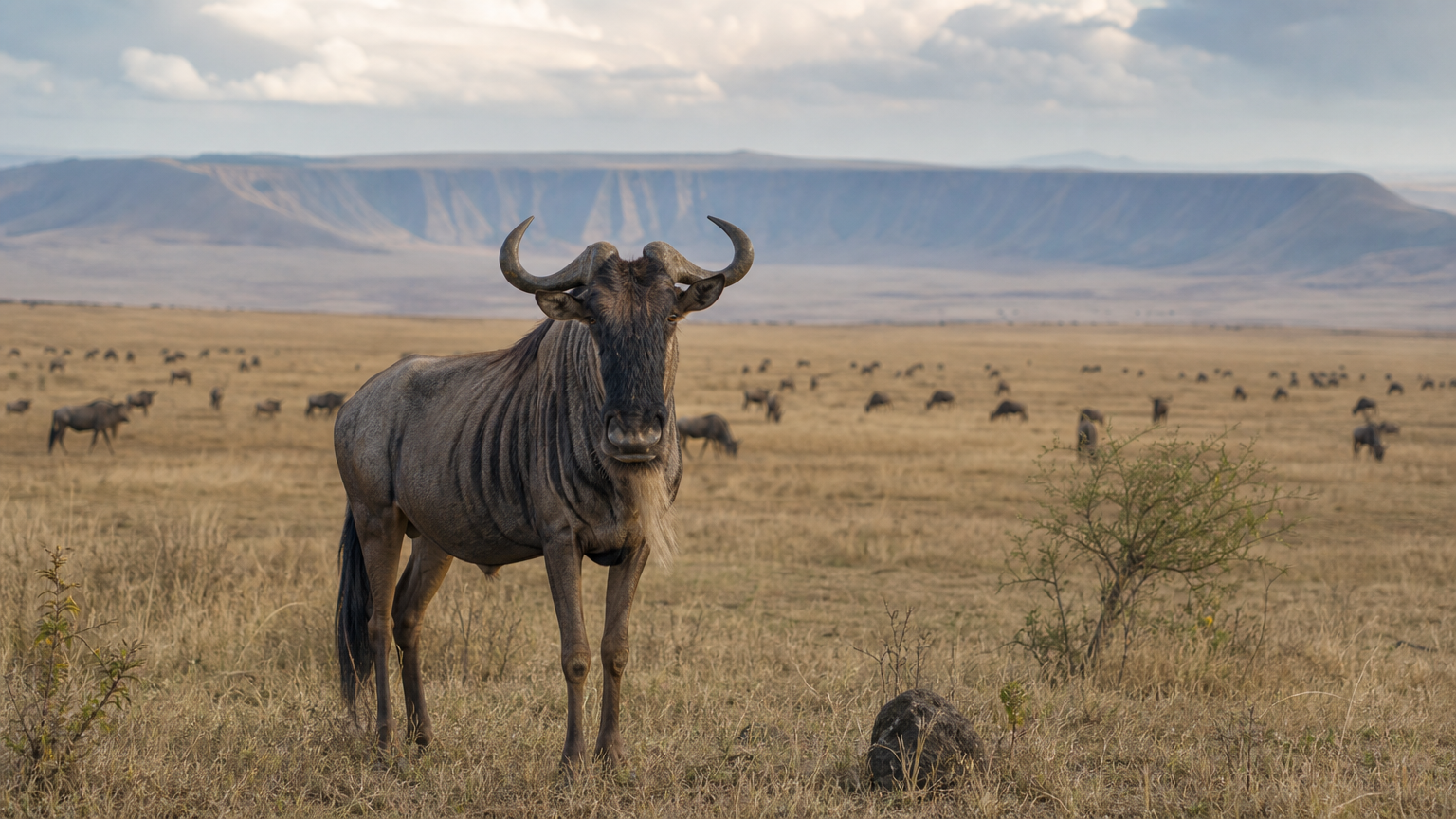
Pairing these two parks isn’t just a marketing trick from tour operators, it’s how the landscape actually works. The Serengeti and Ngorongoro Crater sit right next to each other in northern Tanzania, connected by a single road that cuts through the Ngorongoro Conservation Area. Most travelers doing a serengeti and ngorongoro crater safari fly into Kilimanjaro or Arusha, then drive a loop that hits both without backtracking. You get two completely different wildlife experiences in one trip, without the extra flights or long transfers that combining, say, Serengeti and Selous would require.
What makes each park unique
Each destination shows off a different side of Tanzania’s wildlife. The Serengeti, which we cover in depth in our Serengeti National Park safari guide, is vast, open grassland stretching to the horizon, home to the largest terrestrial mammal migration on Earth. You’ll spend days here covering ground, chasing predator sightings, and watching herds move across plains that feel endless. Ngorongoro Crater, the subject of our full guide to planning a crater safari, is a collapsed volcanic caldera about 12 miles across, with walls rising 2,000 feet on all sides. Animals rarely leave it because water and grass stay available year-round, so the wildlife density inside is extraordinary for a single day.
The Serengeti gives you scale and movement, Ngorongoro gives you concentration and certainty.
| Feature | Serengeti National Park | Ngorongoro Crater |
|---|---|---|
| Size | ~5,700 sq miles | ~100 sq miles (crater floor ~102 sq miles) |
| Typical stay | 3-4 nights | 1 night |
| Wildlife density | Seasonal, tied to migration | Consistently high year-round |
| Best known for | Wildebeest migration, big cats | Black rhino, dense predator sightings |
| Terrain | Open plains, kopjes, rivers | Crater floor, forest rim, lake |
How the two complement each other on one trip
Combining them smooths out the risk that comes with wildlife viewing. If the migration herds happen to be on the far side of the Serengeti during your visit, Ngorongoro still delivers a near-guaranteed day of sightings, including one of the best chances in Africa to spot black rhino. This matters because a ngorongoro crater and serengeti safari removes the all-or-nothing pressure of timing a single park perfectly. You’re not gambling your entire trip on one location’s daily wildlife movements.
Route-wise, the crater usually works as a stop on the way in or out of the Serengeti rather than a separate destination. Most itineraries descend into the crater for a full day game drive, then continue on to the Serengeti plains, or do it in reverse. That single detour adds real value without adding an extra flight or a full extra day of driving.
Who this combination suits
This pairing works well for a specific set of travelers, and knowing where you fit helps you plan the right length of trip:
- First-time safari travelers who want maximum wildlife variety without juggling multiple parks
- Photographers chasing both open-plains action shots and dense predator scenes
- Honeymooners and couples on a 5-9 day trip who want a complete safari without overextending
- Families who appreciate the crater’s shorter, more manageable game drives alongside older kids handling longer Serengeti days
If you’re weighing this combination against other Tanzania routes, our team at Golden Trips Tanzania builds tailor-made safari itineraries around exactly this kind of pairing, matching park order and timing to your dates and budget rather than a fixed template.
Step 1. Choose the best time to go
Timing shapes everything else about your trip, so nail this first before you touch itinerary details or budget. The wildebeest migration moves in a predictable loop through the Serengeti ecosystem each year, and where the herds are standing when you arrive changes which part of the park you should base yourself in, which is why it pays to check the Serengeti migration month by month before fixing dates. Ngorongoro Crater, meanwhile, delivers strong wildlife viewing year-round, so it’s really the Serengeti side of your serengeti and ngorongoro crater safari that dictates your calendar.
Matching your dates to the migration
Roughly speaking, herds calve in the southern Serengeti and Ndutu area from January through March, then push north through the central and western corridors from April through June, cross the Mara River into Kenya’s Masai Mara around July through September, and drift back south again from October through December. If seeing river crossings tops your list, target late June through August, but expect crowded viewpoints and premium lodge rates. If you’d rather watch newborn calves and dense predator action with fewer vehicles around, January through March in Ndutu is hard to beat.
Pick the migration phase you want to see first, then build your travel dates around it, not the other way around.
Weather and crowd trade-offs
Beyond the migration, Tanzania’s dry season (June through October) offers the easiest driving conditions and the most reliable wildlife sightings, since animals cluster near remaining water sources, and our breakdown of when to go on safari in Tanzania compares each season in more detail. The wet season (November through May) brings lush green scenery, better bird watching, and noticeably lower prices, but also muddier roads and shorter grass that can hide predators.
| Season | Months | Migration activity | Crowds | Price level |
|---|---|---|---|---|
| Calving season | Jan-Mar | Southern plains, Ndutu | Moderate | Mid-high |
| Long rains | Apr-May | Herds moving north | Low | Lowest |
| Dry season | Jun-Oct | River crossings, northern Serengeti | High | Highest |
| Short rains | Nov-Dec | Herds returning south | Low-moderate | Moderate |
A quick decision checklist
Use these questions to narrow down your window fast:
- Do I want to see river crossings specifically, or just strong general wildlife viewing?
- Am I comfortable with peak-season prices and busier lodges?
- Does my schedule allow flexibility, or am I locked into fixed dates?
- Is bird watching or lush scenery a priority alongside mammals?
Once you’ve answered those, you’ve effectively picked your travel month, and everything downstream, from lodge availability to route planning, gets easier.
Step 2. Decide how many days you need
Duration decides how much of each park you actually see, so figure this out before you start comparing itineraries. A serengeti and ngorongoro crater safari works on almost any timeline, but the wildlife experience changes a lot between a rushed 4-day loop and a relaxed 9-day trip. Shorter trips mean more driving relative to game viewing time, while longer trips let you add extra game drives, a rest day, or even a Ndutu extension during calving season.
Matching days to trip style
Most travelers fall into one of a few standard trip lengths, and each suits a different priority:
| Trip length | Best for | Typical split |
|---|---|---|
| 4-5 days | Short holidays, tight budgets | 1 night Ngorongoro, 2-3 nights Serengeti |
| 6-7 days | First-time safari-goers wanting depth | 1-2 nights Ngorongoro, 3-4 nights Serengeti |
| 8-9 days | Photographers, migration chasers | 2 nights Ngorongoro, 5-6 nights Serengeti across multiple zones |
| 10+ days | Combined trips with Zanzibar or Tarangire | Full Serengeti-Ngorongoro loop plus add-ons |
More days in the Serengeti almost always buy you better sightings than more days anywhere else on the itinerary.
Why one night in the crater is usually enough
Ngorongoro Crater rarely needs more than one overnight stay near the rim, since a single full-day game drive covers the crater floor thoroughly and the wildlife density means you don’t need repeat visits to see the Big Five, as our notes on what to know before a Ngorongoro Crater tour explain. Spending your extra nights in the Serengeti instead gives you more chances to track migration herds, follow predator behavior over multiple days, or explore different zones like the central Seronera area versus the northern Mara region.
Signs you need more time, not less
Planning around a fixed number sometimes backfires, so watch for these signals that you should extend your trip:
- You’re traveling during peak migration months and want flexibility to chase river crossings
- You’re combining this with a Tanzania safari and Zanzibar beach holiday or a Kenya crossover
- You’re a serious photographer who wants multiple game drives in the same zone
- You’re traveling with kids or older travelers who need slower pacing and rest days
Running short on time doesn’t ruin a ngorongoro crater serengeti safari, but it does mean prioritizing one park over the other, and you’ll want to make that trade-off deliberately rather than by accident.
Step 3. Set your safari budget
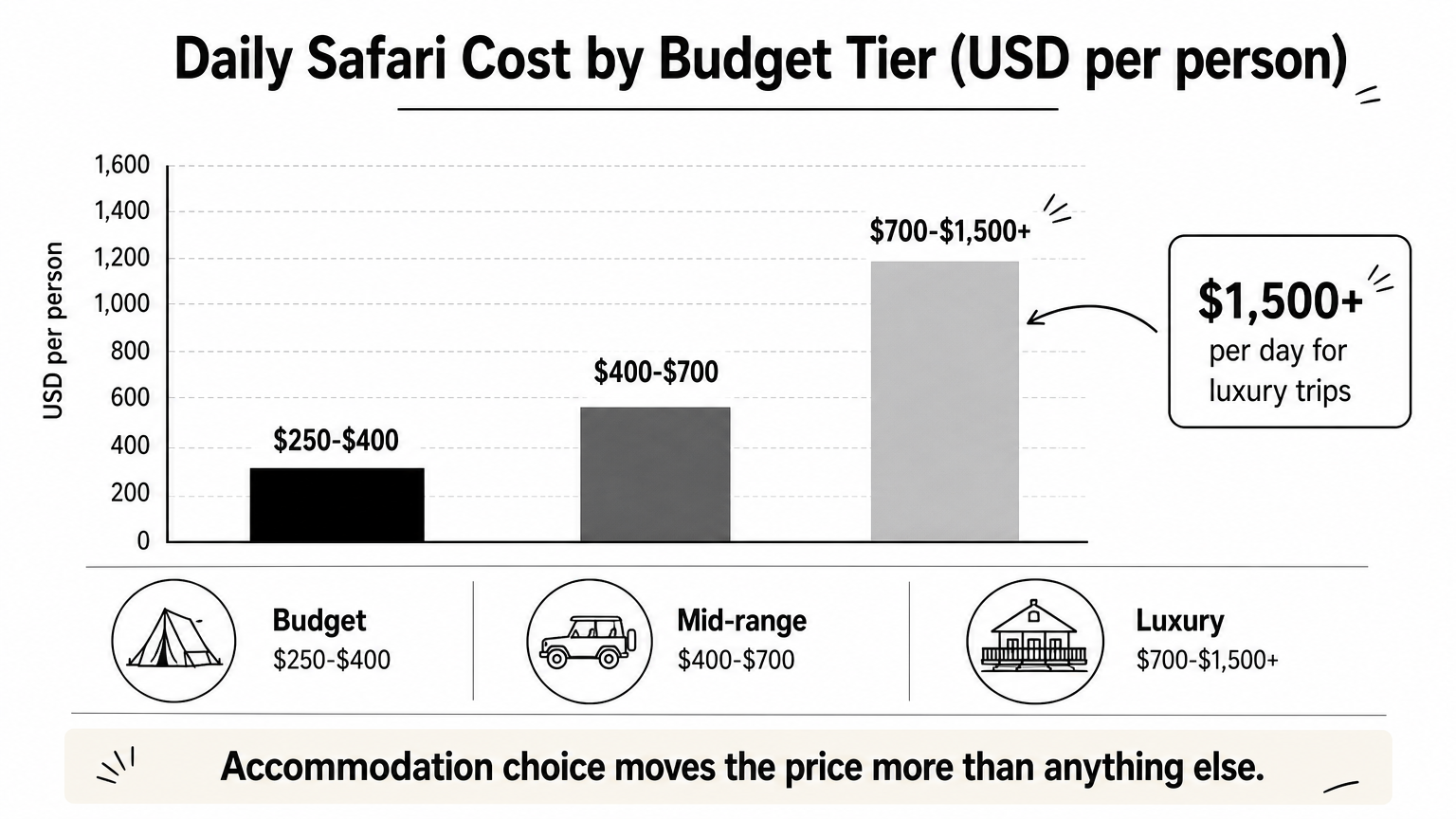
Budget determines almost every other choice you’ll make, from which camps you can book to how many days you can afford in each park. A serengeti and ngorongoro crater safari typically runs from around $250 per person per day on the budget end to $1,500 or more per day for luxury trips, and that spread comes down to accommodation type, vehicle exclusivity, and season, as our guide to safari package prices and inclusions breaks down line by line. Before you start emailing operators, decide roughly where you sit on that range so you’re not wasting time comparing quotes that aren’t actually built for your trip.
What drives the price up or down
Several factors push your daily cost higher or lower, and it helps to know which ones matter most before you start negotiating with an operator.
| Budget tier | Daily cost per person (USD) | Typical accommodation | Vehicle setup |
|---|---|---|---|
| Budget | $250-$400 | Basic tented camps, shared facilities | Shared group vehicle |
| Mid-range | $400-$700 | Permanent tented camps, ensuite | Private 4×4, small group |
| Luxury | $700-$1,500+ | Luxury lodges, premium tented camps | Private 4×4, dedicated guide |
Your accommodation choice moves the price more than almost anything else on the itinerary.
Season also swings costs by 30-50%, with June through October and the calving months of January through March commanding the highest rates. Park fees add up too: Serengeti entry runs around $70 per person per day, and Ngorongoro Conservation Area fees add another $70-$90, plus a crater service fee of roughly $200 per vehicle. These government fees are fixed regardless of operator, so they won’t change no matter who you book with.
Building a realistic total
Adding up flights, park fees, accommodation, and a private vehicle with guide gives you your real number, and it’s worth doing this math yourself rather than trusting a single quoted headline price. For a 6-day ngorongoro crater and serengeti safari, expect a mid-range total somewhere between $2,400 and $4,200 per person, not counting international flights.
Questions to ask before you commit
Use this checklist when comparing quotes from different operators, since line items get hidden more often than you’d expect:
- Does the quote include park fees and crater service fees, or are those extra?
- Is the vehicle private to my group, or shared with other travelers?
- What’s included for meals and drinks at each camp?
- Are airport transfers and domestic flights bundled in?
Getting clear answers here prevents the sticker shock that comes from a quote that looked cheap until the extras got added on afterward.
Step 4. Choose lodges, tented camps, or camping
Accommodation style shapes your whole safari experience, not just your comfort level at night. A serengeti and ngorongoro crater safari can put you in anything from a permanent luxury lodge with a swimming pool to a mobile tented camp that moves with the migration, and each option changes your budget, your proximity to wildlife, and how much of an adventure the trip actually feels like. Picking the wrong style for your travel personality is one of the most common regrets travelers mention after the fact.
Lodges versus tented camps
Tanzania’s top safari lodges give you permanent structures with solid walls, reliable electricity, and often a pool or spa, which suits travelers who want hotel-level comfort after a long game drive. Tented camps, by contrast, put you closer to the sounds of the bush, with canvas walls and en-suite bathrooms in mid-range and luxury options. Many seasoned safari-goers actually prefer tented camps because they feel more immersive without sacrificing much comfort.
| Style | Comfort level | Wildlife immersion | Typical price tier |
|---|---|---|---|
| Permanent lodge | High | Moderate | Mid-range to luxury |
| Permanent tented camp | High | High | Mid-range to luxury |
| Mobile tented camp | Moderate-high | Very high | Mid-range to luxury |
| Public campsite | Basic | High | Budget |
The canvas wall between you and the bush is what turns a safari into an experience instead of just a wildlife tour.
When mobile camps make sense
Mobile tented camps, among the best safari camps in the Serengeti, follow the wildebeest migration, relocating a few times a year to stay near the herds. Booking one during peak migration months puts you within a short drive of the action instead of commuting an hour each way from a fixed lodge. This matters most if your trip is timed specifically around river crossings, since a fixed-location lodge can leave you far from the herds if they’ve shifted position that week.
Camping for budget travelers
Budget-conscious travelers sometimes opt for public campsites inside or near the parks, using basic tents and shared facilities, the approach behind most low-cost Tanzania safari tours. This cuts accommodation costs dramatically but trades away privacy and comfort, and it’s worth pairing with a private vehicle rather than a shared group truck if wildlife time matters more to you than saving on tents.
Matching style to your trip
Before booking, ask yourself which factors matter most for your ngorongoro crater serengeti safari:
- Do I want a pool and hot showers, or am I fine roughing it for better access?
- Am I traveling during peak migration and need proximity to moving herds?
- Is my budget tight enough that camping makes more sense than a tented camp?
- Am I traveling with kids who need reliable facilities over adventure?
We match accommodation style to travel personality when building tailor-made safari itineraries, so you’re not stuck choosing blind from a brochure.
Step 5. Pick a tour operator and safari vehicle
Operator choice matters more than most travelers expect, since it determines the guide’s skill, the vehicle’s reliability, and how quickly problems get solved if something goes wrong mid-trip. A serengeti and ngorongoro crater safari depends heavily on your guide’s ability to read animal behavior, communicate with other vehicles on radio networks, and navigate rough tracks without getting stuck. Choosing the wrong operator can turn a well-planned itinerary into a frustrating string of missed sightings and vehicle breakdowns.
Local operators versus international agencies
Booking directly with a Tanzania-based safari tour operator usually costs less than going through an international agency, since you’re cutting out a middleman markup that can run 20-30%. Local operators like Golden Trips Tanzania also know the parks firsthand, including which tracks flood after rain and where guides are currently spotting predators. International agencies can be useful for combined multi-country trips, but for a ngorongoro crater and serengeti safari specifically, a specialized local team usually delivers better value and faster communication.
A guide who knows the terrain personally will find you more wildlife than any brochure ever will.
Why vehicle setup changes your experience
Sharing a vehicle with strangers caps your flexibility, since the group has to agree on pacing and stops. A private safari tour with a pop-up roof 4×4, on the other hand, lets you linger at a sighting as long as you want and adjust the day’s route on request. Look for vehicles with working radios, since guides use them to share sightings across the network, which meaningfully increases how much wildlife you actually see in a day.
Vetting an operator before you book
Running through a short checklist before committing protects you from operators who look good online but underdeliver on the ground, and it helps to start from a shortlist of Tanzania’s most reputable safari companies:
- Do they have recent Tripadvisor or SafariBookings reviews mentioning specific guides by name?
- Is the vehicle private to your group, with a pop-up roof and working radio?
- Can they confirm the guide’s experience level and language skills upfront?
- Do they respond quickly to questions before you’ve even paid a deposit?
Speed and clarity in those early messages tell you a lot about how they’ll handle problems mid-safari. At Golden Trips Tanzania, every tailor-made safari itinerary comes with a private 4×4 and a named guide, so you know exactly who’s driving you through the Serengeti and Ngorongoro before you ever land in Arusha.
Step 6. Map your route between the two parks
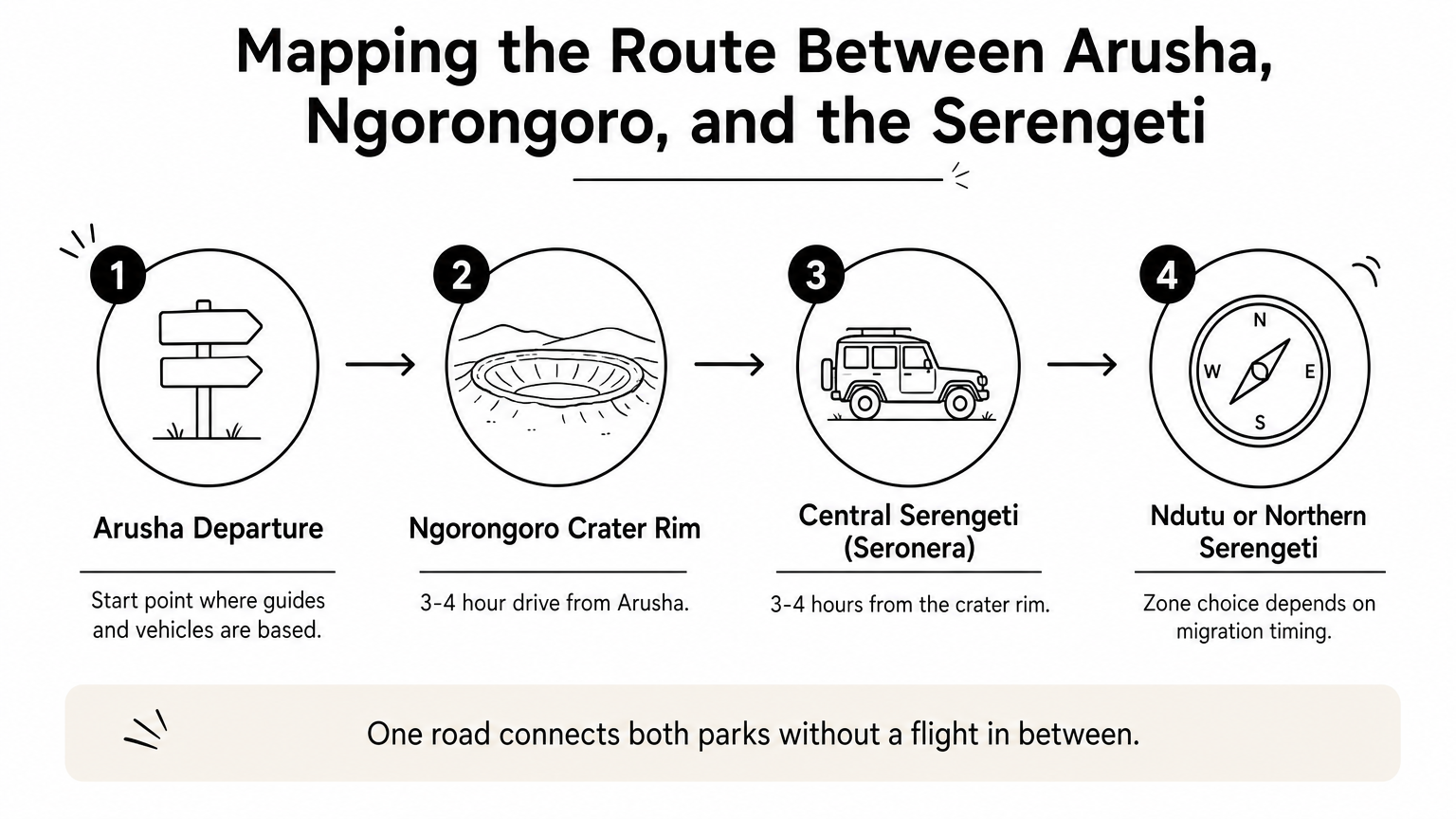
Route planning turns your chosen dates and days into an actual driving plan, and getting this wrong wastes hours you’d rather spend on game drives. A serengeti and ngorongoro crater safari almost always starts in Arusha, the gateway town where most operators base their vehicles and guides. From there, a single road runs west through Karatu and into the Ngorongoro Conservation Area, then continues on to the Serengeti, so the two parks connect without needing a flight in between.
Which direction to drive first
Going counterclockwise, Ngorongoro on the way in, Serengeti on the way out, works well for most itineraries, since it eases you into wildlife viewing before the long stretch of Serengeti plains. Some operators reverse the order to end the trip on the crater’s dramatic descent, which makes a strong final-day memory before your flight out. Neither direction changes drive times significantly, so pick whichever fits your preferred pacing.
A well-mapped route means more hours watching wildlife and fewer hours watching dust.
Typical drive times between key points
| Route segment | Approximate drive time |
|---|---|
| Arusha to Ngorongoro Crater rim | 3-4 hours |
| Ngorongoro rim to Seronera (central Serengeti) | 3-4 hours |
| Seronera to Ndutu | 1.5-2 hours |
| Seronera to Northern Serengeti (Mara River) | 3-4 hours |
| Ngorongoro back to Arusha | 3-4 hours |
Choosing where to base yourself in the Serengeti
Seronera sits centrally and offers year-round wildlife, making it a safe default if you’re unsure where the migration will be. Ndutu suits calving season specifically, and there are plenty of affordable camps and lodges in Ndutu, while the Northern Serengeti near the Mara River only makes sense if you’re chasing river crossings between June and September. Picking the wrong zone for your travel month is the single most common route mistake we see, since it can mean driving toward herds that already moved on.
Building flexibility into the plan
Options worth building into your route include an extra buffer day for road conditions after rain, a mid-trip fly-in to skip a long drive segment, or a flexible base camp that lets your guide adjust daily plans around current sightings. A serengeti and ngorongoro crater safari built with this kind of flexibility tends to deliver better wildlife outcomes than a rigid, pre-fixed daily schedule.
Step 7. Sort out permits, visas, and health prep
Paperwork rarely feels exciting, but skipping it can strand you at immigration or a park gate on day one. A serengeti and ngorongoro crater safari requires a valid Tanzania visa for most Western passport holders, plus proof of yellow fever vaccination if you’re arriving from or transiting through certain countries. None of this is complicated once you know what’s actually required, but leaving it until the week before departure creates unnecessary stress.
Visa requirements
Most travelers from the US, UK, EU, and Canada can get a Tanzania e-visa online before departure, or a visa on arrival at Kilimanjaro International Airport, though online application avoids the arrival queue, and our complete guide to safari visa rules for 2027 walks through the application step by step. Check current requirements directly through the US Department of State’s Tanzania travel page before booking flights, since rules and fees change periodically. Bring your passport with at least six months’ validity and two blank pages, since border officials in Tanzania enforce this strictly.
Park permits and fees
Good news here: your ngorongoro crater and serengeti safari operator handles all park entry permits and crater service fees directly, booking them alongside your vehicle and guide. You don’t need to arrange anything separately, though it’s worth confirming in writing that these fees are included in your quoted price rather than added on at the gate.
Vaccinations and malaria prevention
Yellow fever vaccination is mandatory only if you’re arriving from a country with risk of transmission, as our page on yellow fever entry rules for Tanzania explains, but the CDC recommends it as a general precaution for travel to Tanzania. Check the CDC’s Tanzania travel health page for a full, current list of recommended vaccines, which typically includes hepatitis A, typhoid, and routine boosters. Malaria risk exists across the safari circuit, so most doctors prescribe a prophylaxis like Malarone or doxycycline starting before your trip.
A quick pre-trip doctor visit is cheaper insurance than dealing with a health scare mid-safari.
Final health checklist
Run through this list about a month before departure:
- Confirm visa type and apply online if eligible
- Check yellow fever requirement based on your travel history
- Book a travel clinic appointment for vaccines and malaria prescription
- Buy travel insurance covering medical evacuation, since remote park areas lack nearby hospitals
- Pack a basic first aid kit with rehydration salts and any personal medications
Handling these steps early means your only remaining decisions once you land involve wildlife, not paperwork.
Step 8. Pack the right gear for plains and crater
Gear choice affects your comfort far more than most first-time travelers expect, since the Serengeti and Ngorongoro throw very different conditions at you within the same week. A serengeti and ngorongoro crater safari takes you from dusty, hot plains at 3,000 feet to a crater rim that sits over 7,000 feet up and drops noticeably cold at night, so packing for one climate leaves you unprepared for the other. Getting this list right before you fly, ideally against our ultimate safari packing list, saves you from either overpacking a bulky suitcase or shivering through a 6am game drive.
Clothing that handles both environments
Layering is the whole strategy here, since temperatures swing more than 30 degrees Fahrenheit between a midday game drive and a pre-dawn crater descent. Pack neutral-colored clothing (khaki, olive, brown) rather than bright colors or all-black, since bright colors startle wildlife and dark colors attract tsetse flies in some areas, and our guide on how to dress for a Tanzania safari covers the rest. A warm fleece or down jacket earns its space in your bag for early mornings at Ngorongoro’s rim, even if you never touch it on the Serengeti plains.
Pack for a cold mountain morning and a hot savanna afternoon, because you’ll get both in the same 24 hours.
Essential gear checklist
| Category | Items |
|---|---|
| Clothing | Neutral-colored layers, warm jacket, sun hat, sturdy closed shoes |
| Optics | Binoculars (8×42 or similar), camera with zoom lens |
| Health | Sunscreen, insect repellent with DEET, personal medications |
| Practical | Reusable water bottle, dry bags for dusty roads, headlamp |
| Documents | Passport, visa printout, travel insurance details, vaccination card |
What to leave at home
Skip heavy hardshell suitcases, since most light aircraft transfers and even some road transfers enforce soft duffel bags with weight limits around 33 pounds. Camouflage clothing is also best avoided, since Tanzania restricts it for civilians in some contexts and it draws unwanted attention at checkpoints. Bright white clothing shows dust fast on the Serengeti’s dry tracks, so stick to the neutral palette even for casual camp wear.
A quick pre-departure gear check
Run through this shortlist a few days before you fly:
- Duffel bag under 33 pounds, soft-sided for light aircraft transfers
- Layered clothing covering both hot midday and cold early morning
- Binoculars and camera gear packed in a dry bag for dusty roads
- Malaria prophylaxis and personal medications in carry-on, not checked luggage
Getting your bag right means you spend your energy watching wildlife instead of digging through a suitcase for the jacket you packed at the bottom.
Sample Serengeti and Ngorongoro itineraries
Seeing a full itinerary laid out makes all the previous steps click into place, so here are two realistic templates you can adapt to your own dates, alongside our longer list of Serengeti safari packages to compare. Both assume you’re flying into Kilimanjaro International Airport and starting your serengeti and ngorongoro crater safari from Arusha, with a private 4×4 and guide throughout.
A 6-day mid-range itinerary
This length suits first-time travelers who want solid wildlife time without a huge time commitment. Numbers below reflect a mid-range budget with permanent tented camps.
| Day | Activity | Overnight |
|---|---|---|
| 1 | Arrive Kilimanjaro, transfer to Arusha | Arusha |
| 2 | Drive to Ngorongoro Conservation Area, afternoon at leisure | Crater rim |
| 3 | Full-day crater floor game drive, continue to Serengeti | Central Serengeti |
| 4 | Full-day game drive, Seronera area | Central Serengeti |
| 5 | Morning game drive, afternoon transfer or flight back | Arusha |
| 6 | Depart Kilimanjaro | – |
Six days gets you a genuine taste of both parks, but it leaves little room for bad weather or slow wildlife days.
A 9-day itinerary for migration chasers
Extending to nine days gives you real flexibility, particularly if you’re timing your trip around river crossings or calving season. This version spreads nights across two Serengeti zones instead of one.
| Day | Activity | Overnight |
|---|---|---|
| 1 | Arrive Kilimanjaro, transfer to Arusha | Arusha |
| 2-3 | Drive to Ngorongoro, full-day crater game drive | Crater rim |
| 4-5 | Transfer to central Serengeti, game drives | Central Serengeti |
| 6-7 | Move to northern Serengeti or Ndutu depending on season | Northern Serengeti / Ndutu |
| 8 | Final morning game drive, transfer to airstrip | Arusha |
| 9 | Depart Kilimanjaro | – |
Moving between zones like this adds driving time, so most operators arrange a short domestic flight between the crater area and the Serengeti’s northern airstrips to save you a half day on rough roads.
Adjusting either template is easy once you know your priorities from the earlier steps, whether that means swapping a night for Zanzibar, adding a Ndutu detour, or upgrading to five-star camps and private game drives. We build every ngorongoro crater serengeti safari at Golden Trips Tanzania around a free trip quotation, so you can start from one of these templates and adjust it to your own dates and budget before committing to anything.
Turning your plan into an adventure
You now have everything you need to plan a serengeti and ngorongoro crater safari that actually fits your dates, budget, and travel style, instead of copying someone else’s template. Timing the migration, setting a realistic budget, picking the right camps, and mapping a sensible route matter far more than chasing the cheapest quote you find online. Get those decisions right and the paperwork, packing, and logistics fall into place easily.
Getting the plan right on paper is only half the job. Real trips need a local team who knows current road conditions, where the herds are this week, and which camps actually deliver on their brochure photos. That’s the difference between a good itinerary and a great trip.
Ready to turn this plan into a booked trip? Browse our custom-built Tanzania safari packages and let our Arusha-based team build your safari around the exact steps you just read.