

Booking a Serengeti trip from another continent is a leap of faith, and that’s exactly why you’re hunting through serengeti safari reviews before you hand over a deposit. Glossy brochures all promise the same thing: endless plains, roaring lions, the wildebeest migration. What they don’t tell you is which Tanzania safari operator actually delivers, which guides know where the animals are hiding, and which trips fall apart the moment the itinerary hits a bumpy road.
This article pulls together what real travelers say after they’ve come home, dusty boots and all. You’ll see the patterns that separate a trip worth every dollar from one that leaves guests disappointed, from vehicle quality and guide expertise to how operators handle the unpredictable parts of a safari, like weather, wildlife movement, and last-minute changes.
We’ll walk through what reviewers consistently praise, what red flags show up again and again in negative feedback, and how to read between the lines of a five-star rating. Whether you’re comparing Serengeti safari packages from a handful of operators or just want to know what a great Serengeti safari actually looks like on the ground, this breakdown gives you the honest picture before you commit your travel budget.
Why serengeti safari reviews matter before you book
A Serengeti safari isn’t an impulse purchase. Most travelers spend between $3,000 and $8,000 per person for a week-long trip, and that’s before flights, so it pays to know what each price tier actually includes. Real money is on the line, and so is a trip you may only take once in your life. When you’re weighing that kind of investment against a website full of stock photos, serengeti safari reviews become the closest thing you have to a second opinion from someone who’s already taken the risk.
The best predictor of your safari isn’t the itinerary on paper, it’s what the last hundred travelers said about the guide who actually drove them.
The stakes are higher than a typical vacation
Unlike a beach resort you can swap for another one mid-trip, a safari happens in remote parks with limited cell signal and no easy do-overs. If your guide doesn’t know where the cheetahs were spotted that morning, or your vehicle breaks down an hour from camp, you don’t get a refund and a rebooking, you lose a day of a trip you flew thousands of miles to take. Reviews from past guests tell you how operators handle these moments before they happen to you, not after you’ve already paid.
Reviews expose the gap between marketing and reality
Every operator’s homepage says the same thing: expert guides, comfortable vehicles, unforgettable wildlife. Traveler feedback is where that language gets tested. A five-star review that names a specific guide, describes an actual leopard sighting, or mentions how the driver rearranged a route to avoid a crowded lodge tells you far more than a generic testimonial ever could. When reviews consistently repeat the same details across dozens of guests, from vehicle radios that coordinate sightings between vehicles to guides who remember dietary restrictions without being reminded, you’re looking at a pattern, not a fluke.
What review patterns actually signal
Star ratings alone don’t tell the full story. It helps to look at what shows up again and again across a spread of reviews, not just the headline score.
| Pattern in reviews | What it usually signals |
|---|---|
| Guides mentioned by name repeatedly | Consistent staffing, not rotating strangers |
| Specific wildlife detail (species, behavior, location) | Guests actually saw what they paid for |
| Comments on vehicle condition and pop-up roofs | Comfort during 8+ hour game drives |
| Mentions of flexibility with itinerary changes | Operator adapts to weather and migration timing |
| Complaints clustered around one trip date | Isolated incident, not a systemic issue |
Golden Trips Tanzania built its own reputation on this kind of detail, with over 187 Tripadvisor reviews that name specific guides and describe specific game drives rather than vague praise. Studying that pattern across any safari company in Tanzania you’re considering, including looking at how they structure their tailor-made safari itineraries, gives you a much clearer read on what your own trip will look like than any brochure can.
What travelers consistently say about their trips
Read through fifty or so serengeti safari reviews and the same themes surface again and again, regardless of which operator wrote the itinerary. Guests talk about guides who spotted a leopard draped in a tree from half a mile away, drivers who radioed other vehicles the moment a lion kill happened, and camp staff who remembered a birthday without being told. These aren’t isolated compliments. They’re the recurring language of trips that actually delivered on the promise of an African safari.
The wildlife sightings people rave about
Migration timing dominates the praise. Travelers who visited the western corridor in June or the southern plains in February consistently describe Mara River crossings, newborn wildebeest, and predator action that matched or exceeded what they expected. Positive tanzania safari reviews almost always mention a specific animal encounter, not a vague “we saw lots of wildlife.” That specificity is the tell. When a reviewer names the exact spot where they watched a pride of lions stalk a herd, you know the guide put them in the right place at the right time, not just anywhere with a view.

The reviews that matter most are the ones with a specific animal, a specific place, and a specific guide’s name attached.
The human side guests remember most
Beyond the animals, guests write about the people. A guide who explained Maasai land use during a drive, a driver who slowed down so a photographer could get the shot, a camp manager who upgraded a tent for an anniversary. These details show up far more often in five-star reviews than complaints about Serengeti lodges or food.
| Common praise theme | Why it matters |
|---|---|
| Guide’s local knowledge of animal behavior | Predicts sightings, not luck |
| Vehicle communication network | Faster access to rare moments |
| Personal touches (names remembered, special requests honored) | Signals a boutique-style operation over a volume tour |
| Flexibility around weather or migration shifts | Trip adapts instead of falling apart |
Taken together, these patterns tell you what a strong trip actually feels like on the ground, not just what it promises on paper.
How to read and evaluate safari reviews wisely
Reading through dozens of serengeti safari reviews without a system leaves you skimming star ratings and calling it research. Treat reviews like evidence, not endorsements, and you’ll spot the operators worth your money faster.
Look past the star rating
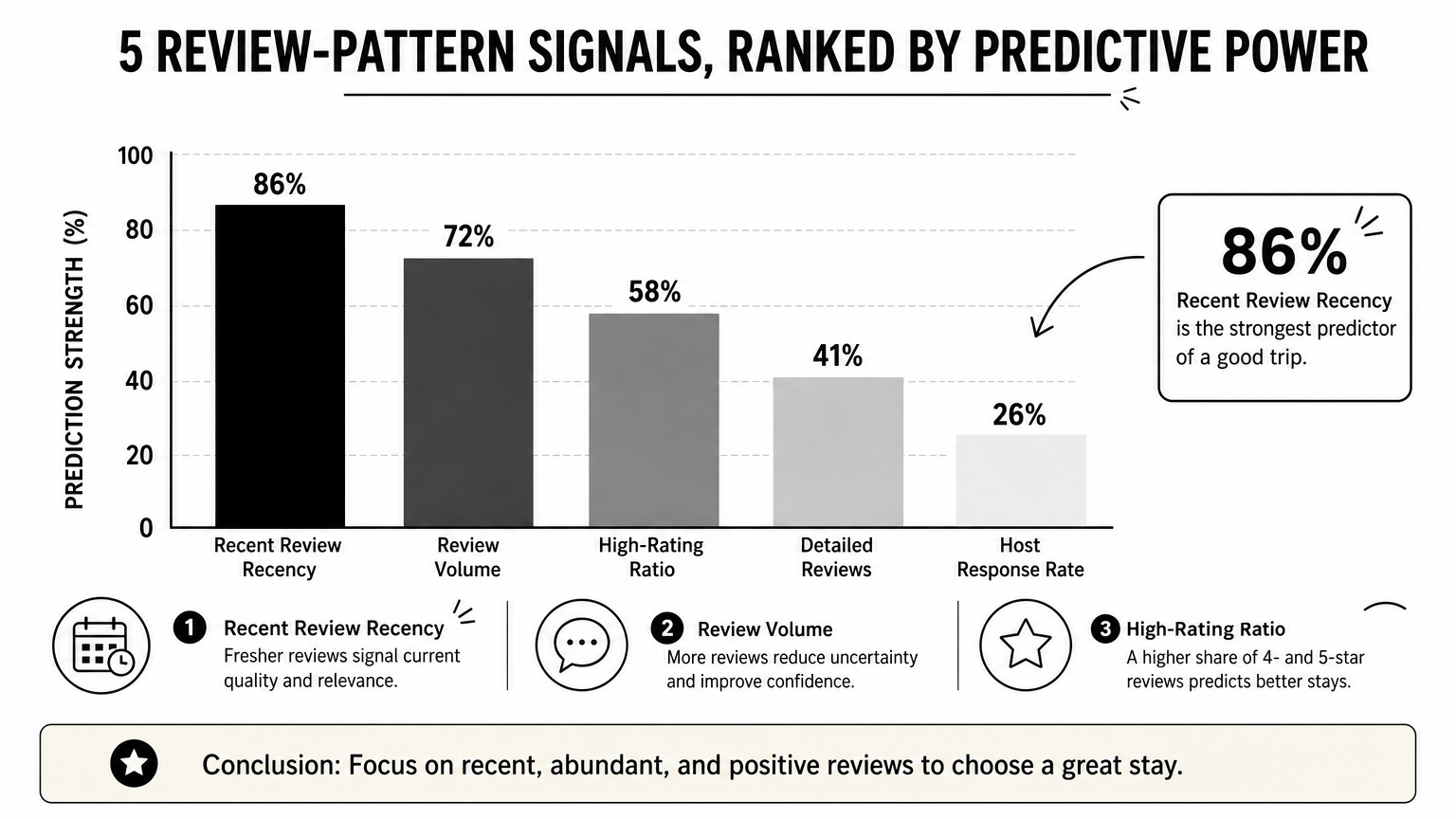
Stars tell you almost nothing on their own. A 4.8-star average built on three reviews means less than a 4.5-star average built on two hundred. Volume and consistency matter more than the number itself. Scroll past the summary score and read the actual text of at least fifteen to twenty reviews, focusing on ones written in the last twelve months, since guides rotate, vehicles age, and management changes.
A star rating tells you how someone felt, but only the written review tells you why.
Cross-reference across platforms
Don’t stop at one site. Compare what shows up on Tripadvisor against what appears on Google Reviews or the operator’s own testimonials page. If the same guide, the same vehicle setup, or the same complaint about slow WiFi at camp shows up across three different platforms written by unrelated travelers, that’s a real pattern. If glowing reviews only exist on the company’s own website, be skeptical.
Ask these questions as you read
Run each review through a short checklist before deciding how much weight to give it:
- Does it name a specific guide, driver, or camp staff member?
- Does it mention a specific park, date, or animal sighting rather than vague praise?
- Does the reviewer explain what went wrong, not just that something did?
- Is the review recent, ideally within the last 12 to 18 months?
- Does the reviewer’s trip length and budget match what you’re planning?
Weigh how the operator responds
How a company replies to criticism tells you as much as the review itself. An operator who acknowledges a mistake, explains what changed, and follows up publicly is showing you exactly how they’ll handle a problem on your own trip. One who deletes negative reviews or responds defensively is telling you something too.
Red flags and standout praise to watch for
Certain phrases in serengeti safari reviews should stop you mid-scroll, no matter how polished the rest of the writeup sounds. Patterns matter more than any single complaint, so watch for repetition across reviewers who never met each other.
Warning signs that predict a rough trip
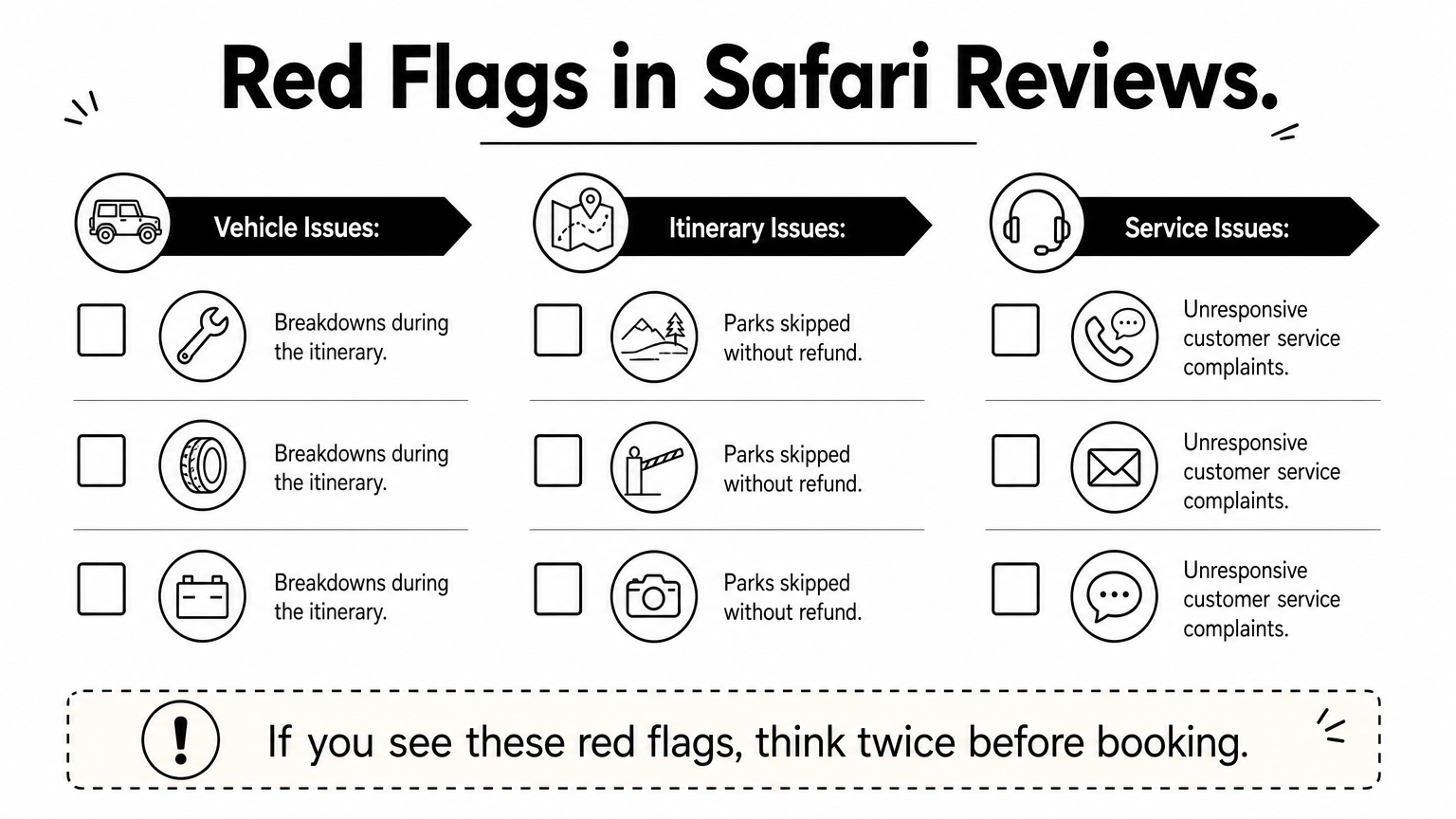
Vague five-star reviews are almost as suspicious as one-star rants. Generic praise with no specifics (“amazing trip, highly recommend”) often comes from a friend, a rushed guest, or worse, a paid placement. Real red flags cluster around a few recurring complaints:
- Guides swapped mid-trip with no explanation
- Vehicles that broke down more than once during the itinerary
- Itineraries that skipped promised parks without a refund or adjustment
- Multiple reviewers mentioning the same unresponsive customer service issue
- Operators responding to criticism with defensiveness instead of accountability
One bad review from a picky traveler means little. Five reviews across two years describing the same broken promise means the operator hasn’t fixed the problem.
One complaint is an outlier, five identical complaints across two years is a pattern you should trust.
Praise that actually predicts a great trip
Standout reviews share a different kind of specificity. Reviewers describe a guide adjusting the route because rain moved the herds, a driver who knew exactly which crossing point the wildebeest would use that week, or a camp team that handled a medical concern calmly and fast. This is the language that separates a genuinely well-run safari from one that just photographs well.
| Standout praise signal | What it confirms |
|---|---|
| Guide adapted plans around weather or migration | Real expertise, not a fixed script |
| Staff handled an emergency or complaint smoothly | Operator has systems, not just good luck |
| Reviewer mentions returning or recommending the same guide by name | Consistent quality across trips |
Golden Trips Tanzania’s own reviews follow this second pattern closely, with repeat mentions of the same guides handling changes in weather and migration timing without guests losing a day of their trip. That consistency, more than any star average, is what you’re really shopping for.
Making sense of it all before you go
Good serengeti safari reviews aren’t decoration on a website, they’re a record of what actually happened to people who trusted their money and vacation time to an operator. The details matter more than the star count: named guides, specific sightings, honest responses to complaints, and patterns that repeat across dozens of unrelated travelers. Skim past the vague five-star praise and the isolated one-star rant, and focus on what shows up again and again.
Once you’ve read enough reviews to spot those patterns, and read a complete guide to the Serengeti, you’ll know exactly what questions to ask before you book, and exactly what to expect once you’re bouncing down a dirt track toward the plains. That’s the whole point of doing this homework: fewer surprises, more of the trip you actually paid for.
If you want to compare that pattern of consistent, specific praise for yourself, read the traveller reviews of Golden Trips Tanzania before you plan your own Serengeti trip.