

Picture drifting silently over the Serengeti at dawn, watching a herd of elephants move across golden grass while the sun breaks over the horizon. That image sells a lot of trips, but a serengeti balloon safari costs real money and books up fast, so you need facts before you commit, not just marketing photos.
This guide answers what you’re actually searching for: how much a hot air balloon safari serengeti experience costs, which operators run them safely and reliably, what the one-hour flight actually involves, and whether it fits your itinerary and budget. You’ll get straight answers instead of vague brochure language.
We’ll walk through pricing (expect to pay premium rates for a bucket-list activity), the champagne breakfast that follows landing, best times of year tied to the wildebeest migration, and how to fit a balloon safari in serengeti plans without wrecking your morning game drive schedule. As a Tanzania-based operator that builds custom safari itineraries around experiences like this one, we’ve seen what works and what disappoints travelers, and we’ll tell you both.
Why take a hot air balloon safari over the Serengeti
Few activities in Tanzania change your view of the landscape as fast as a sunrise balloon flight over the Serengeti plains. From a vehicle, you see the plains at eye level, dust and grass blocking half of what’s out there. From a basket rising silently at dawn, you see the whole system at once: rivers cutting through the grassland, herds moving in patterns you’d never notice from the ground, and the curvature of the plains stretching toward Kenya, the full landscape covered in our complete guide to Serengeti National Park. Pilots typically climb to around 1,000 feet, then drop low over treetops and waterholes when wildlife is close. That range gives you both the big picture and the intimate moments, often in the same flight.
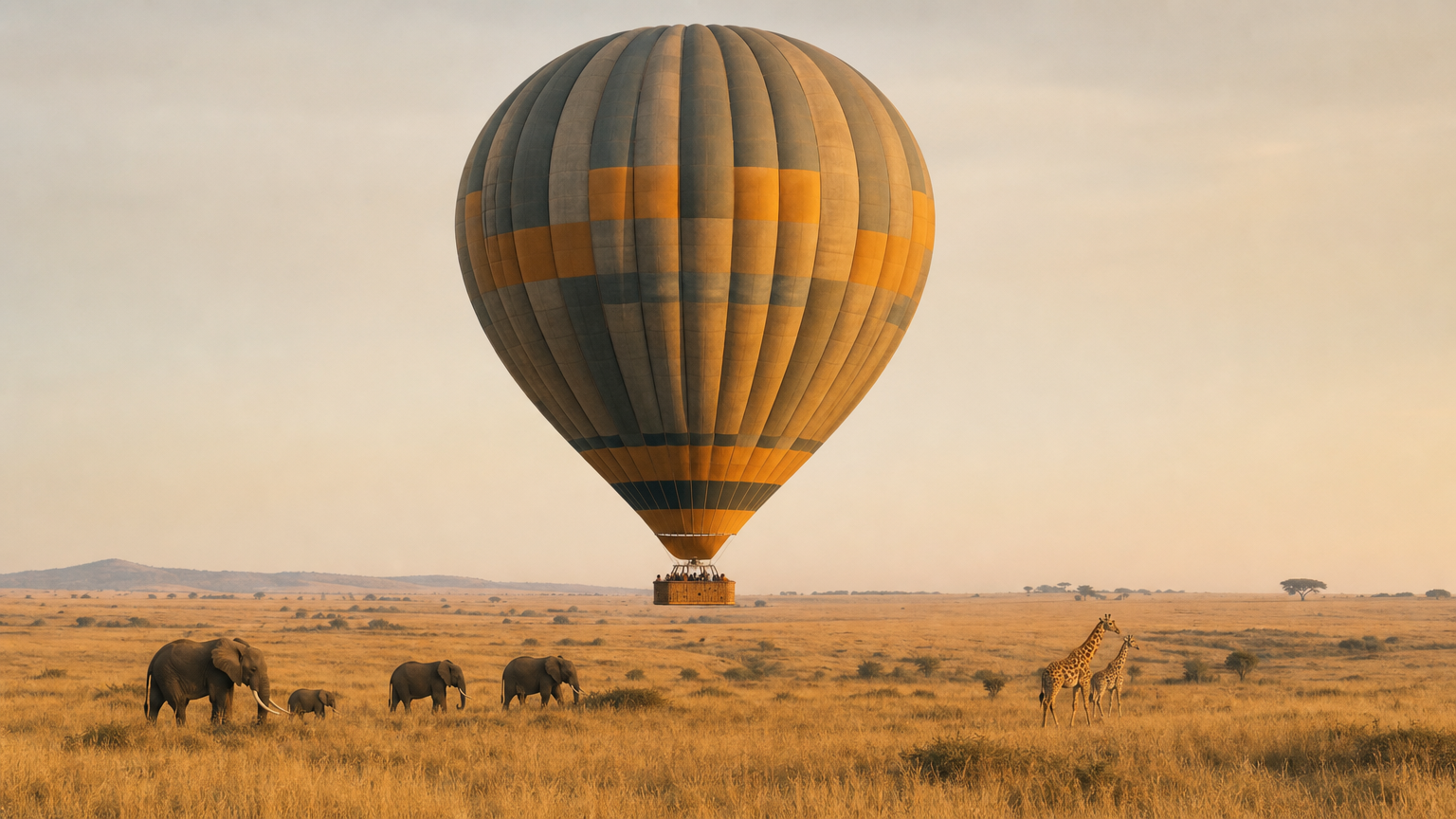
Beyond the view, there’s the silence. Balloons only fire their burners in short bursts, so most of the flight happens without engine noise, tire crunch, or radio chatter from other vehicles. Animals below rarely react to a balloon the way they react to a truck, so you often catch elephants, giraffes, and buffalo behaving exactly as they would if no one were watching. Pilots who’ve flown the same stretch of Serengeti for years know where predators tend to rest at sunrise, and a good one will time the flight path to pass over those spots when the light is best.
A balloon doesn’t just show you the Serengeti, it shows you the Serengeti behaving as if you weren’t there.
Balloon safari vs. game drive: what’s different
A hot air balloon safari serengeti trip isn’t a replacement for game drives, it’s a complement to them. Each covers ground the other can’t.
| Factor | Balloon Safari | Game Drive |
|---|---|---|
| Duration | About 1 hour in the air | 3-4 hours typical morning drive |
| Vantage point | Aerial, up to 1,000 ft | Ground level, vehicle roof |
| Noise level | Nearly silent | Engine noise, other vehicles nearby |
| Wildlife interaction | Passive observation from above | Close-up sightings, tracking behavior |
| Best for | Landscape views, migration patterns, sunrise light | Predator kills, close animal behavior, photography detail |
| Physical demand | Minimal, standing in basket | Sitting, some rough terrain jostling |
Neither trip beats the other. A serengeti hot air balloon safari gives you scale and light; a game drive gives you detail and proximity. Most travelers who fly do it as one memorable morning within a multi-day Serengeti safari tour built around vehicle-based game viewing.
A different kind of morning start
Getting up before 5 a.m. sounds rough until you realize what it buys you. Ground crews inflate the balloon in the dark using generator-powered fans, then the burners take over, and you watch a giant nylon envelope rise off the grass in front of you. That process alone is worth the early wake-up call for most travelers, before you even leave the ground. Sunrise over the Serengeti happens fast, going from gray to gold in about fifteen minutes, and being airborne for that transition puts you in a different category of experience than watching it from a lodge deck.
Who this experience is really for
Couples planning anniversary and honeymoon safaris book a disproportionate share of these flights, and it’s easy to see why: champagne breakfasts, dramatic light, and a once-in-a-lifetime feel line up perfectly with a special occasion. Families with older kids and solo travelers chasing a bucket-list moment fill the rest of the baskets. If you’re prone to motion sickness or nervous about small enclosed spaces, know that a balloon basket is open-air and the ride itself is smooth, more like floating than flying. The one real limitation is mobility: getting in and out of the basket requires stepping over a fairly high wall, so travelers with significant hip or knee issues should ask their operator about accessibility before booking a serengeti balloon tour.
How to book a Serengeti balloon safari
Most travelers don’t book a serengeti balloon safari directly with the balloon company. You book it as an add-on through your safari operator, who arranges the pickup, coordinates with your camp or lodge, and slots the flight into your existing game drive schedule. This matters because balloon launch sites shift with the migration season, and only an operator with current ground contacts knows which camp is actually close enough to make a 5 a.m. pickup realistic that week.
Lock in your date early
Only two companies hold government concessions to fly balloons over the Serengeti, and each flies a limited number of baskets per morning. Demand spikes hard during the wildebeest migration months, so a balloon safari in serengeti slot for July through October can sell out weeks in advance. If your travel dates fall in peak season, ask your operator to request the balloon flight at the same time you book your overall itinerary, not after you land in Tanzania.
Book the balloon flight when you book the itinerary, not after you land in Tanzania.
What to confirm before you pay
Before you hand over a deposit for a serengeti hot air balloon safari, get clear answers on the details that actually affect your morning. Ask your operator to confirm:
- Pickup time and location: which camp you’re staying at determines whether pickup is 4:30 a.m. or 5:30 a.m.
- Launch site for that season: central Serengeti (Seronera) or northern Serengeti, depending on where the herds are
- Weight limits: most operators cap passenger weight around 130 kg (287 lbs) for safety and fuel calculations
- Cancellation policy: high wind or rain can ground a flight, and you need to know if you get a refund or a rescheduled slot
- What’s included: the champagne breakfast and certificate are usually bundled in, but confirm before you’re surprised by an add-on fee
Fitting it into a custom itinerary
A balloon flight works best when it’s built into your trip from the start rather than bolted on last minute, since the early pickup and the breakfast afterward can eat into your morning game drive time. When we put together a client’s tailor-made Serengeti safari package, we schedule the balloon morning as a standalone half-day, then shift the vehicle game drive to the afternoon so nobody’s rushing through breakfast to make a 9 a.m. departure. If you’re still finalizing your route, get a free quotation from our team and we’ll tell you honestly whether a serengeti balloon tour fits your dates and camp locations before you commit to paying for one.
How much does a Serengeti balloon safari cost
Expect to pay between $600 and $700 per adult for a standard one-hour flight in 2026, with children usually priced between $450 and $550 depending on age and operator. That’s a steep number for a single morning activity, and it hasn’t moved much in recent years because only two companies hold the concession to fly, which keeps competition, and price pressure, low. A serengeti balloon safari for a couple runs $1,200 to $1,400 before you even add the safari vehicle time it displaces, so budget for it as a distinct line item rather than something that quietly fits inside your daily safari rate and what it covers.
The price tag reflects scarcity, not luxury markup: two operators, limited baskets, and a season that books out fast.
What’s actually included in the price
Most quotes bundle more than the flight itself, and knowing what’s covered helps you compare operators fairly rather than just comparing headline numbers.
| Included | Usually Covered | Sometimes Extra |
|---|---|---|
| Flight briefing and safety talk | Yes | – |
| One-hour balloon flight | Yes | – |
| Champagne bush breakfast | Yes | – |
| Flight certificate | Yes | – |
| Camp-to-launch site transfer | Yes | – |
| Tips for pilot and ground crew | No | Usually $10-20 per person |
| Professional in-flight photos | No | $50-100 add-on |
Gratuities catch a lot of first-time flyers off guard, since the pilot and ground crew work in the dark before sunrise to inflate and pack the balloon, and a tip in that $10-20 range per person is standard practice, not optional generosity.
Why a hot air balloon safari in the Serengeti costs so much
Running a hot air balloon safari serengeti operation isn’t cheap on the operator’s side either, and that cost gets passed straight to you. Each balloon burns propane at a rate that would surprise most passengers, ground crews need vehicles to chase and retrieve the balloon after landing, and the government concession fees for flying over a national park add another layer most tourists never see. Add mandatory insurance, pilot training and certification, and the short flying window each morning (usually just one flight per balloon before the wind picks up), and the math behind the price starts to make sense.
Is it worth the money
Setting aside romance and marketing, ask yourself if a serengeti balloon tour earns its place against other ways to spend that same $650. For most travelers on a multi-day Serengeti safari package already budgeted at several hundred dollars a day, the balloon flight is a splurge within a splurge, not a budget-breaker. If your trip is tighter on funds, a sunrise game drive delivers similar light and wildlife activity for the cost of your regular day rate, just without the aerial view or the champagne.
What to expect on the day of your flight
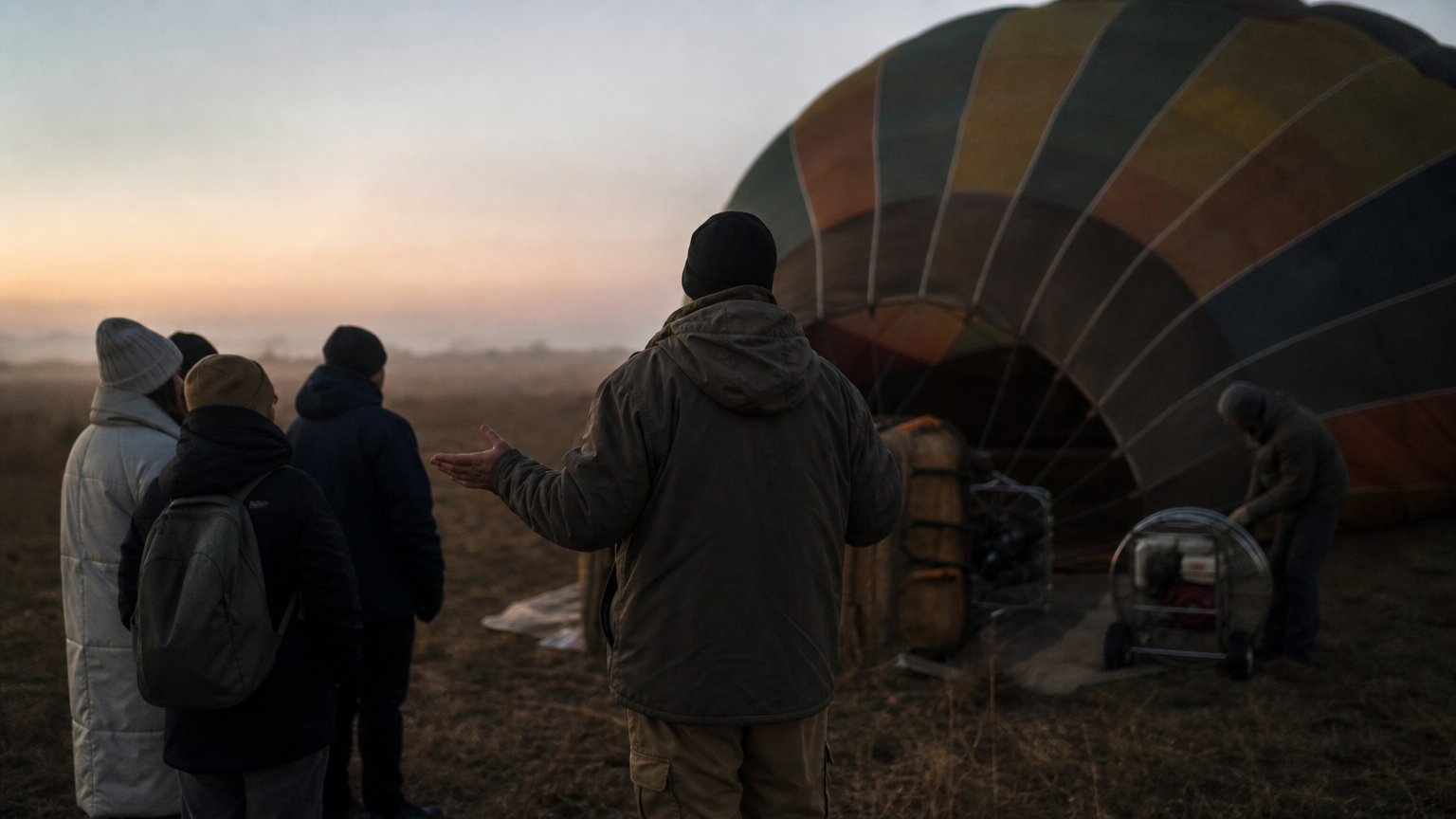
Your alarm goes off somewhere between 4:00 and 4:30 a.m., which feels brutal until the guide hands you a hot cup of coffee at the vehicle door. A short drive, usually 20 to 40 minutes depending on your camp, takes you across dark plains to the launch site, where you’ll likely spot other vehicles converging on the same open field. Ground crews are already working by the time you arrive, running generator fans to force cold air into the balloon envelope before the burners take over and heat it enough to stand upright.
Boarding and the flight itself
Your pilot gathers everyone for a short safety briefing before boarding, covering how to sit for landing and what to hold onto during the ascent. Climbing into the basket means stepping over a wall about hip-height, so wear pants you can move in, not a skirt or dress. Once airborne, a serengeti balloon safari settles into a rhythm of long silent glides interrupted by short bursts from the burner, and the basket rarely tilts more than a few degrees even when the pilot drops low over a herd.
The flight feels less like flying and more like the ground slowly falling away beneath you.
Expect the pilot to narrate what you’re seeing, since most have flown the same stretch of Serengeti for years and know which ridgelines hide lions at that hour. The full flight runs close to an hour, though wind speed can shorten it slightly on a given morning.
Landing and the bush breakfast
Landings on a serengeti hot air balloon safari range from a smooth touchdown to a bumpy skid across grass, and pilots are trained for both. Ground crews arrive within minutes to help everyone out and start packing the balloon back into its trailer. Then comes the part almost every traveler mentions afterward: a table set up in the open bush, white linen, champagne poured before 8 a.m., and a full cooked breakfast served while you watch the crew work behind you.
Here’s roughly how the morning unfolds:
- 4:00-4:30 a.m.: Wake-up call and coffee at camp
- 4:30-5:15 a.m.: Transfer to the launch site
- 5:15-5:45 a.m.: Balloon inflation and safety briefing
- 5:45-6:45 a.m.: The flight itself
- 6:45-8:00 a.m.: Landing, champagne bush breakfast, and flight certificate presentation
- 8:00-9:00 a.m.: Transfer back to camp or straight into your day’s game drive
You’ll receive a signed certificate marking the flight before the vehicle takes you back, and most travelers are wrapped up in time to still catch a shortened morning game drive if their itinerary is built that way.
Best time and launch sites for spotting the migration
Timing a serengeti balloon safari around the annual wildebeest migration across the Serengeti takes some planning, since the herds move in a rough loop through the ecosystem each year and the balloon launch site shifts to follow them. Operators reposition their balloons between the central Serengeti (Seronera) and the northern Serengeti (Kogatende) depending on the season, so the launch site that gets you over thousands of wildebeest in July won’t be the same one that works in February. Ask your operator which site is active for your travel dates before you lock in a flight, because booking the wrong month can mean drifting over quiet woodland instead of a Mara River crossing in progress.
Where the herds are, month by month
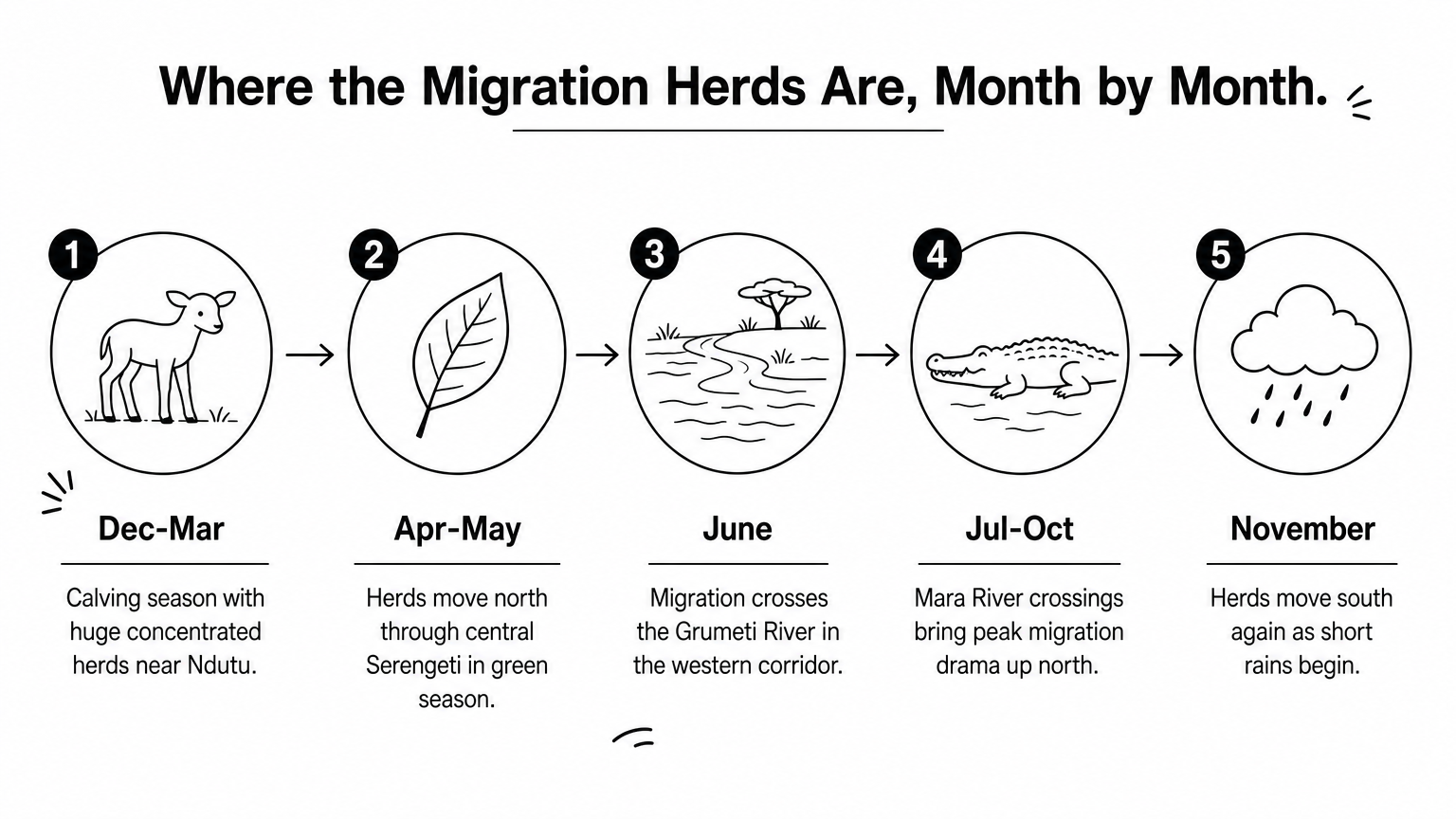
Getting this timing right is the single biggest factor in whether your flight delivers a big-game spectacle or a quieter scenic ride, so it pays to check the ideal months to visit the Serengeti in 2026/2027. Here’s a rough guide to what you’ll likely see depending on when you fly:
| Months | Launch Site | What You’ll Likely See |
|---|---|---|
| December-March | Southern Serengeti / Ndutu | Calving season, huge concentrated herds, newborn calves |
| April-May | Central Serengeti (Seronera) | Herds moving north, green season, fewer crowds |
| June | Western corridor | Migration crossing the Grumeti River |
| July-October | Northern Serengeti (Kogatende) | Mara River crossings, peak migration drama |
| November | Central Serengeti (Seronera) | Herds moving south again, short rains begin |
Fly over the wrong stretch of Serengeti in the wrong month and you’ll get a beautiful landscape with no wildebeest in it.
Seronera versus the northern launch site
Seronera sits close to most central Serengeti camps, which makes for an easier 4:30 a.m. pickup and a shorter transfer before sunrise. It works well outside peak migration months, when resident wildlife like lions, elephants, and giraffes still make for a rewarding flight even without huge herds passing through. The northern site near Kogatende, on the other hand, only operates during the migration’s peak window and requires staying at one of the safari camps in the northern Serengeti, since the drive from central Serengeti camps would eat too far into your morning.
Booking around the migration, not against it
Balloon operators know roughly where the herds sit in a given week based on ranger reports and pilot observations from recent flights, so check where the herds are month by month and ask your operator for their current read before committing to dates. A hot air balloon safari serengeti trip booked for peak migration season without confirming which camp puts you near the active launch site risks a beautiful flight over empty grass. If your itinerary already has you staying in the north during July through October, you’re set up well; if you’re unsure, this is exactly the kind of detail we sort out when we build a custom route for a client, matching camp location to the season the migration actually favors.
Tips for getting the most out of your flight
Getting real value out of a serengeti balloon safari comes down to small decisions you make before you even climb into the basket. Dress in layers, since the pre-dawn air at the launch site can feel close to 50°F, but temperatures climb fast once the sun clears the horizon and you’re airborne. Bring a light jacket you can tie around your waist rather than one you’ll be stuck carrying, and skip anything with a wide-brimmed hat, since the burner’s heat and the basket’s breeze will send it straight into the grass below.
What to pack in the basket
Space in a hot air balloon basket is tight, and pilots keep loose items to a minimum for safety, so pack smart rather than heavy and trim down your safari packing list for the morning. A few essentials make a real difference:
- A camera with a strap, not a bag, since you’ll want both hands free during ascent and descent
- A wide-angle lens or your phone’s standard lens, since the landscape shots matter more than zoomed wildlife close-ups from 1,000 feet
- Motion sickness tablets, only if you know you’re sensitive to small drops in altitude, though most flyers never need them
- A light jacket you can remove once the sun warms the basket
- Cash for tips, since the ground crew and pilot won’t have a card machine waiting for you at breakfast
Getting the photos worth keeping
Your position in the basket affects your photos more than your camera settings do, so ask to stand near a corner rather than the center, since corners give you an unobstructed view without another passenger’s shoulder in every frame. Shoot wide during the ascent to capture the scale of the plains, then switch to a slightly tighter frame once the pilot drops low over a herd or waterhole. Early morning light shifts fast, going from flat gray to warm gold in a matter of minutes, so keep your camera on and ready rather than buried in a bag between shots.
The best photo from a balloon flight is rarely the one you planned, it’s the one you were ready for when the pilot dropped low without warning.
Making peace with the early wake-up
A hot air balloon safari serengeti morning starts brutally early, and no amount of planning removes that. What helps is going to bed early the night before rather than fighting the schedule, and asking your camp to leave a thermos of coffee at your tent door rather than relying on a quick cup at the vehicle. Skip alcohol the night before if you can, since a 4 a.m. wake-up hits much harder with a mild hangover working against you.
Treat it as one morning, not the whole trip
Don’t build your entire safari around this single flight, since weather occasionally grounds balloons and no reputable operator promises a guaranteed reschedule during a short trip. Build in a buffer day if your dates allow it, and treat the flight as one unforgettable morning within a longer safari rather than the sole reason for your trip to the Serengeti.
A sunrise worth waking up for
A serengeti balloon safari isn’t cheap, and it isn’t necessary for a great trip to Tanzania. But if you’ve read this far, you already know what it buys: an hour of silence over the plains, a bush breakfast with champagne before 8 a.m., and a view of the migration you can’t get from a vehicle roof. Book it early, confirm the launch site matches your travel dates, and treat it as one morning within a longer safari, not the whole reason for the trip.
The details matter here more than the marketing photos do. Get the timing wrong and you’ll fly over quiet woodland instead of a river crossing. Get it right and you’ll land talking about it for years. If you want help matching your camp, your dates, and your budget to a flight that’s actually worth booking, explore our tailor-made private safari tours in Tanzania and we’ll build the morning around what you’re really after.