


 25 Sep 2026
 14 min read
A safari is a guided journey through a natural environment to observe wildlife, landscapes and the relationships that sustain them. It is not simply a drive past animals: it is a way to experience nature with the help of local knowledge, careful planning and respect for the places you visit.
For first-time travelers, understanding what is a safari makes it easier to compare safari tours, choose a suitable pace and decide whether a Tanzania safari should be combined with Zanzibar, Kilimanjaro or another destination. This guide explains what happens during a safari, where you stay, how guides and conservation fit in, and how to prepare.
What Is a Safari, Really?
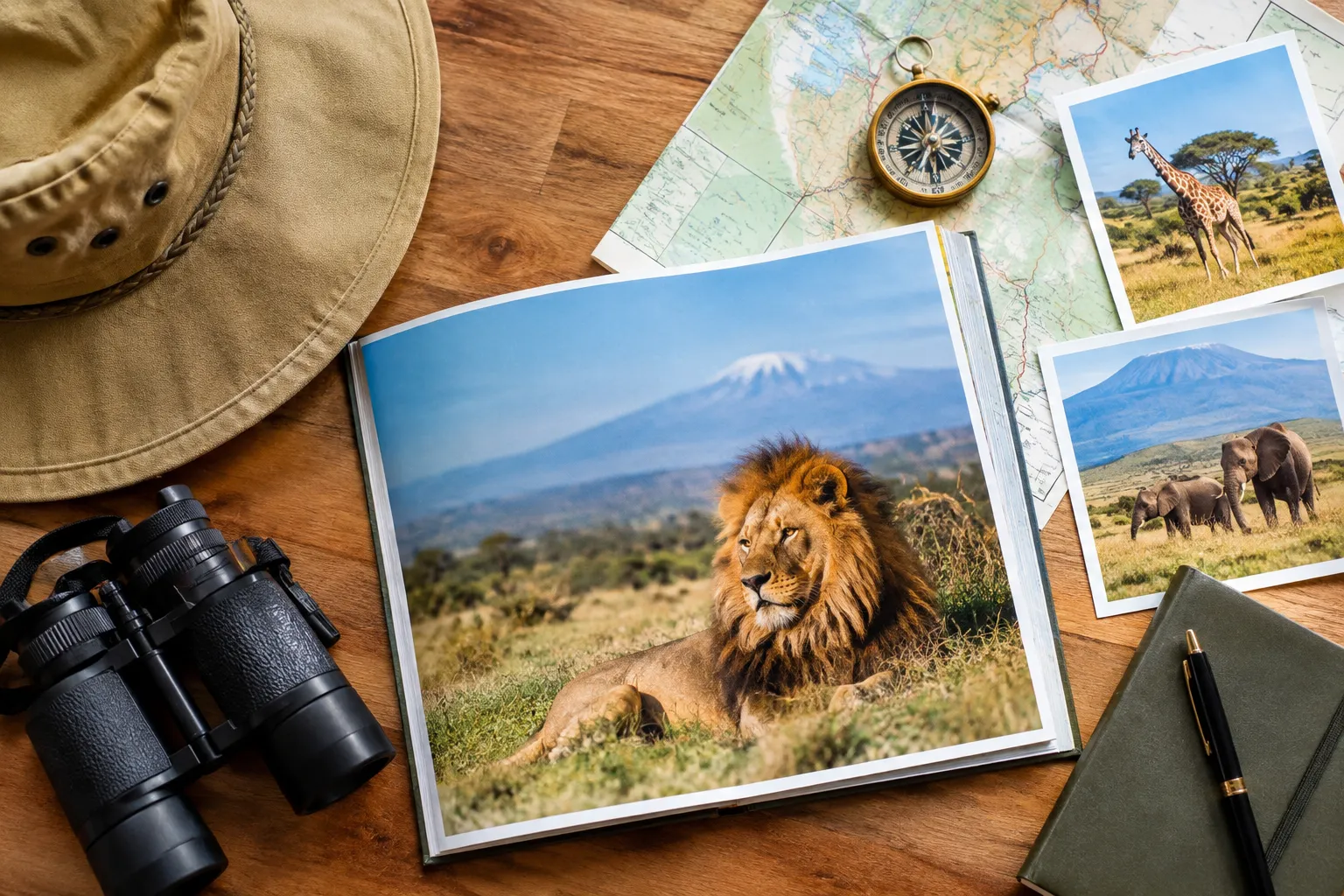
A safari is a planned wildlife journey, usually led by a trained guide in a protected natural area. Travelers may explore by vehicle, on foot or through other permitted activities while observing animals in their natural habitat.
A safari holiday can include wildlife viewing, landscapes, birdwatching, cultural experiences, meals, accommodation and time to rest. The details vary according to the country, parks, season, accommodation and travel style.
In Tanzania, a safari may involve visiting several parks or focusing on one region. A carefully planned route considers driving time, wildlife interests, accommodation and the overall pace rather than trying to include every possible destination.
Travelers comparing Tanzania safari tours can use the itinerary details to understand how different routes turn the idea of a safari into a practical journey.
What the word safari means
The word safari comes from a Swahili term meaning journey or travel. In modern tourism, it commonly refers to a guided trip focused on wildlife and natural environments, particularly in Africa.
The term does not describe one fixed type of holiday. A safari may be comfortable or simple, private or shared, vehicle-based or partly walking-based. It can also be combined with a beach stay, a mountain climb or cultural activities.
This is why asking “what is a safari?” requires more than a dictionary definition. The experience depends on how the trip is organized, where it goes and how travelers interact with the environment.
Why people go on safari
Wildlife is the obvious attraction, but it is not the only reason people choose safari holidays in Africa. Travelers may be interested in:
- Seeing animals behaving freely in their natural environment
- Understanding how predators, herbivores, birds and landscapes interact
- Experiencing different habitats, from open plains to woodland and wetlands
- Learning from a local safari guide
- Supporting protected areas and communities connected to tourism
- Photographing wildlife and landscapes
- Spending time away from crowded urban environments
- Combining a safari with Zanzibar or a Kilimanjaro climbing tour
A safari also involves uncertainty. Animals are not scheduled performers, and no responsible operator can guarantee a particular sighting. The value lies in observing nature as it is, including quiet periods, changing weather and unexpected discoveries.
This makes a safari different from a zoo visit. At a zoo, animals live in managed enclosures and visitors follow a predictable route. On safari, the animals choose where they go, the landscape is open and the guide must work within wildlife and park regulations.
What Happens on a Safari?
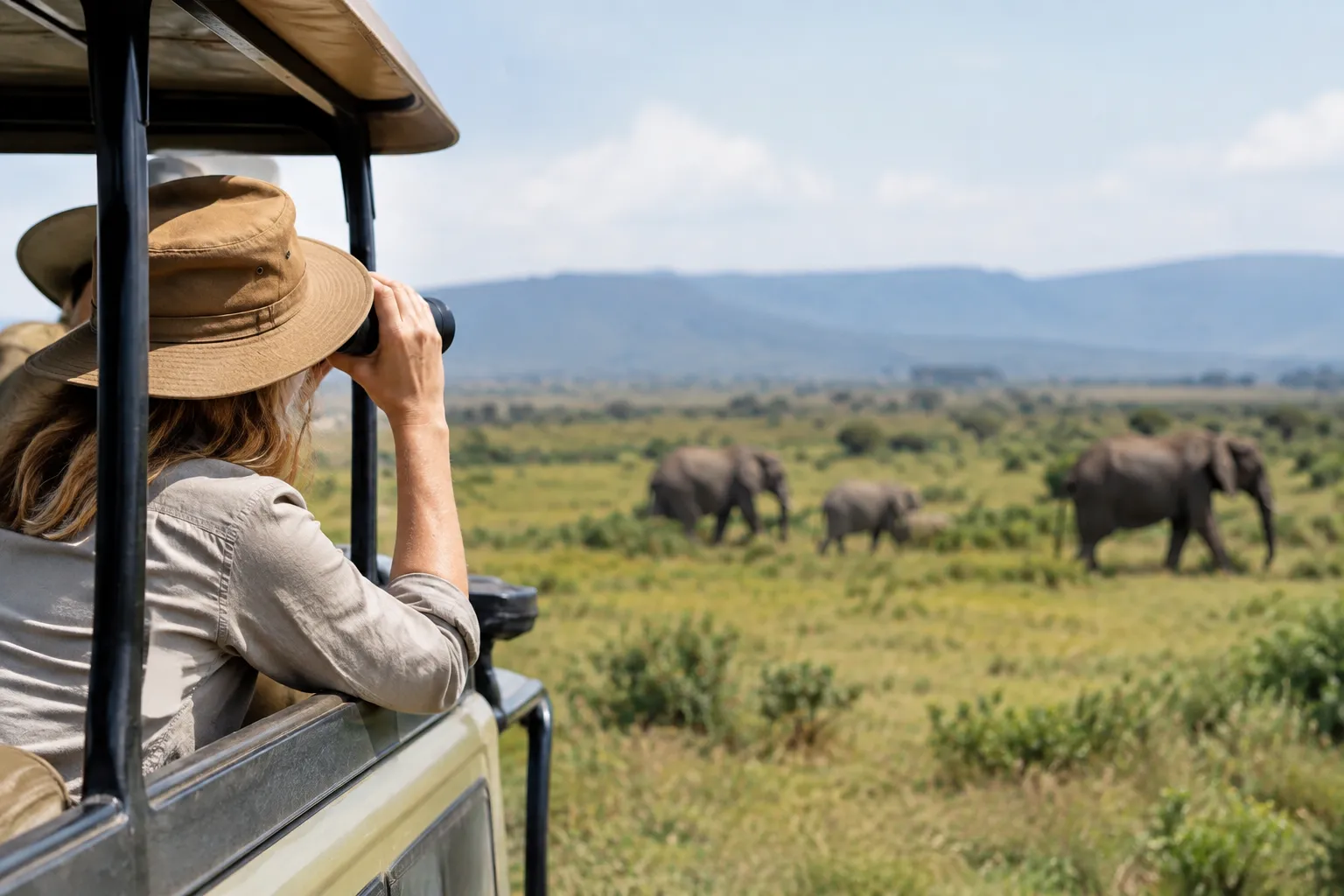
Most safari days combine travel, wildlife viewing, meals and rest. You may spend several hours in a safari vehicle, stop for a planned meal or break, and return to camp between activities.
The exact schedule depends on the park, accommodation, weather, road conditions and the preferences built into your itinerary. Some travelers want long game drives, while others prefer a slower route with more time at camp.
The Tanzania safari FAQ can help with practical questions about planning, timing and expectations before you choose a trip.
Game drives and wildlife viewing
A game drive is a guided wildlife outing in a purpose-suitable vehicle. The driver-guide follows permitted roads and tracks, watches the surroundings and explains what you are seeing.
The guide may look for:
- Animal tracks and other signs
- Movement in grass, woodland or water
- Alarm calls from birds or animals
- Fresh activity around water or feeding areas
- Changes in animal behavior
- Suitable viewpoints that allow respectful observation
A game drive is not a race between sightings. The vehicle may stop for several minutes to watch one animal, or it may continue because conditions are not suitable for a close approach. Patience is part of the experience.
Wildlife sightings vary from day to day. Visibility, weather, season, habitat and animal movement all influence what you see. A well-planned safari gives you opportunities to explore suitable areas, but it cannot control wild animals.
Travelers should also expect time spent driving between areas. These transfers are part of the journey and may reveal changing landscapes, smaller animals and birds that are easy to miss when focusing only on the most famous species.
Walking safaris and other activities
Some safari itineraries include guided walks, depending on the destination, local rules and the qualifications of the guide. Walking changes the experience because you notice smaller details such as plants, tracks, insects and sounds.
A walking activity may be shorter and more carefully controlled than a vehicle excursion. The guide explains how to move, where to stand and when to remain quiet. Travelers must follow instructions immediately, particularly when wildlife is nearby.
Other possible activities include:
- Birdwatching
- Cultural visits arranged with local communities
- Nature interpretation
- Photography
- Time at a viewpoint or picnic location
- Boat-based wildlife viewing where permitted
- Visits connected with conservation or local livelihoods
Not every safari includes every activity. When comparing itineraries, check what is specifically included rather than assuming that a brochure phrase covers a particular experience.
How guides shape the experience
A safari guide is more than a driver. The guide may interpret animal behavior, explain habitats, identify birds and plants, select routes and help travelers understand the wider environment.
Guides also manage practical safety. They judge distances, communicate with other guides when appropriate, follow park rules and decide when a vehicle should move away. Their choices can affect both the quality of a sighting and the welfare of the animals.
For first-time travelers, a good guide also makes unfamiliar situations easier. They can explain why the vehicle has stopped, what sounds to listen for and how to use binoculars or a camera without distracting from the experience.
When evaluating safari tours, ask how the itinerary is guided, how much time is spent driving and whether the pace gives the guide enough flexibility to respond to conditions.
A Typical Day on Safari
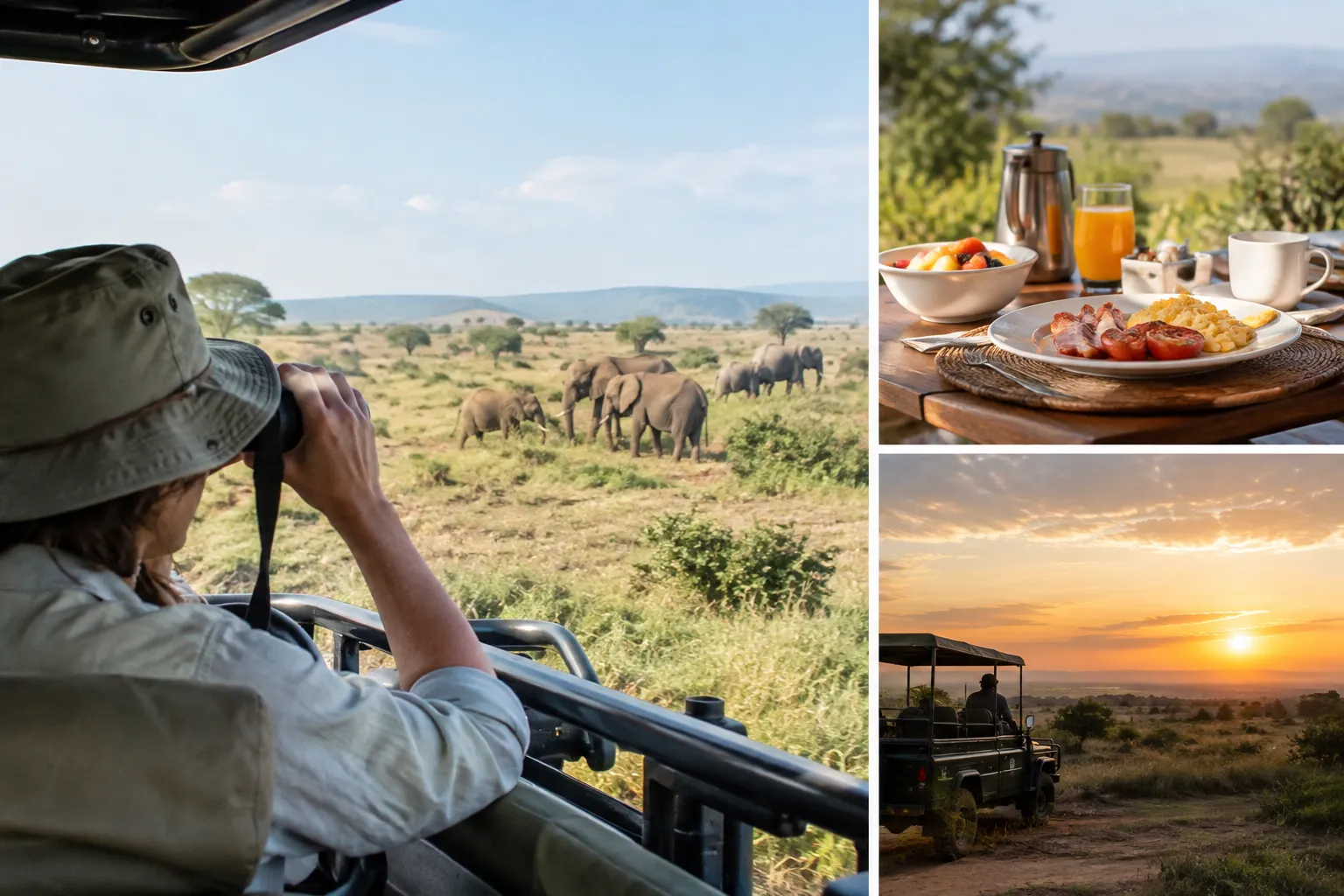
There is no single standard safari schedule, but many days are structured around periods when temperatures and light may be more comfortable for wildlife viewing. A day often includes an early departure, a longer activity, a rest period and another outing later.
The rhythm can feel active, but it should not be treated as a competition to remain in the vehicle from dawn until dark. Rest and flexibility matter, especially on longer safari holidays.
If your trip begins or ends on the coast, the practical connection between wildlife areas and the islands is explained in Safari from Zanzibar.
Morning and afternoon wildlife viewing
An early morning drive may begin before breakfast or with breakfast arranged for an early departure. The light can change quickly, and the cooler conditions may make the outing comfortable.
After morning viewing, travelers commonly return for breakfast or lunch and spend time resting. The middle of the day may be used for a nap, reading, swimming where available or enjoying the camp rather than continuing to drive.
An afternoon drive usually begins later, when the heat has eased. It may continue toward sunset, depending on park rules and the itinerary. Some travelers value the evening light; others prefer returning to camp before dark.
The right schedule depends on your priorities. Photographing animals may require patience, while families or travelers combining safari with other activities may prefer shorter outings and more downtime.
Meals, rest and time at camp
Meals may be served at a lodge, in a camp dining area or at a planned outdoor location where permitted. The arrangement varies by accommodation and route, so check the itinerary if dietary requirements or meal timing are important.
Rest time is a practical part of safari travel. Long drives, uneven roads, heat and early starts can be tiring even when the schedule looks manageable on paper.
At camp, you may have time to:
- Shower and change
- Charge selected devices where power is available
- Read or review photographs
- Talk with fellow travelers
- Listen to the natural surroundings
- Prepare for the next day
A well-paced safari balances wildlife viewing with recovery. Adding more parks is not always an improvement if it creates long transfers and leaves little time to enjoy each place.
Evenings in the bush
After sunset, camp life becomes quieter and the natural sounds may become more noticeable. Depending on the accommodation and local rules, the evening may include dinner, conversation, a campfire or an explanation of the next day’s plan.
Night movement is not the same as daytime movement. Travelers may need an escort between areas of camp, and walking alone may not be permitted. Follow instructions from camp staff even when the accommodation appears close to other buildings.
Some itineraries include night drives where they are authorized. These are separate activities with different expectations from daytime game drives, and availability depends on the destination and regulations.
Where You Stay on Safari
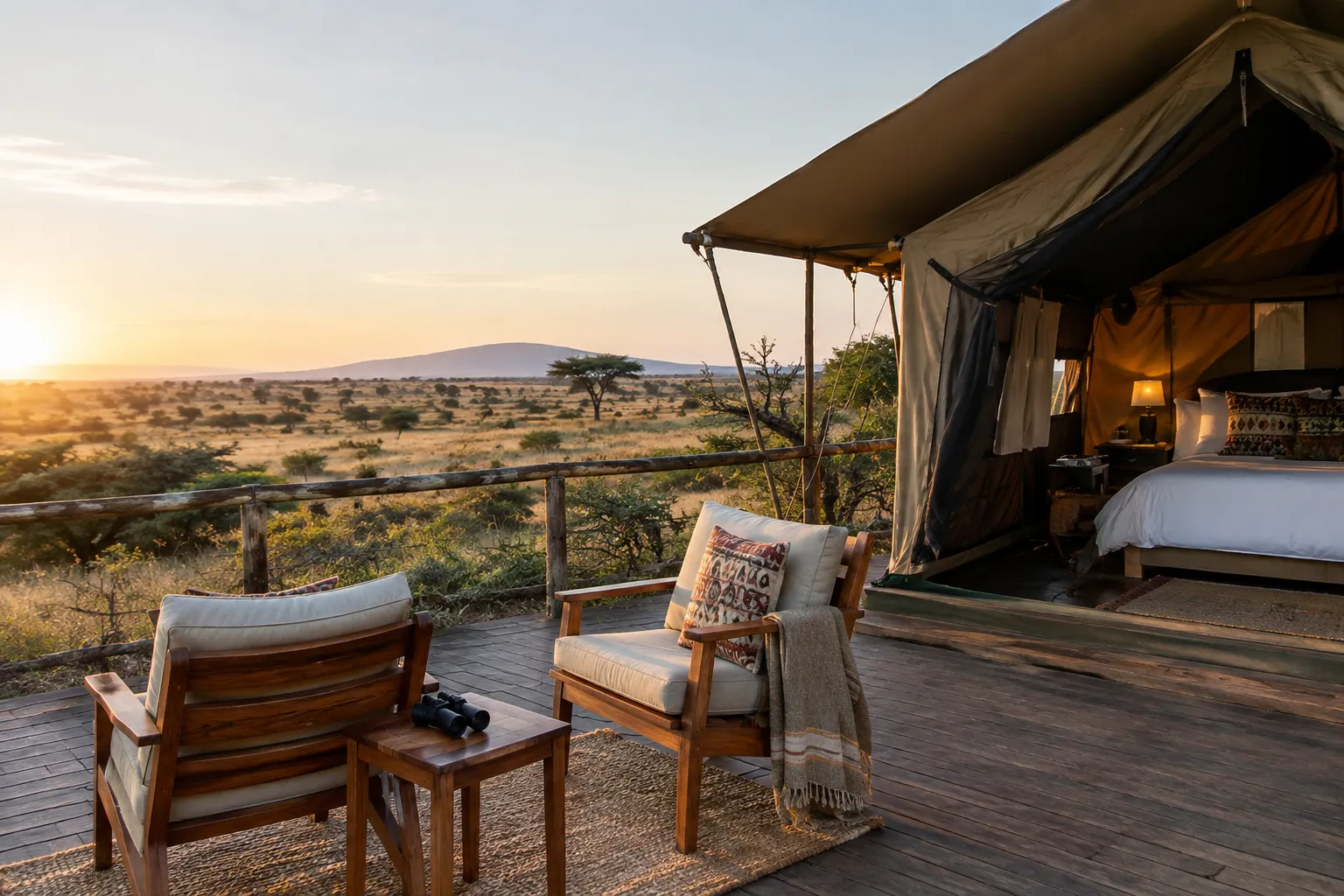
Safari accommodation ranges from permanent lodges to tented camps and mobile camps. The choice affects comfort, atmosphere, location, facilities and sometimes the amount of time spent traveling each day.
There is no universally correct option. A traveler who values fixed facilities may prefer a lodge, while someone who wants a more flexible route may consider a tented or mobile camp.
Lodges, tented camps and mobile camps
Permanent lodges are established properties with fixed rooms or cottages and shared areas. They may suit travelers who prefer a more conventional accommodation setting and predictable facilities.
Tented camps use tents as guest rooms, but the design and facilities can vary considerably. Some are permanent, while others are seasonal or designed to move with an itinerary.
Mobile camps are set up for a limited period and relocated as planned. Their potential advantage is route flexibility, but the facilities and level of permanence may differ from those at a lodge.
When comparing safari holidays in Africa, consider:
- How much comfort you need after a long drive
- Whether you prefer a fixed property or a closer-to-nature setting
- How important location is to your daily schedule
- Whether shared spaces suit your travel style
- How the accommodation affects the total route and pace
The accommodation name alone does not tell you everything. Ask for clear descriptions and confirm what facilities are available at each stop.
What safari accommodation usually includes
Safari accommodation commonly provides a sleeping space, meals and housekeeping, but the details vary. Shared areas may include a dining room, lounge or outdoor sitting area.
Power, hot water, internet access, laundry and charging arrangements are not identical everywhere. Some camps operate with limited resources or set schedules, so travelers should ask before departure rather than assume that city-hotel services will be available.
It is also useful to check:
- Whether bathrooms are private or shared
- How luggage is handled
- Whether drinks or extra activities are included
- What happens if you arrive after dark
- Whether the property can accommodate dietary needs
- How the camp manages wildlife around guest areas
These questions are not signs of excessive caution. They help match the safari experience to your expectations.
Safety, Conservation and Responsible Travel
A safari takes place in a natural environment, so safety depends on preparation, guide instructions and sensible behavior. It also depends on treating wildlife, habitats and local communities with respect.
Responsible travel is not a separate activity added after the safari. It affects how vehicles approach animals, how visitors behave in camps, what they buy and how they respond to local rules.
Wildlife safety and guide instructions
Wild animals can be unpredictable, even when they appear calm. Remain in the vehicle when instructed, keep your voice low near animals and avoid sudden movements that may disturb them.
During walking activities, stay with the guide and follow directions about where to stand, when to stop and how to respond to wildlife. Do not approach animals, feed them or attempt to attract their attention for a photograph.
At camp, follow instructions about moving between buildings, storing food and keeping distance from animals. Do not assume that a fence or tent makes wildlife behavior predictable.
Before booking, ask practical safety questions, including how the itinerary is paced, who leads activities and what support is available if a traveler becomes unwell.
How tourism can support conservation
Tourism can contribute to conservation through park fees, employment, local suppliers, community partnerships and revenue connected with protected areas. The effect depends on how tourism is managed and how benefits are distributed.
A safari also creates responsibilities. Visitors should respect access rules, avoid littering and accept that some areas or activities may be restricted to protect habitats and animals.
Conservation is broader than seeing large mammals. It includes protecting landscapes, water sources, plant life, smaller species and the communities living near wildlife areas.
Travelers can ask operators how their itineraries work with local guides, camps and conservation requirements. Clear answers are more useful than general promises.
How to travel responsibly
Responsible safari behavior is practical:
- Keep a respectful distance from animals
- Never feed wildlife or encourage unnatural behavior
- Follow park and guide instructions
- Avoid loud music and unnecessary noise
- Take litter with you or use the correct disposal point
- Ask before photographing people
- Respect local customs and community spaces
- Use water and electricity thoughtfully
- Avoid buying products made from protected wildlife materials
- Choose activities that follow local regulations
Responsible photography matters too. A close photograph is not worth pressuring a guide to leave a road, crowding an animal or disturbing a resting group.
Plan Your First Tanzania Safari
Once you understand what a safari involves, planning becomes a series of choices rather than one large decision. Start with the experience you want, then match the route, season, accommodation and support level to that goal.
A first Tanzania safari may be designed around wildlife viewing, a particular landscape, a slower private journey or a combined trip that includes Zanzibar or Kilimanjaro.
Choosing parks and the right safari style
Tanzania has several wildlife regions, and each offers different combinations of landscapes, access, activities and travel time. The right choice depends on your interests rather than a simple list of famous names.
Consider whether you prefer:
- A focused itinerary with fewer transfers
- Several parks and a broader range of landscapes
- A private vehicle with a flexible daily schedule
- A shared trip with a more structured arrangement
- Longer game drives or more time at camp
- Wildlife viewing combined with walking or cultural activities
- A safari followed by a Zanzibar beach holiday
Season also influences planning. Weather, road conditions, animal movement and visitor patterns can affect the experience, but no season guarantees identical sightings.
If you are also considering Kilimanjaro, plan the mountain and safari portions as connected but separate experiences. A climb requires attention to acclimatization, physical preparation, guide support and recovery time; it should not be squeezed into a schedule without considering the demands of both activities.
What to pack and expect before departure
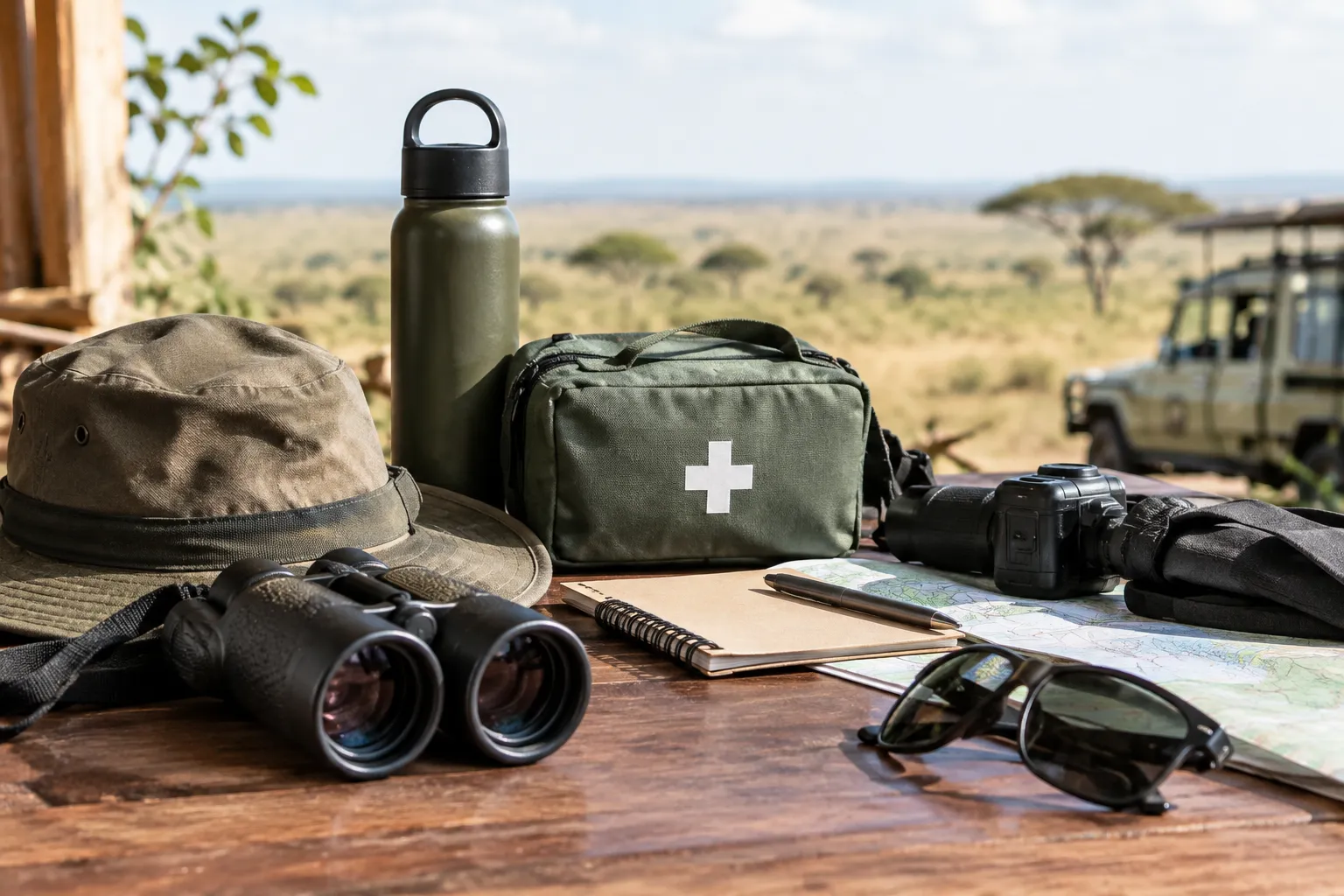
Pack for changing temperatures and practical outdoor conditions. Useful items may include lightweight layers, comfortable trousers or shorts, a warm layer for early mornings, a hat, sun protection, closed shoes and personal medication.
A small day bag can hold water, binoculars, a camera, spare batteries or power banks where appropriate, and any essentials needed during a game drive. Check luggage restrictions if your itinerary includes small aircraft or other limited-capacity transport.
Before departure, confirm:
- Passport and entry requirements
- Travel insurance
- Recommended health preparation with a qualified medical professional
- Baggage limits
- Airport and accommodation transfers
- Dietary requirements
- Charging and communication arrangements
- Payment and tipping expectations
- The daily driving pattern
- What is included and excluded from the quoted itinerary
Set realistic expectations about wildlife. You may see remarkable behavior, but you may also spend time searching, driving or watching ordinary moments. The guide’s explanations, the changing landscape and the feeling of being in a living ecosystem are part of what makes a safari different from a checklist.
How Golden Trips Tanzania can help
Golden Trips Tanzania helps travelers organize guided safari holidays across Tanzania and nearby East Africa. For first-time travelers, the useful role of a local planning partner is to turn broad interests into a clear route with a sensible pace, practical connections and appropriate accommodation.
We can help you think through questions such as:
- Which parks fit your available time
- How much driving is reasonable
- Whether a private or shared safari suits your plans
- How to connect a safari with Zanzibar
- Whether Kilimanjaro belongs before or after the safari
- What information should be clear in an itinerary and quotation
Our Tanzania safari holidays page is a useful next reference when you are ready to compare possible safari arrangements. The aim is not to make one itinerary suitable for everyone, but to help you understand the choices before committing.
Safari FAQs
Is a safari only found in Africa?
No. The word safari is used for wildlife journeys in several destinations, but Tanzania and other African countries are especially associated with guided wildlife travel and protected natural areas.
How close can you get to animals on safari?
The distance depends on park rules, terrain, animal behavior and the guide’s judgment. A responsible safari never pressures wildlife for a closer photograph or sighting.
What should you wear on a Tanzania safari?
Wear comfortable, breathable layers with practical closed shoes, sun protection and a warmer layer for cooler mornings. Neutral, adaptable clothing is useful, but comfort matters most.
How long should a first safari last?
There is no universal answer. The right length depends on your available time, chosen parks, transfer distances, budget and whether you are combining the safari with Zanzibar or another experience.
Can children go on a Tanzania safari?
Children may be able to join a Tanzania safari, but suitability depends on age, the itinerary, driving time, accommodation rules and activity restrictions. Ask for family-specific planning before booking.
Will I have phone service or Wi-Fi during a safari?
Connectivity varies by location and accommodation. Some areas may have service or Wi-Fi, while remote camps can have limited or no reliable connection, so plan for interruptions.
Do safari travelers need to tip their guides and camp staff?
Tipping customs vary by destination, operator and service arrangement. Ask for clear guidance before departure and prepare in a way that reflects the itinerary and your satisfaction.
Can a safari be combined with a beach holiday in Zanzibar?
Yes. A Tanzania safari can be planned alongside a Zanzibar holiday, but the itinerary should allow realistic transfer time and enough days to enjoy both the wildlife and coastal portions.
Plan Your Safari
You now have a clearer way to judge what a safari includes, from guiding and wildlife viewing to accommodation, safety and daily pace. Golden Trips Tanzania can help turn those preferences into a practical Tanzania safari plan.
Maya Ellison is a travel editor specializing in Tanzania safaris, Kilimanjaro itineraries, and Zanzibar escapes. She works with destination specialists and local guides to make complex travel details clear, practical, and easy to plan. Her writing offers first-time safari travelers honest guidance on pacing, logistics, safety, and the thoughtful touches that help create a seamless Tanzania adventure. Maya also brings particular insight to couples planning memorable East African honeymoons.