


 23 Sep 2026
 10 min read
A tour guide does far more than lead people from one place to another. A good guide explains what you are seeing, manages practical details, supports safety, and helps a trip feel clear rather than overwhelming. This is especially important in Tanzania, where a safari, cultural visit, Kilimanjaro climb, or Zanzibar holiday may involve unfamiliar environments and careful timing.
Tour guide: what it means in practice
A tour guide is a trained or experienced person who helps travelers understand and navigate a destination. Their work may include interpretation, route planning, logistics, communication, safety awareness, and coordination with accommodation providers, drivers, park staff, mountain crews, or local communities.
The exact role changes according to the journey:
- A safari guide helps travelers observe wildlife responsibly, understand animal behavior, and move through national parks safely.
- A Kilimanjaro guide supports route management, pacing, mountain communication, and attention to altitude-related risks.
- A cultural guide explains local history, customs, livelihoods, and places of community importance.
- A guide coordinating guided travel may also help connect several parts of an itinerary, such as a safari followed by time in Zanzibar.
A guide is not a substitute for every specialist involved in a trip. A safari driver, mountain porter, park ranger, hotel team, or local host may each have a separate role. However, the tour guide often becomes the main point of communication between travelers and the destination.
Good guiding combines knowledge with judgment. On safari, this might mean deciding when to spend more time at a sighting and when to move on so the day remains comfortable. On a mountain, it may mean maintaining a measured pace instead of treating speed as progress. During a cultural visit, it means explaining local practices respectfully rather than turning communities into attractions.
For a useful example of how a guide’s experience and responsibilities can be presented, read our safari guide’s story. A profile cannot replace questions about your own itinerary, but it can show the type of background travelers may want to investigate.
Tour guide: the key factors
When evaluating a tour guide or the operator arranging your trip, look beyond friendliness and destination photographs. A guide can be personable and still lack the planning, communication, or safety habits that your journey requires.
The most useful evaluation considers the whole service: who will guide you, what they are expected to do, how decisions are made, and what support exists if plans change.
The core problem to understand
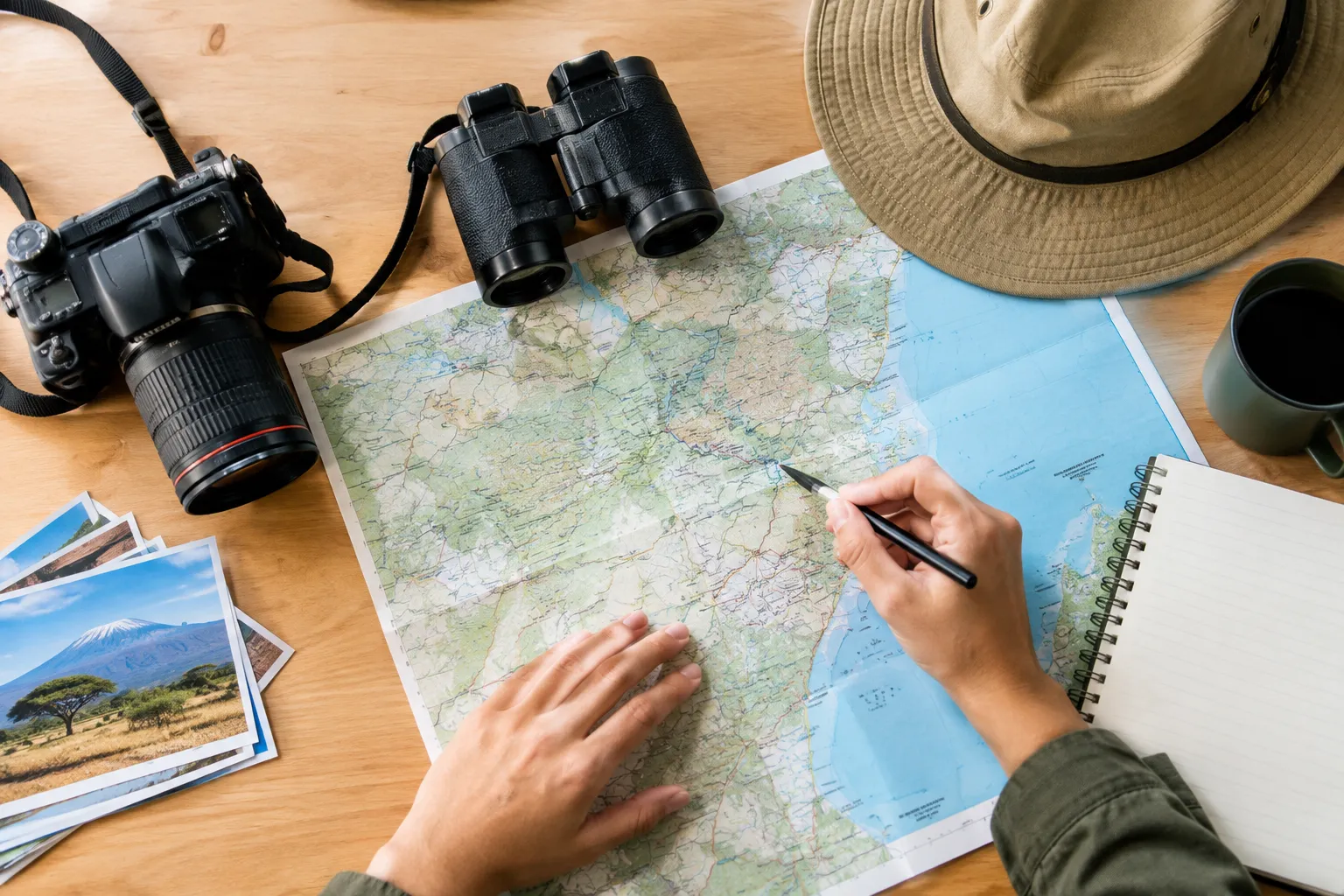
The central problem is that travelers often buy an itinerary without knowing what the guiding service actually includes. A written schedule may list parks, trails, or activities, but it may not explain who makes daily decisions or how much responsibility rests with the guide.
This matters because travel conditions are variable. Wildlife movements, road conditions, weather, physical fatigue, park rules, flight schedules, and altitude can all affect the day. A capable guide must communicate changes clearly and make decisions that protect the quality and safety of the experience.
For a safari guide, core responsibilities commonly include:
- Explaining park rules and responsible wildlife-viewing behavior.
- Identifying animals and interpreting their behavior without promising sightings.
- Choosing routes and stopping points within the permitted system.
- Monitoring the group’s comfort, timing, hydration, and general needs.
- Communicating with the driver, accommodation team, or other operational staff.
- Explaining what is known, what is uncertain, and what may change.
A Kilimanjaro guide has a different emphasis. The guide should help the group follow the agreed route and schedule, maintain a sustainable walking pace, and communicate with the mountain support team. Travelers should also understand how the operator approaches acclimatization, health checks, rest, and decisions if someone is struggling.
For cultural or community-based visits, the guide’s responsibility includes preparing travelers to behave appropriately. This can involve explaining dress expectations, photography etiquette, greetings, permissions, and the difference between observing a place and intruding on it.
Guided travel is most valuable when the guide adds interpretation and judgment, not merely transportation. If the guide only repeats a schedule, travelers may miss the context that makes a destination understandable.
The practical decision criteria
Before booking, ask questions that reveal how the service will work in practice.
First, clarify the itinerary. The number of days, route, parks, walking sections, transfers, and rest periods should be written clearly. This is particularly important for Kilimanjaro, where shortening an itinerary after booking could affect the planned pace and acclimatization opportunity. Ask whether the confirmed duration is fixed, what could cause a change, and how changes would be communicated.
Second, ask who will guide each part of the trip. A combined Tanzania itinerary may involve one safari guide, a separate mountain guide team, local cultural guides, and different transfer providers. Knowing this in advance prevents confusion about responsibility.
Third, evaluate communication. A good tour guide should be able to explain:
- What the day involves and why the timing matters.
- Which parts of the plan are fixed and which are flexible.
- What travelers should bring or prepare.
- What to do if they feel unwell, tired, or uncomfortable.
- How unexpected weather, road conditions, or delays will be handled.
Fourth, look for local knowledge that is relevant rather than theatrical. On safari, relevant knowledge includes ecology, animal behavior, park procedures, and route awareness. On a mountain, it includes the route, pacing, weather awareness, group management, and altitude-related concerns. On a cultural visit, it includes local context and respectful communication.
Fifth, consider responsible service. Ask how porters and other support staff are treated, what equipment or roles are expected, and whether the operator explains ethical standards clearly. A low price does not by itself demonstrate poor service, but an unusually cheap offer deserves careful questions about what is excluded, who is paid, and whether the itinerary is realistic.
Finally, consider support beyond the guide. A guide may be excellent, but a complex trip also needs accurate bookings, clear transfers, emergency communication, and a reliable process for handling changes. Travelers evaluating standards can learn more about about our team before comparing itinerary details.
Common mistakes to avoid
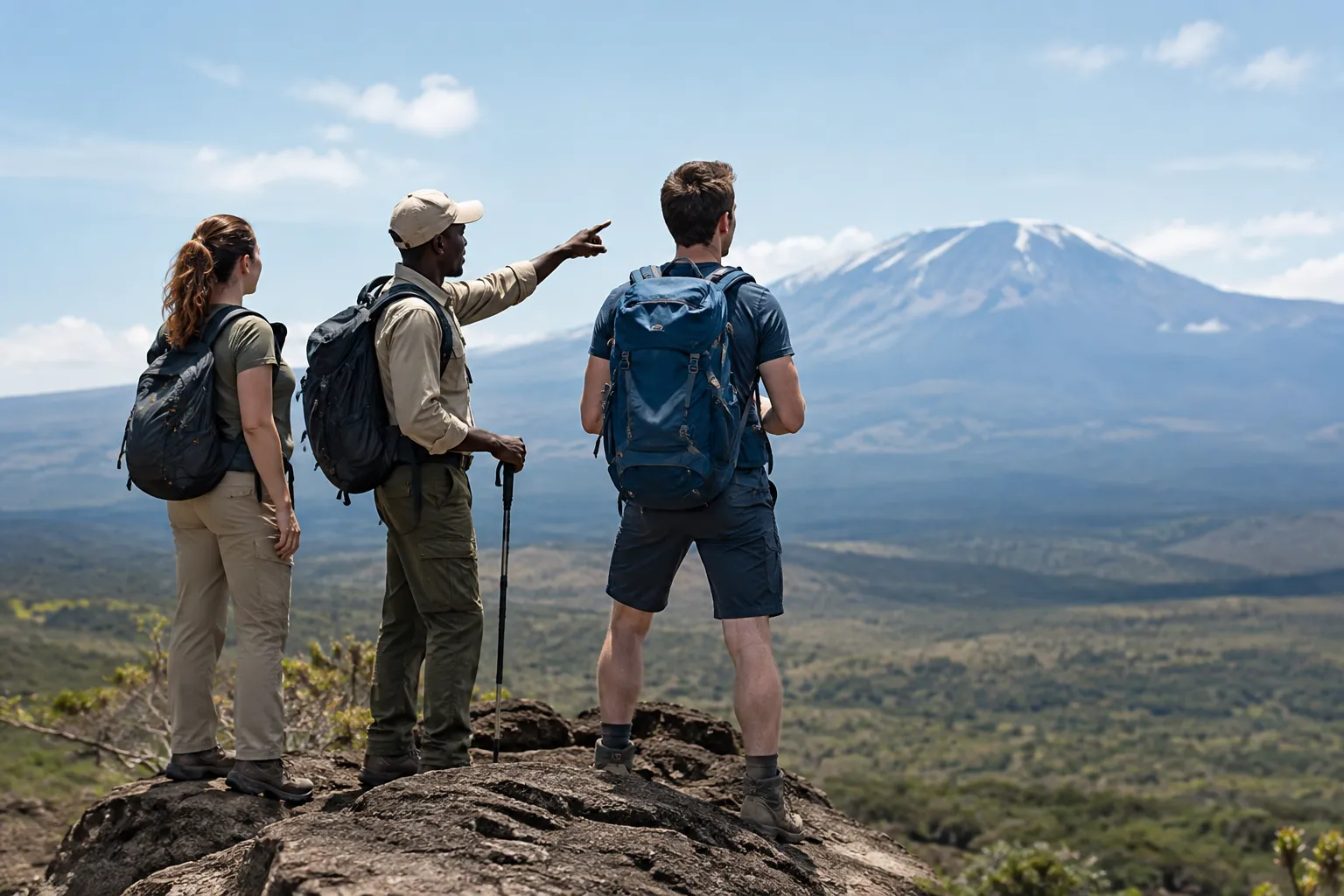
One common mistake is choosing only by price. A quote may appear attractive because it excludes park fees, transfers, meals, equipment, accommodation categories, guide support, or other necessary elements. Compare like with like and request a written explanation of inclusions and exclusions.
Another mistake is assuming that a longer list of destinations means a better trip. Too many parks, camps, or transfers can create rushed days and less time to appreciate each place. A guide can improve the daily experience, but cannot eliminate the consequences of an unrealistic schedule.
Travelers should also avoid treating online reviews as the only measure of guide quality. Reviews may reflect weather, wildlife luck, personal expectations, or the performance of the wider operator rather than the guide alone. Use reviews as one source of information, then ask direct questions about the itinerary and service.
Do not assume that every mountain itinerary with the same route name offers the same experience. Duration, sleeping arrangements, group size, pacing, acclimatization days, guide-to-client arrangements, and contingency planning may differ. Confirm these details before paying a deposit.
Another error is failing to discuss health and comfort. Travelers should tell the operator about relevant medical conditions, dietary needs, mobility concerns, allergies, or previous altitude experience. A guide cannot plan responsibly around information they have not received.
Finally, do not expect a guide to guarantee wildlife sightings, perfect weather, a summit, or a particular travel time. Responsible guiding explains probabilities and trade-offs rather than making promises that conditions cannot support.
Tour guide in practice: how to apply it
The best way to assess a tour guide is to follow the journey from planning to completion and identify what should happen at each stage.
Before departure, the operator or guide should help establish a shared understanding of the trip. You should know the route, approximate daily rhythm, accommodation style, transfer arrangements, included services, and important preparation requirements. For a mountain trip, this includes the planned number of days and the approach to pacing and acclimatization. For a safari, it includes the parks, travel distances, vehicle arrangements, and how flexible the days are.
At the start of each day, a guide should explain the plan in practical language. Travelers should not need specialist knowledge to understand when they will depart, how long a transfer may take, what facilities are available, or what conditions to expect. If the day changes, the reason should be explained rather than concealed.
During a safari, observe whether the guide balances enthusiasm with respect for wildlife and other visitors. Responsible behavior includes following park rules, keeping an appropriate distance where required, avoiding disruptive actions, and allowing animals to behave naturally. A knowledgeable safari guide should welcome questions and distinguish between established information and interpretation.
During a mountain trip, notice whether the guide pays attention to the group rather than focusing only on the fastest member. A steady pace, regular communication, and willingness to discuss symptoms or fatigue are more useful than pressure to maintain an unrealistic speed. Travelers should feel able to report concerns early.
During a cultural visit, consider whether the guide gives context before entering a community or sensitive place. They should help travelers understand what is appropriate and avoid presenting local people as scenery. Asking permission before photography and respecting a person’s decision not to participate are basic parts of responsible conduct.
When combining a safari with Zanzibar, logistics deserve particular attention. The itinerary should allow enough time for transfers and connections rather than assuming every movement will be immediate. A well-paced plan also considers whether travelers need recovery time after early safari starts, long drives, or a mountain climb. General destination planning can be explored in Tanzania Tours 2026, while the final schedule should be assessed against your own travel dates and priorities.
Tipping is another practical topic to discuss before travel. Expectations can vary according to the type of service, group size, duration, and local practice. Ask the operator how tips are normally handled, whether they are given directly or shared, and whether tipping is optional rather than treated as a hidden fee. A clear explanation helps travelers budget and reduces awkwardness at the end of a trip.
A simple guide-quality checklist can help:
- Is the itinerary written clearly, including duration and major transfers?
- Do you know which guide or guide team is responsible for each activity?
- Can the guide explain safety, pacing, and changes in plain language?
- Are wildlife and community interactions governed by respectful practices?
- Are inclusions, exclusions, fees, and tipping expectations transparent?
- Is there a process for responding to illness, delays, or itinerary changes?
- Does the plan leave enough time for the trip to be enjoyable rather than rushed?
Golden Trips Tanzania organizes travel in Tanzania and nearby East Africa, including safari holidays, Zanzibar holidays, and Kilimanjaro climbing tours. When comparing guided travel providers, use the same questions for every itinerary so that your decision reflects service quality and fit rather than presentation alone.
Tour guide FAQ
Tour guide basics: what should you know first?
A tour guide explains a destination, supports logistics, and helps manage safety and communication. A safari guide, Kilimanjaro guide, and cultural guide apply these responsibilities in different settings.
Tour guide options: how do you choose the right one?
Choose according to the activity, route, pace, communication needs, and safety concerns. Ask who will guide each part of the trip and what support exists if plans change.
Tour guide mistakes: which ones should you avoid?
Avoid choosing only by price, accepting an unclear itinerary, overlooking acclimatization, or assuming a guide can guarantee wildlife sightings, weather, travel times, or a summit.
Tour guide in daily use: what should you expect?
Expect a guide to explain the day, answer questions, communicate changes, and help you follow local, park, or mountain safety practices without hiding important limitations.
Tour guide comparisons: what should you check before deciding?
Compare itinerary duration, guide responsibilities, group arrangements, inclusions, safety communication, ethical practices, flexibility, and the clarity of fees rather than comparing headline prices alone.
Recommended next steps
Start by writing down what you want the trip to achieve: wildlife viewing, cultural understanding, a Kilimanjaro climb, beach time in Zanzibar, or a balanced combination. Then identify the decisions that matter most, such as pace, comfort, private or shared travel, transfer time, and responsible service.
Request a detailed itinerary rather than relying on destination names alone. Check the number of days, route, accommodation approach, transport, guide roles, included services, exclusions, and arrangements for unexpected changes. If the trip includes Kilimanjaro, confirm that the agreed duration will not be shortened without a clear reason and discussion.
Finally, judge the quality of the conversation before travel. A trustworthy tour guide or operator should answer practical questions directly, explain trade-offs, and avoid promising conditions that no one can control. That approach gives first-time travelers a stronger basis for choosing guided travel in Tanzania and for understanding what good service should look like once the journey begins.
Maya Ellison is a travel editor specializing in Tanzania safaris, Kilimanjaro itineraries, and Zanzibar escapes. She works with destination specialists and local guides to make complex travel details clear, practical, and easy to plan. Her writing offers first-time safari travelers honest guidance on pacing, logistics, safety, and the thoughtful touches that help create a seamless Tanzania adventure. Maya also brings particular insight to couples planning memorable East African honeymoons.