

Picking a safari camp serengeti trip revolves around can make or break your entire Tanzania itinerary. With hundreds of camps scattered across the park, from riverside lodges to canvas tents that move with the wildebeest migration, the choice feels overwhelming fast, especially when prices range from $200 to over $2,000 a night.
This guide narrows that field down to the 10 camps actually worth your money in 2026. You’ll get straight answers on luxury tented camps with private plunge pools, budget-friendly mobile tented camps that follow the herds, and everything in between, plus what each one charges and who it suits best, whether you’re chasing the Great Migration river crossings in Serengeti National Park or want a quiet base near Ngorongoro.
We’ve built these recommendations from years of running camping safari itineraries on the ground in Tanzania, not from a spreadsheet of booking sites. Each entry covers location, seasonal strengths, and honest pros and cons, so you can match a camp to your dates, budget, and the kind of Serengeti experience you actually want.
1. Nomad Serengeti Safari Camp
Nomad Serengeti Camp sits in the central Seronera area, one of the few permanent tented camps allowed to operate inside this year-round wildlife hotspot. Unlike the migratory camps that pack up twice a year, this safari camp serengeti travelers rely on for consistent game viewing stays put, which means the guides know every lion pride, leopard tree, and cheetah territory in walking distance. That local knowledge shows up fast on your first game drive, when your guide radios in a sighting before you’ve even finished your coffee.
Location and setting
Situated along the Seronera River valley, the camp overlooks a stretch of riverine forest that draws resident wildlife even when the migration herds are hundreds of miles away. Ten spacious canvas tents sit on raised platforms, spaced far enough apart that you won’t hear your neighbors, with en-suite bathrooms and a small private veranda facing the bush. The central mess tent and bar overlook a waterhole, so you can watch elephants and buffalo drift through without leaving your gin and tonic.
A permanent camp in Seronera beats chasing the migration when your travel dates are fixed months in advance.
Best for
This camp suits first-time visitors who can’t shift their travel dates around migration patterns and still want reliable Big Cat sightings. Families and couples on a tighter safari window, say five to seven days, benefit most from Nomad’s fixed location, since you skip the long transfer times that mobile camps in the western or northern Serengeti often require. It also works well if you’re combining the Serengeti with Ngorongoro Crater and Tarangire, since Seronera sits roughly in the middle of Tanzania’s northern circuit.
Price range
Expect to pay between $450 and $650 per person per night on a full-board, all-inclusive basis, with two daily game drives included.
| Season | Rate per person/night | Notes |
|---|---|---|
| Low (Mar-May) | $450-$500 | Fewer crowds, lush landscape |
| Peak (Jun-Oct, Dec-Feb) | $550-$650 | Book 6+ months ahead |
| Shoulder (Nov) | $480-$530 | Good value, short rains |
Rates typically include park fees but not international flights or tips for guides and camp staff.
2. Singita Sasakwa Lodge
Singita Sasakwa Lodge occupies the northern Serengeti’s Sasakwa Hill, and it plays a different game entirely from Nomad’s classic tented setup. Think manor-house architecture, a stable of horses for game-viewing rides, and a wine cellar stocked with vintages you’d expect in Cape Town, not the Serengeti bush, the kind of standard you find at the top luxury safari lodges in Tanzania. If your idea of a serengeti luxury tours experience includes both wildlife and genuine indulgence, this is the property that delivers both without compromise.
Location and setting
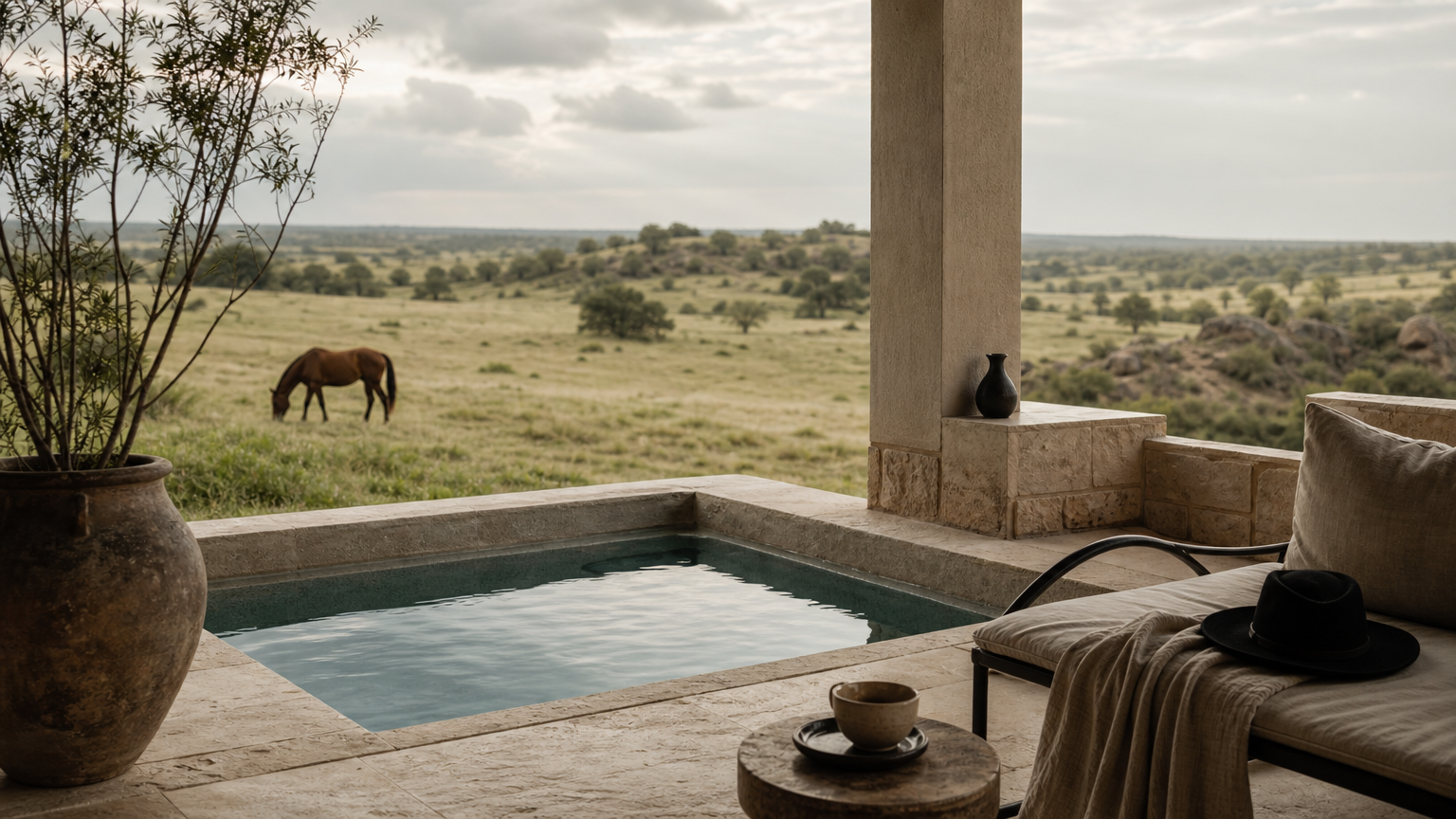
Perched at 6,000 feet, Sasakwa Hill gives you sweeping views over the Grumeti Reserves, a private concession bordering the Serengeti’s northern migration corridor. Nine cottages and suites, each with a private pool, spread across the hillside, so you get privacy that packed camps in Seronera can’t match. The lodge’s elevated position also means cooler nights, a welcome break if you’ve spent the day on dusty game drives.
Sasakwa’s private concession means your game drives happen without another vehicle in sight.
Best for
Honeymooners and travelers celebrating a milestone gravitate here, since the privacy, spa treatments, and horseback safaris create a romantic, slower pace than a standard serengeti safari camp. It also suits repeat visitors to Tanzania who’ve done the classic Big Five checklist and now want a quieter, more exclusive angle on the same landscape.
Price range
Rates run from $1,200 to $2,400 per person per night, all-inclusive with private vehicle game drives, though most guests book a minimum three-night stay to justify the transfer costs from Arusha or the Grumeti airstrip.
3. Namiri Plains
Namiri Plains Camp reopened in 2014 after being closed to tourism for two decades, and that rest period turned it into one of the best cheetah-viewing spots in East Africa. Asilia Africa runs this safari camp serengeti cheetah enthusiasts specifically seek out, since the plains here held near-total protection while the rest of the ecosystem saw steady tourist traffic. Guides here track individual cheetah families across generations, so you’re not just spotting a cheetah, you’re hearing its backstory.
Location and setting
Eastern Serengeti’s short-grass plains surround the camp, an open landscape that suits predator sightings but lacks the riverine shade of Seronera. Twelve tents, split across two sub-camps, use canvas walls that roll up entirely, putting almost nothing between you and the plains at night. The serengeti safari camp tanzania design here favors minimalism over luxury flourishes, with solar power and no wifi in the tents themselves.
Namiri Plains rewards patience: cheetahs here get closer to vehicles than almost anywhere else in Tanzania.
Best for
Wildlife photographers chasing cheetah action shots find Namiri unmatched, and the camp’s exclusive traversing rights mean fewer vehicles crowd every sighting. Travelers who prioritize predator behavior over big migration crowds should book here over more central options.
Price range
Expect $700 to $950 per person per night, full-board with two game drives daily, running higher during the dry season from June through October when cheetah activity peaks.
4. Sanctuary Kichakani Serengeti Camp
Sanctuary Kichakani Serengeti Camp packs up twice a year and follows the wildebeest herds between the southern plains and the northern Mara River corridor, making it one of the true mobile tented camps left in Tanzania. Sanctuary Retreats built its reputation on this exact model, moving the entire camp by truck so guests wake up close to wherever the migration happens to be that month. If your trip revolves around timing the river crossings, this serengeti camping safari setup removes the guesswork.
Location and setting
Kichakani relocates twice yearly, like other seasonal camps that move between Ndutu and Kogatende, sitting in the southern Serengeti near Ndutu from December through March, then shifting north to the Kogatende area from June through October. Nine spacious canvas tents rest on the ground rather than raised platforms, giving the camp a genuinely rustic feel with proper safari beds, hot bucket showers, and flush toilets. Nothing about the layout feels permanent, which is exactly the point.
A camp that moves with the herds beats one that waits for them to pass by.
Best for
Migration purists who want to time their trip around calving season or river crossings should book Kichakani over any fixed-location camp. It also suits adventurous travelers who don’t mind trading marble bathrooms for a more authentic bush experience.
Price range
Rates run $550 to $800 per person per night, full-board with game drives, varying by season since location dictates demand and logistics costs.
5. Lamai Serengeti
Lamai Serengeti Camp clings to the Kogatende kopjes on the northern bank of the Mara River, putting you closer to the river crossings than almost any other serengeti safari camp on this list. Nomad Tanzania operates two sub-camps here, Nomad House and Private House, both built into granite outcrops that give the whole property a fortress-like feel above the migration corridor. During July through October, guests here watch wildebeest attempt crossings from the camp deck without ever climbing into a vehicle.
Location and setting
Granite boulders anchor the camp’s structure, with tents and suites tucked between rock formations that offer natural shade and dramatic views over the Mara River below. Nine tents split across the two houses, each with an outdoor shower and a private plunge pool that catches the afternoon breeze rolling off the river valley. Kogatende’s remote position in the Serengeti’s far northern region keeps vehicle traffic light even during peak crossing season, a real advantage over more crowded viewpoints downstream.
Camps built into the Mara riverbank turn migration season into a spectator sport from your own deck.
Best for
Serious migration chasers who plan their entire trip around river crossing odds should prioritize Lamai over camps further south. Photographers wanting elevated vantage points for crossing shots also do well here, since the kopje setting offers angles ground-level camps can’t match.
Price range
Expect $650 to $1,100 per person per night, full-board, with rates climbing toward the top end during peak crossing months from July through September.
6. Singita Faru Faru Lodge
Singita Faru Faru Lodge sits inside the Grumeti Reserves, the same private concession as its sister property Sasakwa, but this serengeti safari camp trades manor-house grandeur for a sleeker, more contemporary design. Glass-walled suites, an on-site art gallery, and a working research center give Faru Faru a different personality, one built around conservation science as much as comfort. Singita funds an active research program here, and guests can often join a ranger for a look at the reserve’s rhino reintroduction project.
Location and setting
Faru Faru overlooks the Grumeti River, with nine suites built low to the ground so the views stretch uninterrupted across the reserve’s rolling grassland. Each suite has a private plunge pool and outdoor shower, and the open-plan living areas blur the line between indoors and bush. Unlike the granite kopjes at Lamai or the riverine forest at Seronera, this landscape feels softer and greener, thanks to the Grumeti’s year-round water source.
A private concession like Grumeti means exclusive game drives without the vehicle congestion of public park roads.
Best for
Conservation-minded travelers and design enthusiasts find Faru Faru’s blend of research access and architecture hard to match elsewhere. Couples wanting a private concession experience without the horseback riding focus of Sasakwa should book here instead.
Price range
Rates run from $1,100 to $2,000 per person per night, all-inclusive with private vehicle game drives and conservation fees built into the nightly rate.
7. Lemala Nanyukie
Lemala Nanyukie occupies a quiet corner of the northern Serengeti near Bologonja, an area migration crowds haven’t fully discovered yet. Lemala Camps built this serengeti safari camp around the idea that you shouldn’t need Kogatende’s crowds to catch strong migration action, and the camp’s position along seasonal river crossings backs that up from June through September. Guides here know the terrain well enough to time crossings without competing against a dozen other vehicles for the same view.
Location and setting
Sixteen tents spread across a hillside overlooking open plains and acacia woodland, each with private verandas facing the valley below. The serengeti safari camp tanzania design leans toward comfort without excess, using canvas and thatch construction that keeps interiors cool through the hottest afternoons. A raised deck and plunge pool near the main lounge give you a spot to watch elephants cross the valley floor while you cool off.
Fewer camps in a single migration corridor means better sightings, not just quieter dinners.
Best for
Mid-range travelers who want migration proximity without Singita-level pricing find real value here. Families traveling with teenagers also do well, since the camp’s larger tents and flexible activity schedule suit groups who want options beyond back-to-back game drives.
Price range
Expect $500 to $750 per person per night, full-board with two daily game drives, with rates rising toward the top of that range during peak crossing months.
8. Ubuntu Migration Camp
Ubuntu Migration Camp takes the mobile concept further than most, relocating up to four times a year to stay as close as possible to the wildebeest herds. Asilia Africa runs this serengeti camping safari operation with a small footprint, just eight tents, so the camp can pack up and shift in under two days when the migration moves on. If you want the closest thing to following the herds on foot without sacrificing a proper bed, Ubuntu delivers that balance.
Location and setting
Ubuntu’s exact position changes with the season, sitting near Ndutu for calving from December through March, then shifting toward the western corridor or northern Serengeti as the herds move. Tents use canvas and simple wood framing, with bucket showers and long-drop toilets that keep the camp light enough to relocate quickly. There’s no swimming pool or bar with imported spirits here, the setup stays deliberately basic so the camp can chase the action rather than anchor to one view.
The most mobile camps trade comfort for proximity, and Ubuntu leans hard into that trade.
Best for
Budget-conscious travelers who still want a genuine serengeti camping safari experience, rather than a fixed lodge with a migration view on paper only, should book Ubuntu. It also suits younger travelers and second-time visitors comfortable trading marble bathrooms for a camp that actually moves with the wildlife.
Price range
Rates run $400 to $600 per person per night, full-board with game drives, among the more affordable options on this list for genuine migration-following camps.
9. Sayari Camp
Sayari Camp anchors the far northern Serengeti near the Mara River, and Asilia Africa built it specifically for guests chasing the migration’s most dramatic river crossings. Unlike Lamai’s kopje perch, Sayari sits lower in a wooded riverine valley, giving the camp a denser, more intimate feel among sausage trees and acacia thickets. Resident game here stays strong even outside crossing season, since the Mara’s permanent water draws elephants, buffalo, and big cats through the property year-round.
Location and setting
Fifteen tents spread along the riverbank, each raised on a platform with a private veranda facing the water, and the camp recently added a second smaller sub-camp for extra privacy. Indoor and outdoor showers, a plunge pool at the main lounge, and a proper wine cellar push this serengeti safari camp closer to Singita territory than to Ubuntu’s stripped-down setup. Vehicle access to prime crossing points sits just minutes away, a real advantage when crossings happen fast and without warning.
The camps closest to the Mara River see crossings first, before the crowds arrive from further south.
Best for
Migration chasers who still want proper creature comforts, rather than the bucket showers at Ubuntu or Kichakani, fit Sayari’s profile well. Photographers benefit from the camp’s permanent hides along the riverbank, built specifically for capturing crossing action without disturbing the herds.
Price range
Expect $650 to $1,050 per person per night, full-board with two daily game drives, climbing toward the top end during July through September when crossing activity peaks along this stretch of the Mara.
10. Mwiba Lodge
Mwiba Lodge sits on the Mwiba Wildlife Reserve, a private conservancy bordering the Serengeti’s southern edge near Maswa Game Reserve, and it operates under different rules than any camp inside the national park itself. Because the land is privately managed, guides here run night drives, off-road tracking, and walking safaris, activities banned inside Serengeti National Park boundaries. That flexibility makes this safari camp serengeti travelers pair with cultural encounters, since Mwiba also arranges visits with Hadzabe hunter-gatherers and Datoga blacksmiths living on the reserve’s fringes.
Location and setting
Granite kopjes and acacia woodland surround the lodge, overlooking a natural spring that draws elephants and buffalo through the dry season without any need to drive far. Twelve suites and a separate two-bedroom villa spread across the hillside, each with a private plunge pool and open-air lounge facing the valley below. Rustic Bushcamp tents, a simpler satellite option on the same reserve, give budget-conscious guests a way to access the same private-land activities at a lower nightly cost.
A private reserve bordering the Serengeti buys you night drives and walking safaris that the park itself won’t allow.
Best for
Cultural travelers wanting more than a drive-by village stop should book Mwiba over any park-bound camp on this list. Repeat visitors craving night drives and bushwalks, activities most serengeti safari camp properties simply can’t offer, find real value in the reserve’s private status.
Price range
Rates run $600 to $1,000 per person per night at the main lodge, full-board with activities included, while Bushcamp tents drop to roughly $400 to $550.
11. How to choose the right Serengeti safari camp
Matching a safari camp serengeti trip to your actual travel dates matters more than any star rating. Migration timing drives everything: book Kichakani or Ubuntu near Ndutu for calving season, or Sayari and Lamai near the Mara for July through September crossings. Seronera-based camps like Nomad work year-round, so they suit travelers who can’t shift dates around wildlife movement.
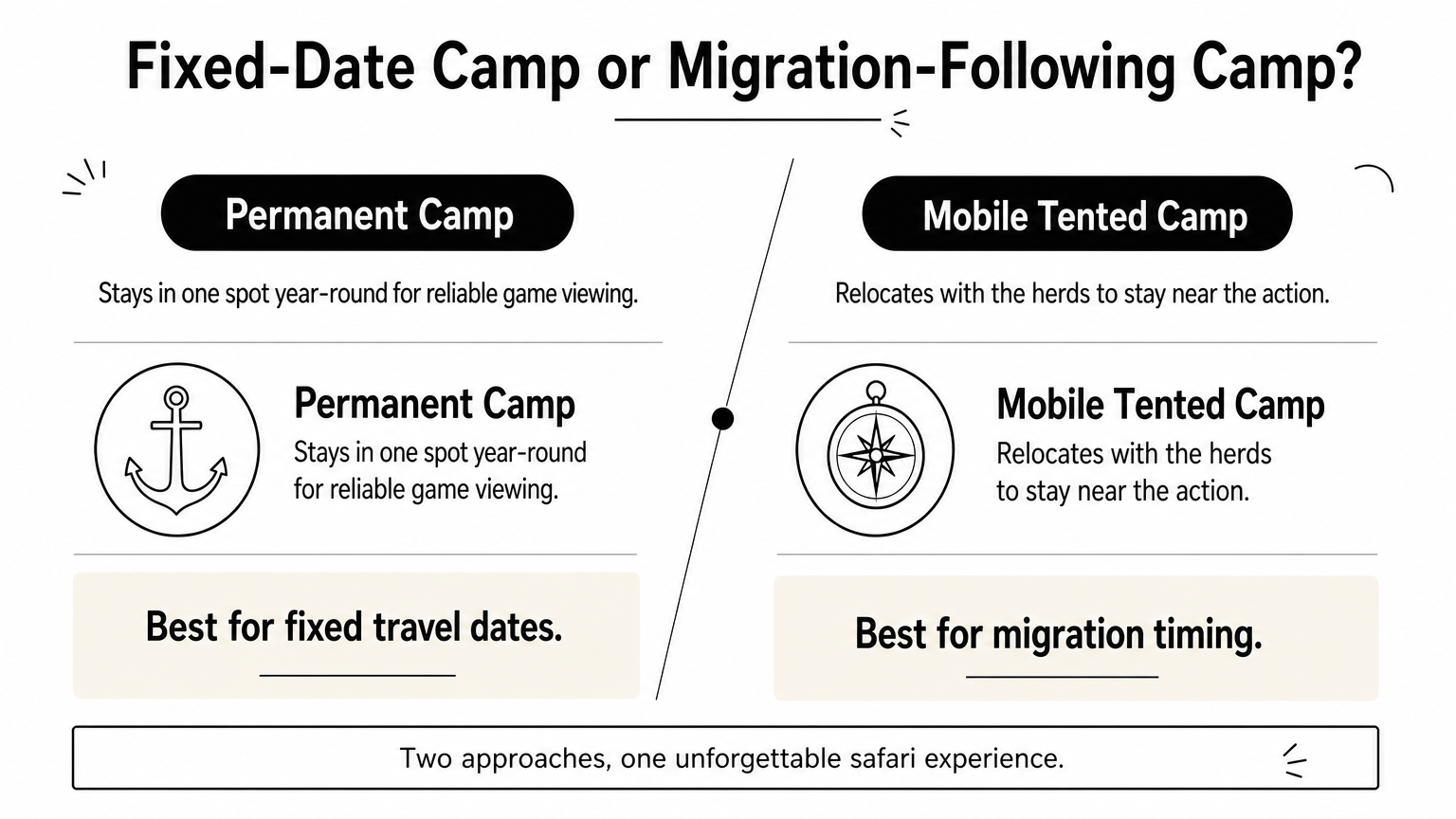
Budget sets your second filter, and the range on this list runs from $400 to $2,400 per person per night, so it helps to know what Serengeti safari package prices actually include. Decide early whether you want a luxury Tanzania safari tour experience with plunge pools and wine cellars, or a genuine camping safari serengeti setup with bucket showers and canvas walls that roll up at night. Neither approach is wrong, but mixing expectations leads to disappointment.
The best camp isn’t the highest-rated one, it’s the one that matches your dates, budget, and tolerance for rustic living.
Consider these factors side by side before booking:
| Priority | Best camp type | Example from this list |
|---|---|---|
| Fixed travel dates | Permanent camp | Nomad, Namiri Plains |
| Migration crossings | Riverside or mobile camp | Sayari, Lamai, Kichakani |
| Privacy and exclusivity | Private concession lodge | Singita Sasakwa, Mwiba |
| Tight budget | Mobile tented camp | Ubuntu Migration Camp |
| Cultural add-ons | Private reserve | Mwiba Lodge |
Finally, factor in transfer logistics. Camps in the far north add flight time and cost, while central Seronera options cut travel days you’d rather spend on game drives.
12. What to know before a Serengeti camping safari
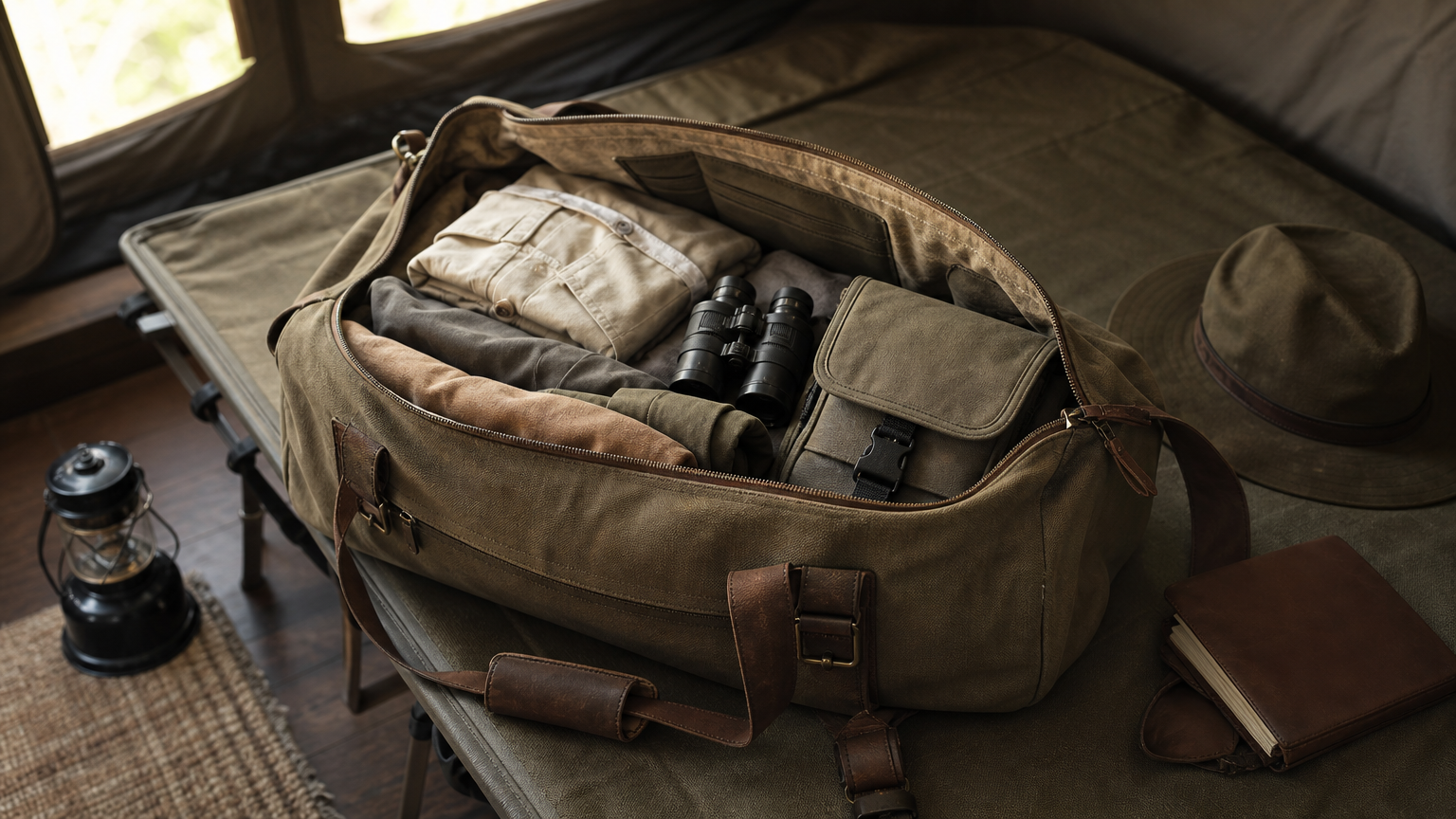
Packing wrong causes more mid-trip headaches than any camp choice ever will. A serengeti camping safari means dust, sudden temperature swings, and long game drives on rough tracks, so gear that works in a city hotel often fails out here, which is why what to pack for a Tanzania safari deserves real thought. Nights near Ndutu or Kogatende drop into the 50s Fahrenheit even during the dry season, while afternoons climb past 85, so layers matter more than any single jacket or fleece.
Booking timing shapes your entire experience more than most travelers expect. Camps near the Mara fill up a year in advance for July through September crossings, and Ndutu-area tents sell out for calving season by the previous January, so check the month-by-month guide to visiting the Serengeti before you commit to dates. Waiting until three months out usually means settling for a lesser camp or a worse tent within the same property.
Pack for temperature swings, book migration-season camps a year ahead, and confirm your camp’s exact vaccination and malaria guidance before you fly.
A few practical items make the difference between a smooth trip and a frustrating one:
- Neutral-colored clothing (khaki, olive, tan) since bright colors and dark blue attract tsetse flies, as our guide to what to wear on a Tanzania safari explains
- A good pair of binoculars, since camp-supplied ones are often shared and low quality
- Cash in small bills for tips, since most camps run cashless otherwise
- A basic malaria prophylaxis, confirmed with your doctor before departure
- A dust-proof camera bag, since Serengeti roads generate genuine dust storms in dry months
Check with your camp directly about generator hours, wifi limits, and laundry service, since these details vary widely even between camps in the same price bracket.
13. Common questions about Serengeti safari camps
Questions about a safari camp serengeti trip tend to repeat across travelers, so here are the ones we hear most often from clients planning their first visit.
How far in advance should you book? Migration-season camps like Sayari or Kichakani need booking 9 to 12 months out, while permanent Seronera camps like Nomad often have openings 3 to 4 months ahead.
Do camps have electricity and wifi? Most permanent camps run generators for set hours and offer basic wifi in common areas, but true mobile tented camps like Ubuntu skip both entirely to stay light and quick to relocate.
Is it safe to walk around camp at night? Yes, but only with a guide escort, since wildlife moves through camp grounds after dark even at fenced properties.
No camp in the Serengeti guarantees a migration crossing on any given day, only better odds based on location and season.
Can you drink the water? Stick to bottled or filtered water provided by camp staff. Tap water isn’t safe even at high-end lodges.
What’s the difference between a lodge and a tented camp? A lodge uses permanent brick or stone structures, while a serengeti safari camp built around canvas tents offers a closer, more immersive bush feel, often at a lower price point.
Do children stay at these camps? Most accept kids over 6, though a few adults-only properties like Lamai’s Private House restrict younger guests entirely.
Finding your perfect Serengeti stay
Ten camps, ten different personalities, but the same underlying truth: the right safari camp serengeti choice comes down to your dates, your budget, and how much comfort you’re willing to trade for proximity to the herds. Nomad and Namiri Plains reward travelers locked into fixed dates, Sayari and Lamai deliver front-row seats to river crossings, and Ubuntu proves a genuine serengeti camping safari doesn’t need a four-figure nightly rate to feel authentic.
Getting this decision right takes more than reading reviews online. It takes someone who’s driven these tracks, slept in these tents, and knows which camp actually delivers on its marketing photos this season. That’s exactly the gap Golden Trips Tanzania fills for travelers building a Serengeti trip from scratch. Compare our Serengeti safari packages for 2026 and get matched with the camp that fits your dates and budget, not just the highest bidder on a booking site.